Be yourself; Everyone else is already taken.
— Oscar Wilde.
This is the first post on my new blog. I’m just getting this new blog going, so stay tuned for more. Subscribe below to get notified when I post new updates.
Be yourself; Everyone else is already taken.
— Oscar Wilde.
This is the first post on my new blog. I’m just getting this new blog going, so stay tuned for more. Subscribe below to get notified when I post new updates.
Soho, in London’s West End? SoHo in lower Manhattan? No! It’s about Socho or Sokho (kh pronounced as a gluttural h, as in the Spanish name Jose), the Tel or archeological mound overlooking the Elah Valley, in the the Judean Lowlands, beyond the south border of my home city of Bet Shemesh, Israel!
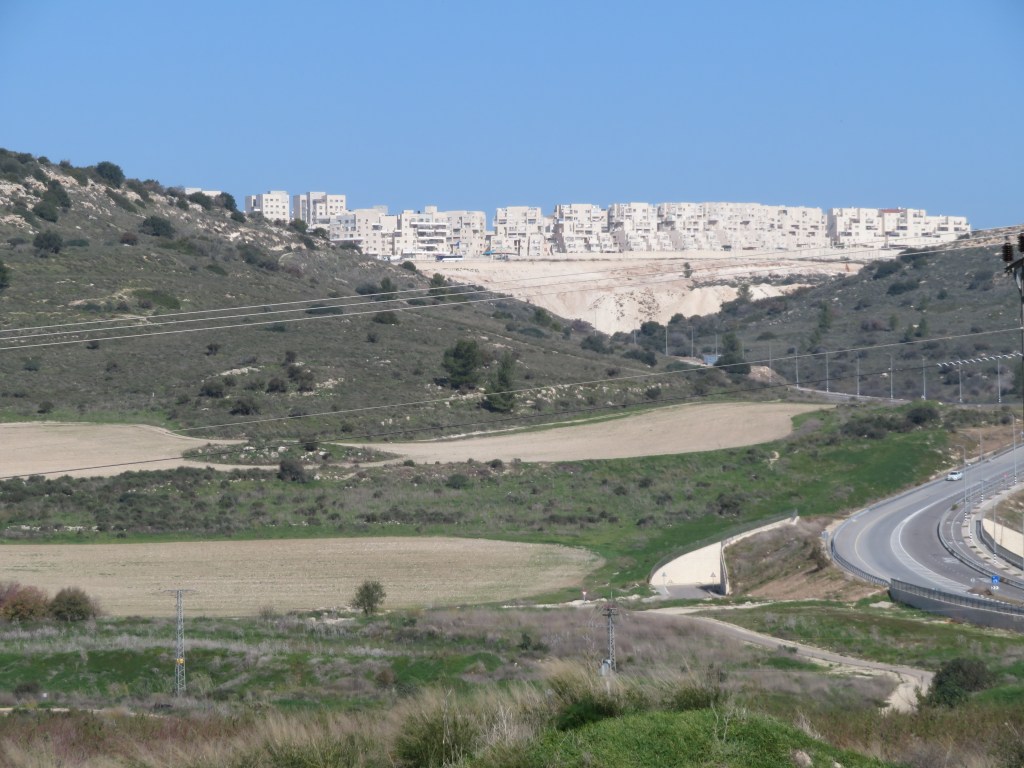
I biked from my home, along a new main road, like a spinal chord, running most of the length of the city of Bet Shemesh. I used the road before its opening to car traffic; bicycles have their privileges.
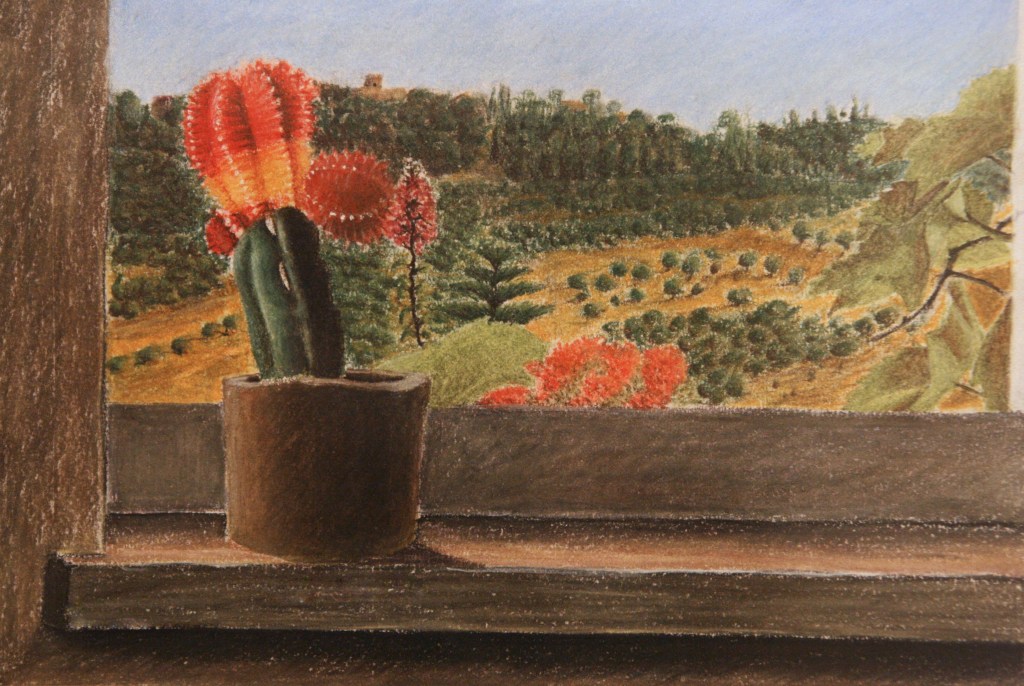
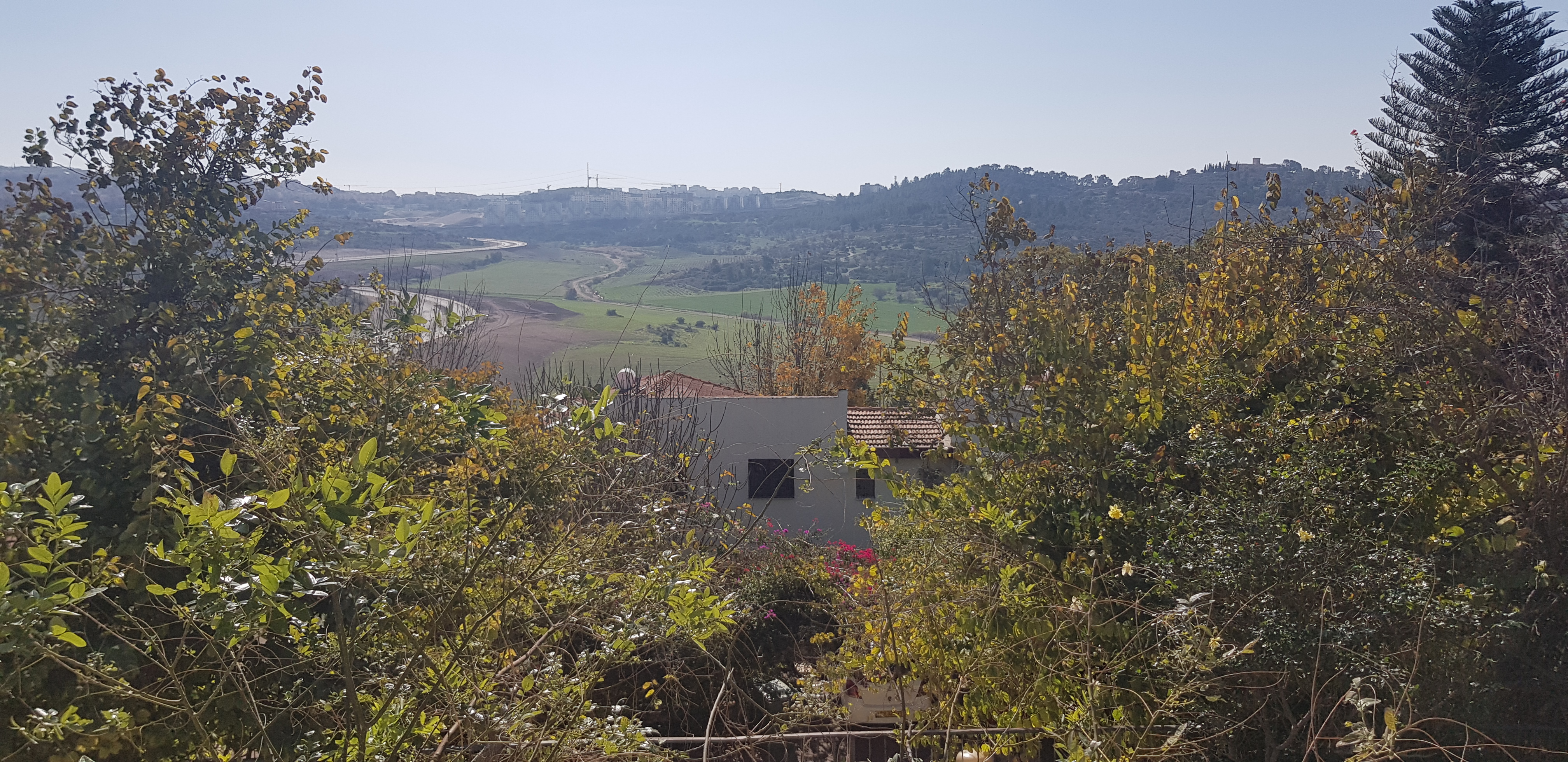
The new road has become the focus of the view out from our home. One of the reasons that 30 years ago I chose the plot of land to build our house, was precisely this view. That was way before this road was even dreamt about. Back then, no tall trees stood on the hill where our neighborhood is located, and therefore we enjoyed an uninterrupted view of the breathtaking, pastoral and pristine landscape of the valley bellow and the hill beyond. On top of that hill stands the monastery of Bet G’emal. I used to spend hours enjoying that landscape, sometimes with binoculars, and even with a telescope. One day, with my bare eye, I noticed what looked like a white spot moving on the green fields of the valley. Curious to discover what I had seen, I zoomed in with my telescope, and through its eyepiece discretely joined a group of six monks in their white robes, taking their Sunday stroll and relishing the silence of the fields, olive groves, rolling hills, soothing winter sun, blue sky, chirping birds, wild flowers and as yet pristine horizons.
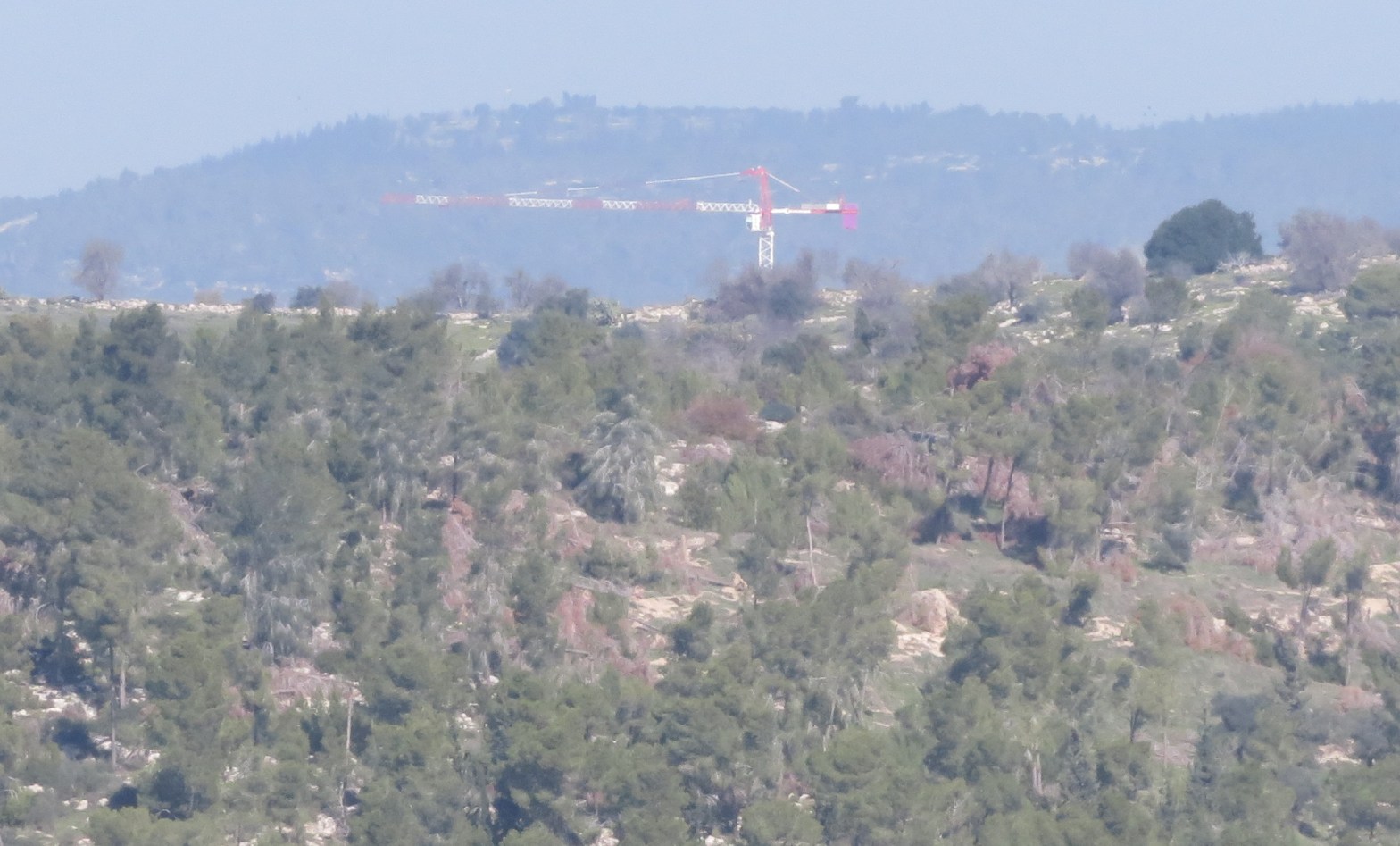
I recall when, a few days after moving into the house and going to enjoy the view, I saw that a high-tension electricity mast was being erected on the hill directly opposite, at about 5 kms. distance. After some months that mast was dwarfed by another massive one, about twice the height, with its highly visible cables and their bright red air flight warning balloons hanging from them. A national-scale high tension electricity corridor to export electricity to Jordan, Israel’s neighbor to the east, generated at a plant on the Mediterranean Cost to our west, now crossed the view from my window. These electricity infrastructures were just the beginning. Four years later, I observed from my window how heavy machinery began to remove the green mantle on the hills at 6 kms. distance, but again, smack in front of our nose.
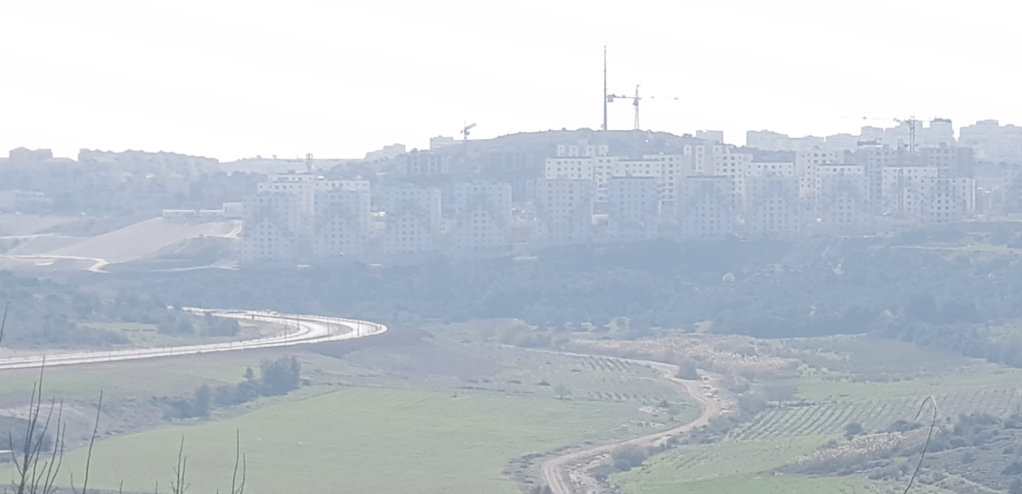
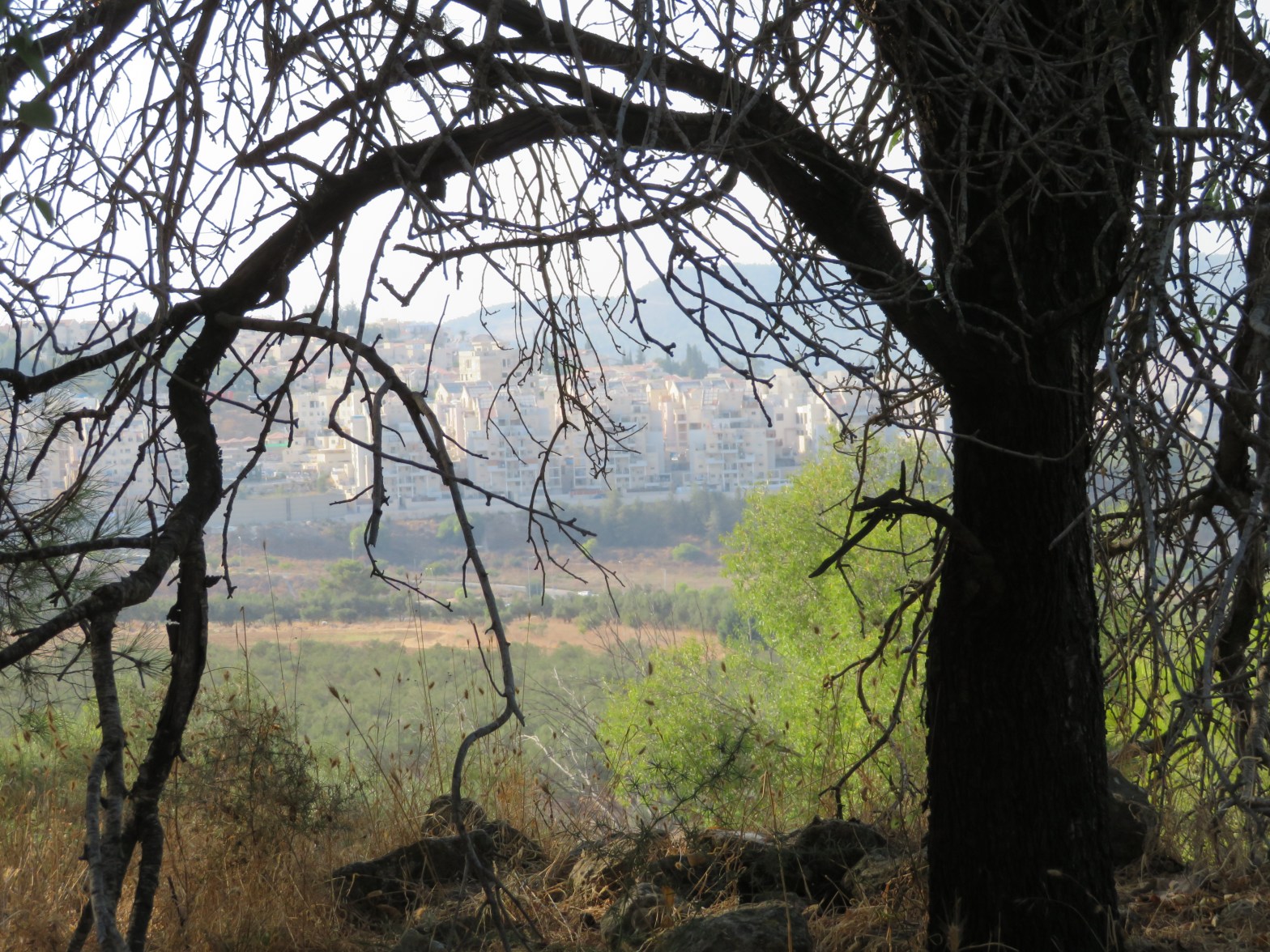
At the time we were learning to live with the changing landscape seen from our home, I was working as the City Engineer for the Bet Shemesh Municipality. I was involved in the urban planning of the future neighborhoods of Ramat Bet Shemesh, planned and built by the government, for over 150,000 inhabitants, to be annexed to the original Bet Shemesh, at the time a small town of scarce 20.000. Local residents expressed their distress at the Housing Ministry’s gargantuan intervention with their home town, without informing them, let alone consulting with them. Poignantly they protested “the rape of Bet Shemesh”. (Today Bet Shemesh numbers about 120,000 residents, and is planned and very rapidly growing to become a city of a quarter million.)
I was later commissioned the design of a school located next to the above mentioned electricity posts, the site clearly visible at the distance from our windows. Working in my profession, I was torn on the one hand between the satisfaction of participating in my country’s development, and on the other hand, the pain from the consequent destruction of the precious balance of nature, views and antiquities of my surroundings.
Looking out the back window of my home to Progress vanquishing Nature, rings a bell. The house I was born and grew up in in Bogotá Colombia, was also built at the edge of the city. In the early 1950’s, the back windows looked into a marvelous landscape of woods and mountains. But by the time I was a young boy, roads and houses started to appear in the woods, and before long, the border of the city – and the proximity of the woods and the mountain – moved farther and farther away. This motive has accompanied my 6 decades of existence in the 20 and 21 centuries. The same motive was beautifully expressed in the popular Israeli song from the 1950’s Gan Hashikmim (Garden of the Sycamores), referring to the rise of the new city of Tel Aviv at the expense of the native Sycamore trees.
Garden of the Sycamores
lyrics: Ytzhak Ytzhaki, music: Yohanan Zarai
Once upon a time here were Sycamores.
surrounded by sand and a landscape
the city of Tel Aviv in those days
was a sole house on the sea shore
and sometimes meetings were held
under the Sycamores in the shade
and near the trees the girls laughed
and answered in song “Hi Yalel”
Yes, this is, yes, this is
this is the garden of the Sycamores
there were many like these
then in those days
Tel Aviv grew suburbs around her
everything in it was planned and checked
built within her streets ,they forgot the Sycamores
and whitened their heads with dust
Everything here was built with the pace of the generation
stores and skyscrapers
but if we only turn our vision back in time
we will remember the green Sycamores
Yes, this is, yes, this is..
Today, the Sycamores have disappeared
just a sign with their name reminds
a few birds and and an orphaned bench
stands in the heart of the city.
and draws to it, when evening falls
and the leaves drop from the trees
a street person or a solitary walker
or a pair of young lovers.
Yes, this is, yes, this is….
https://lyricstranslate.com/en/gan-hashkimim-garden-sycamores.html
The new road flanks the hill on top of which Bet G’emal monastery stands. The entire hill and surroundings, property of the Vatican, is land used as ancient olive groves and agricultural fields. Thankfully, except for the new road that crosses it, the property remains as a large green lung in the center of the city. I pray the Vatican will not decide one day to sell the land to developers.
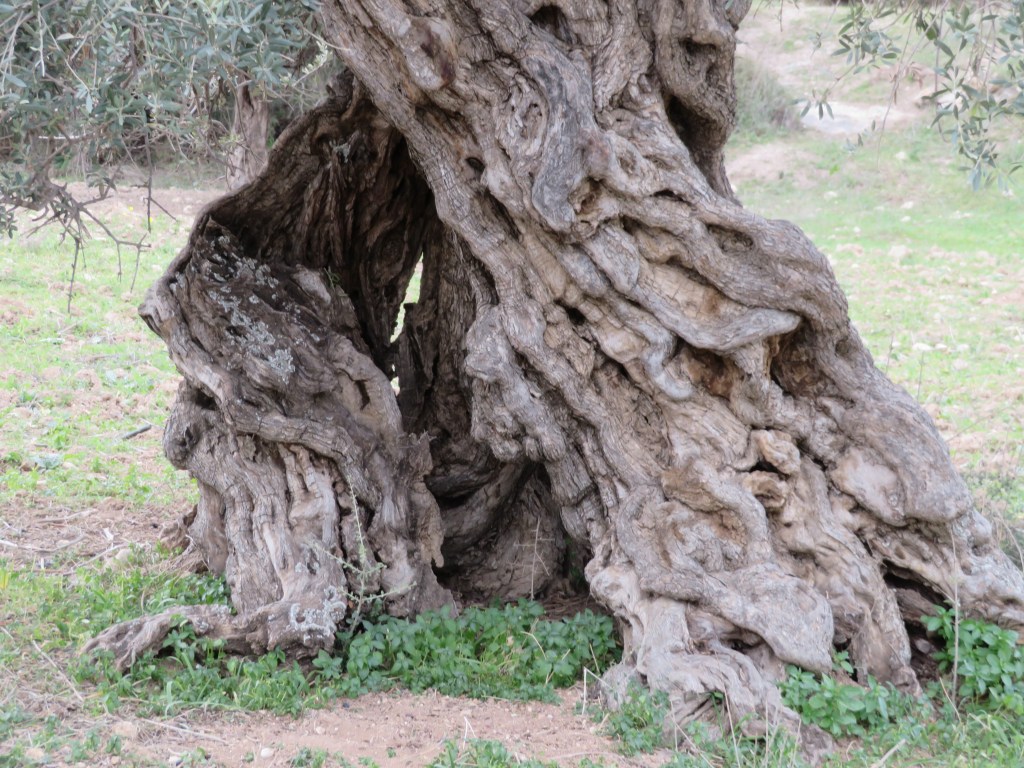
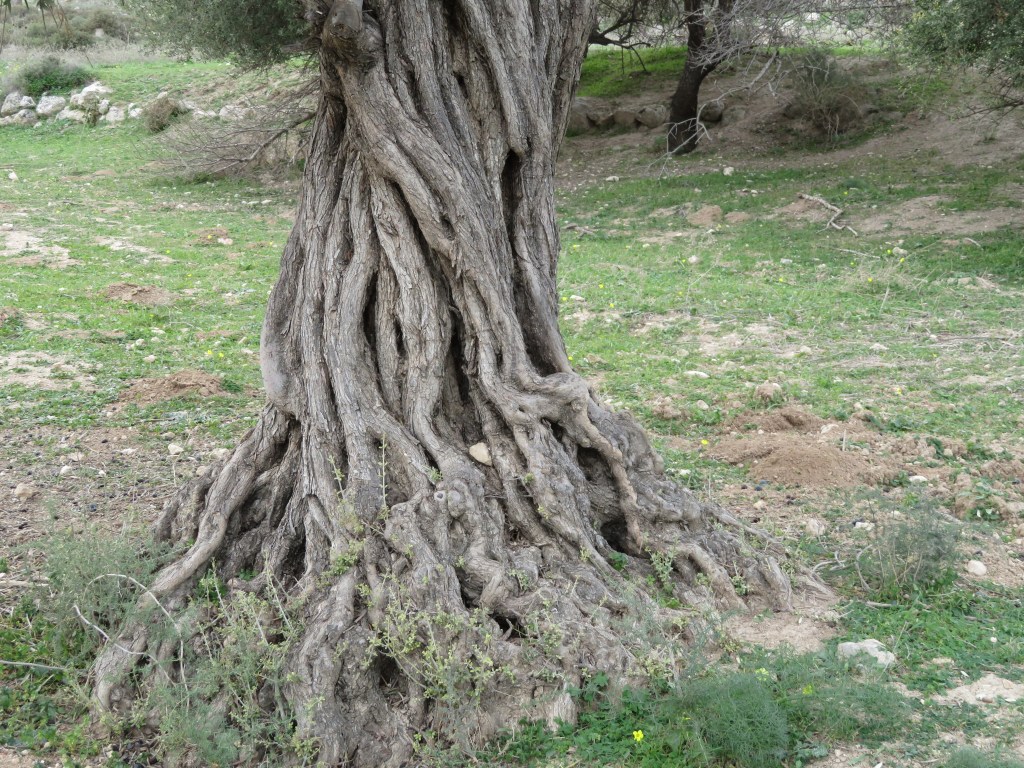
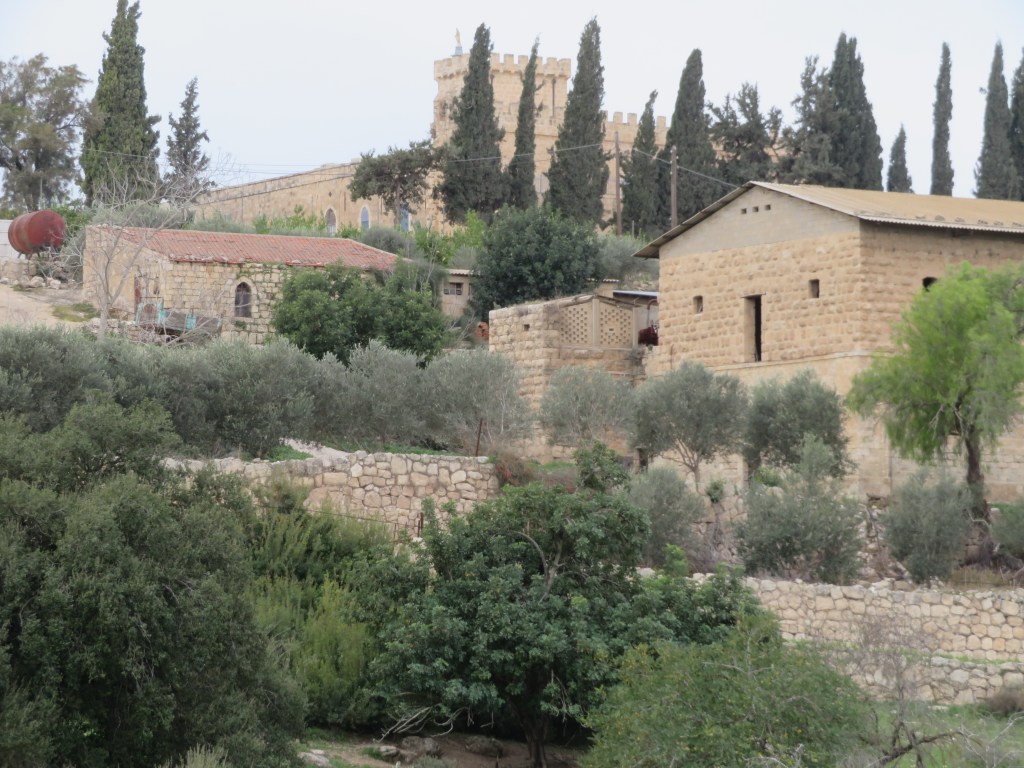
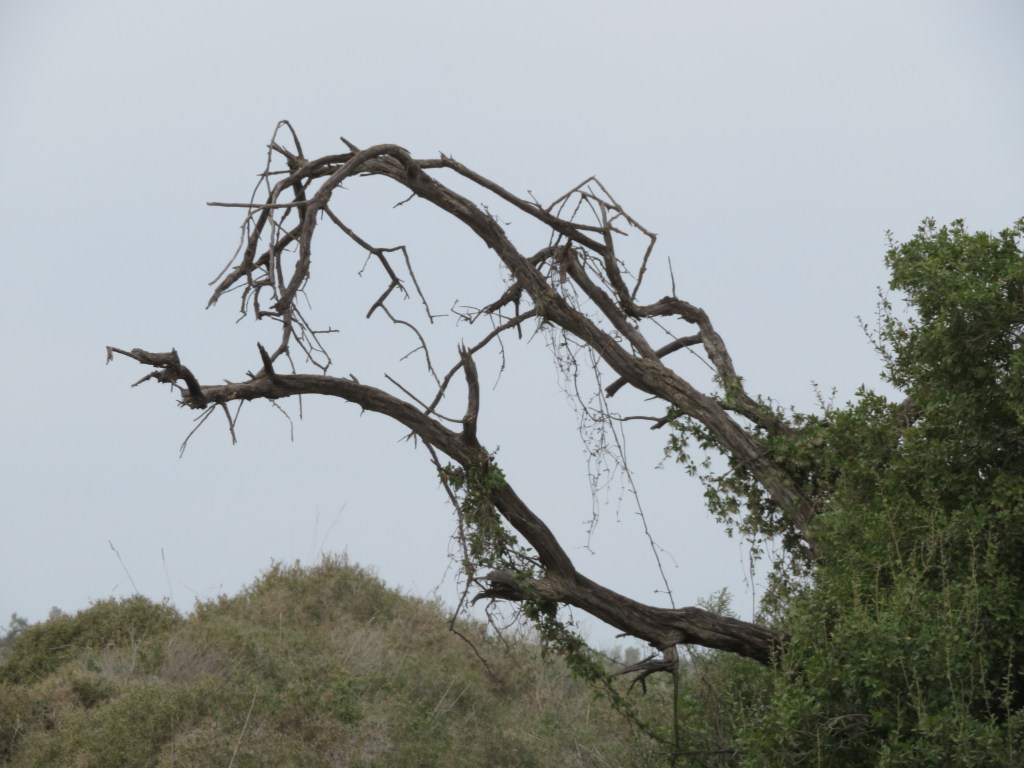
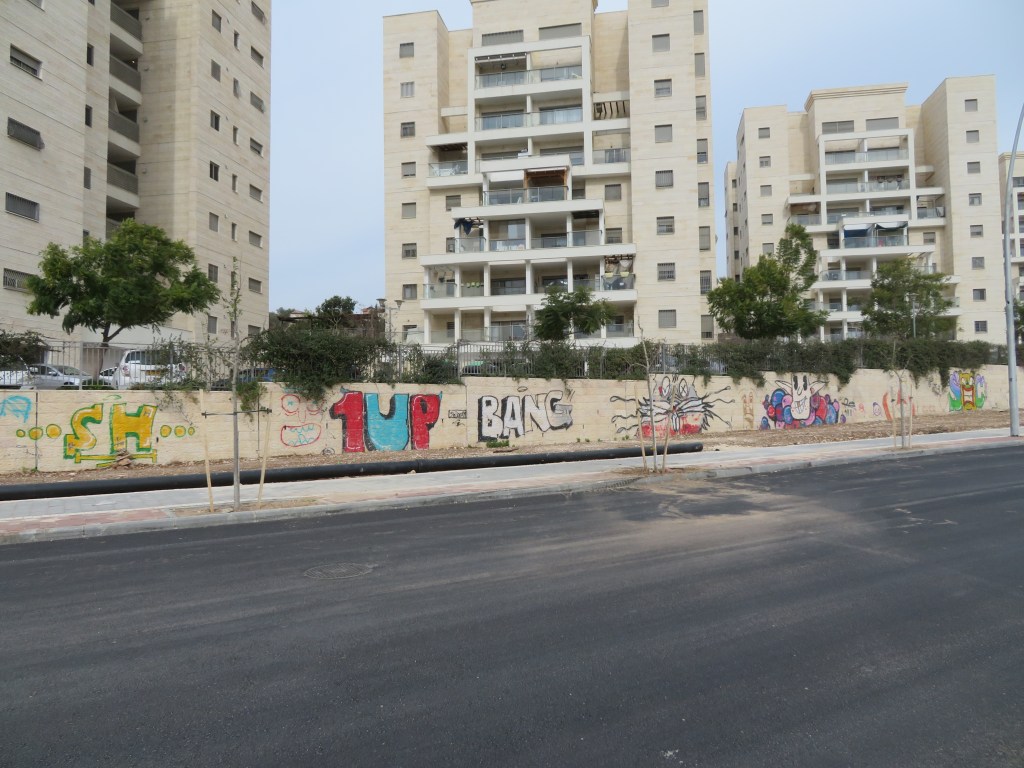
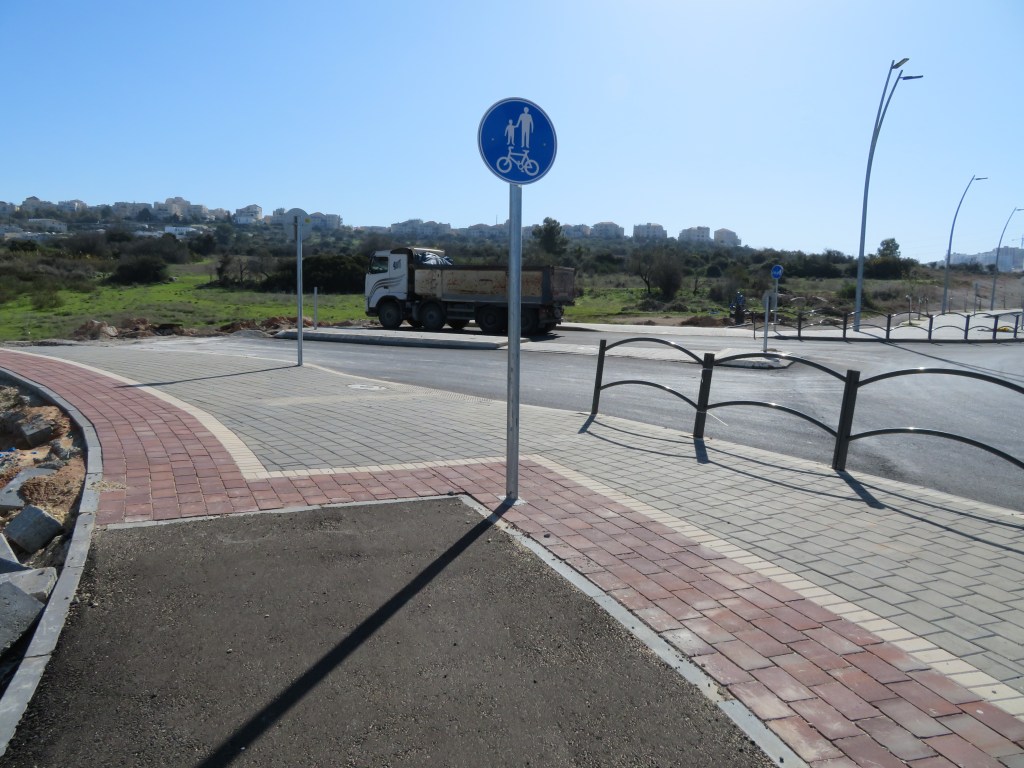
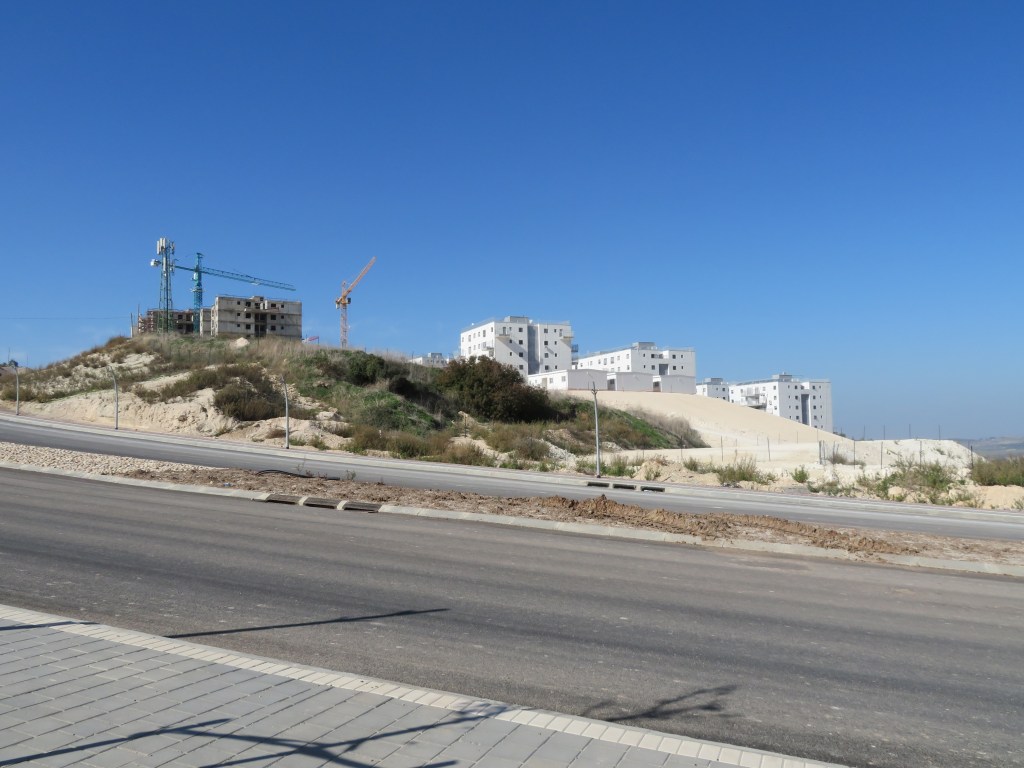
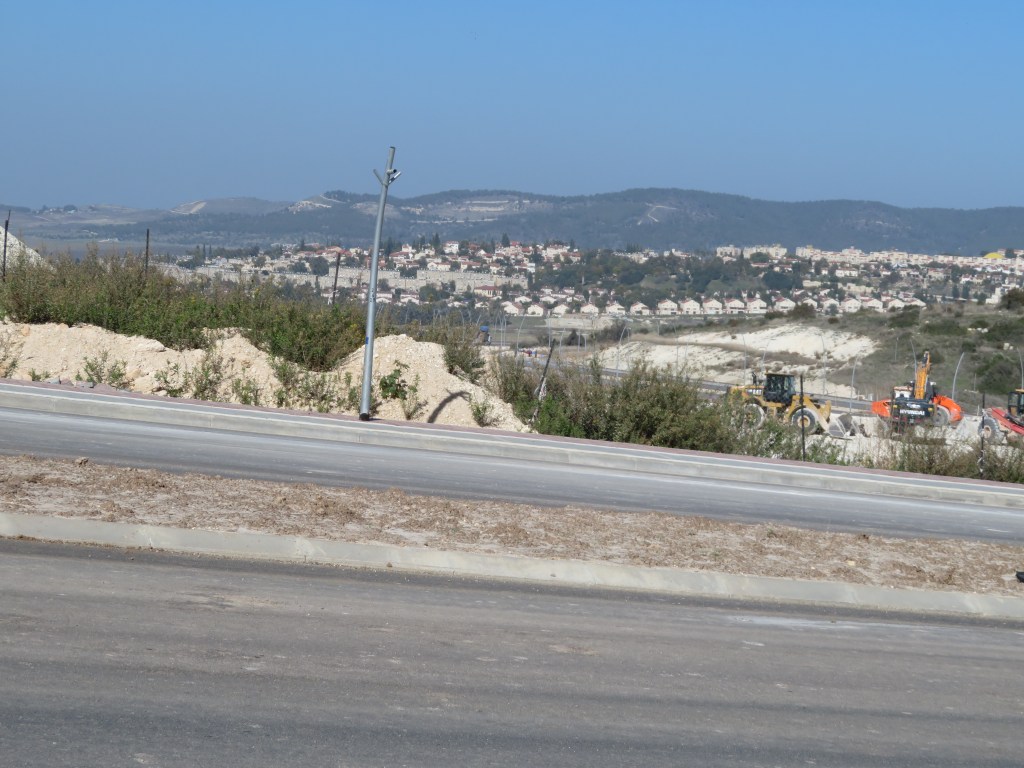

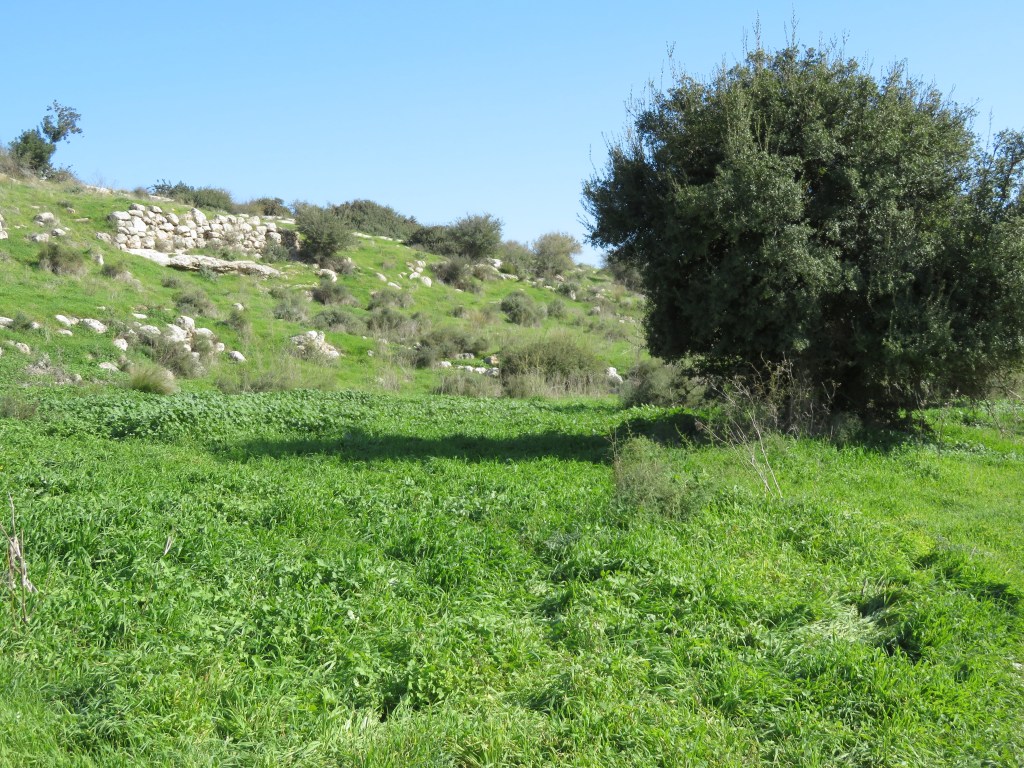
The new road ends at the foot of Tel Sokho, one of the rolling hills flanking the south of the Ela Valley. In the winter it is covered by an intense green mantle with native Mediterranean trees and scrub. In spring the hill is blessed with large breathtaking extensions of of purple wild Lupines. Upon hiking or biking on the tel, one will undoubtedly stumble on the very numerous remnants of ancient buildings, walls, mosaic floors, wells, cisterns, stone installations for producing wine or oil, burial graves, etc. I am relieved to know that Tel Sokho is part of Adulam Park, a vast swath of land legally designated as a nature reserve, where buildings, certainly cities, may not be erected. Some years back, the area was under threat of a shale fracking project, which fortunately became irrelevant thanks to the fall of the world oil market.
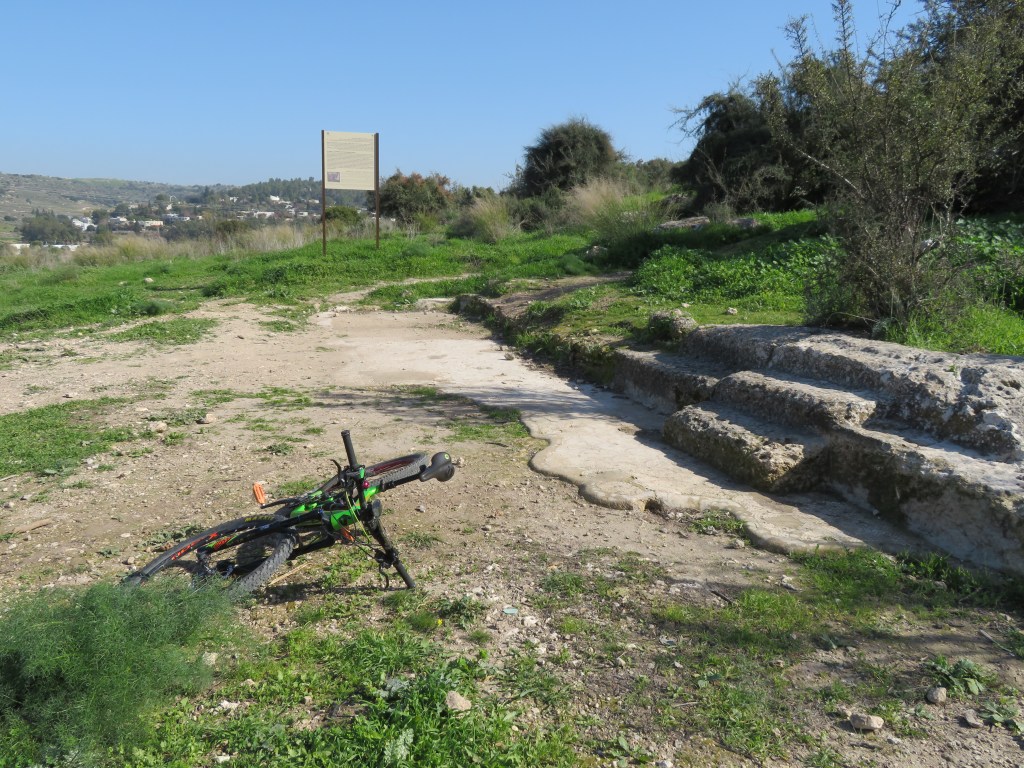
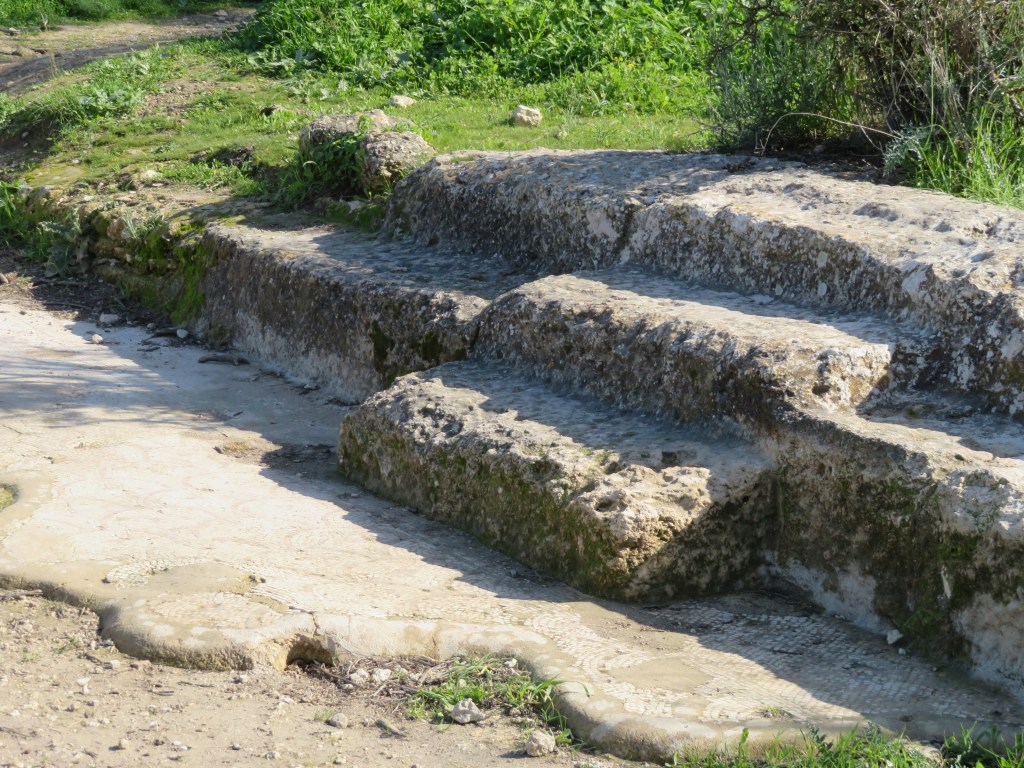
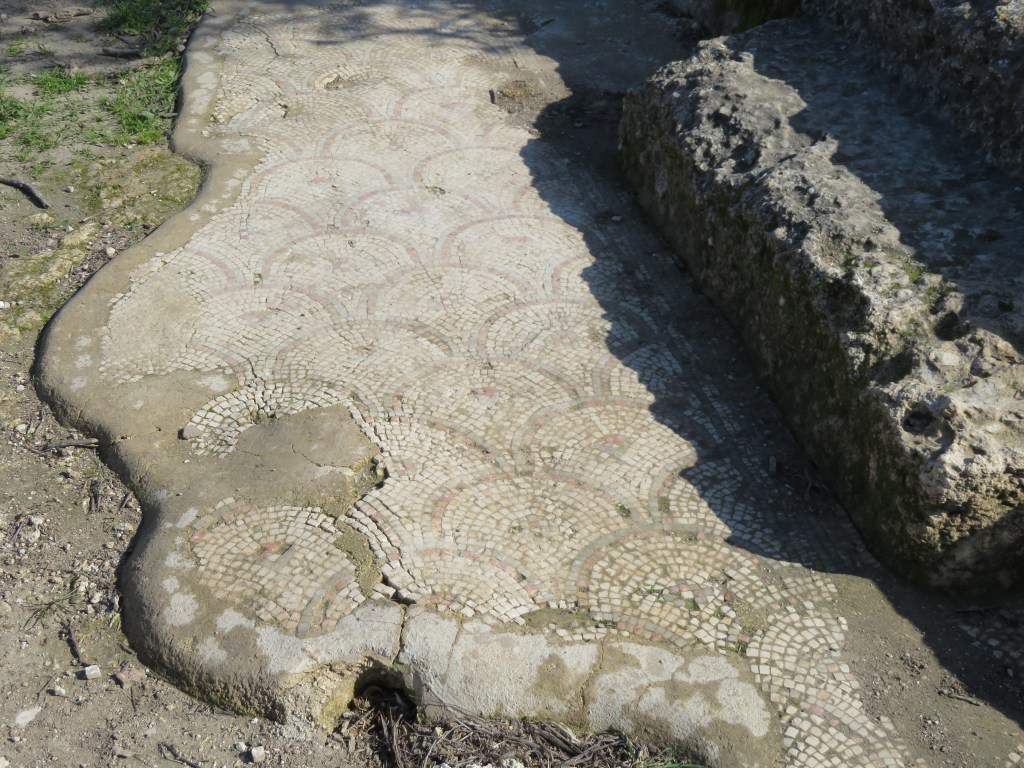
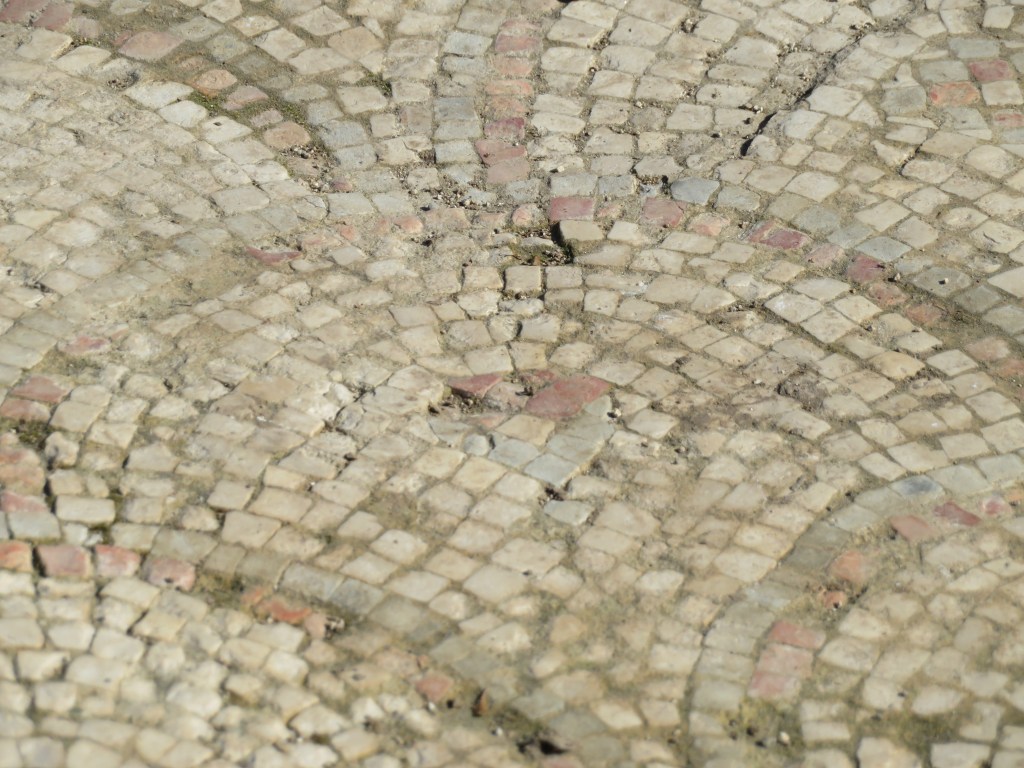
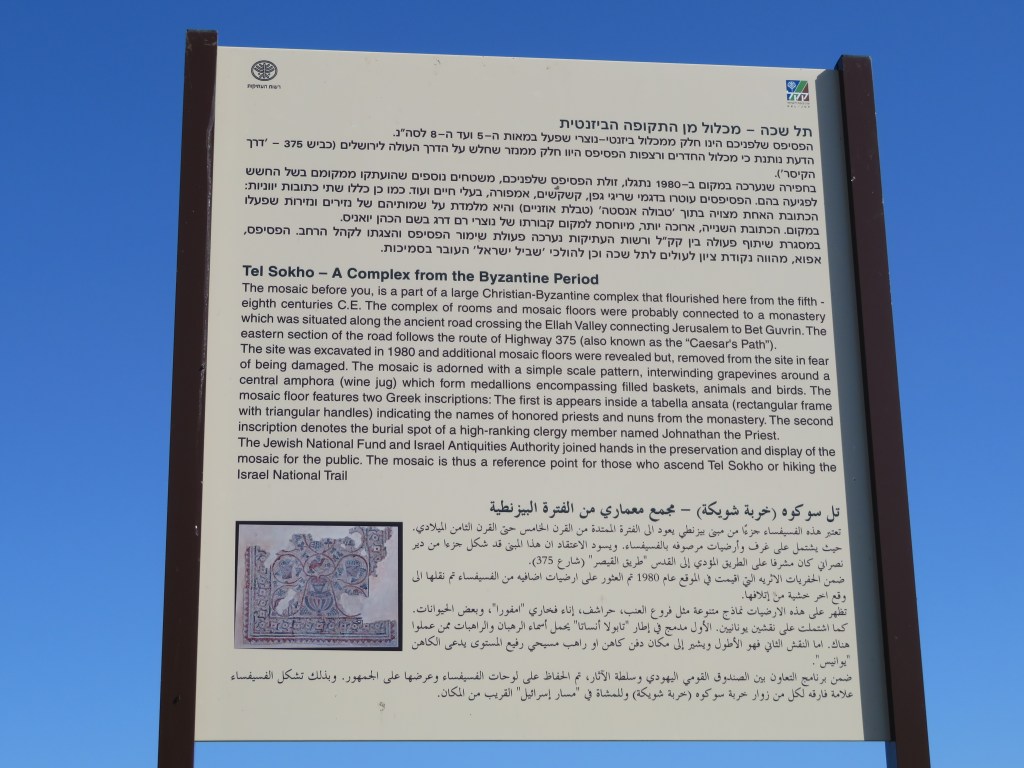
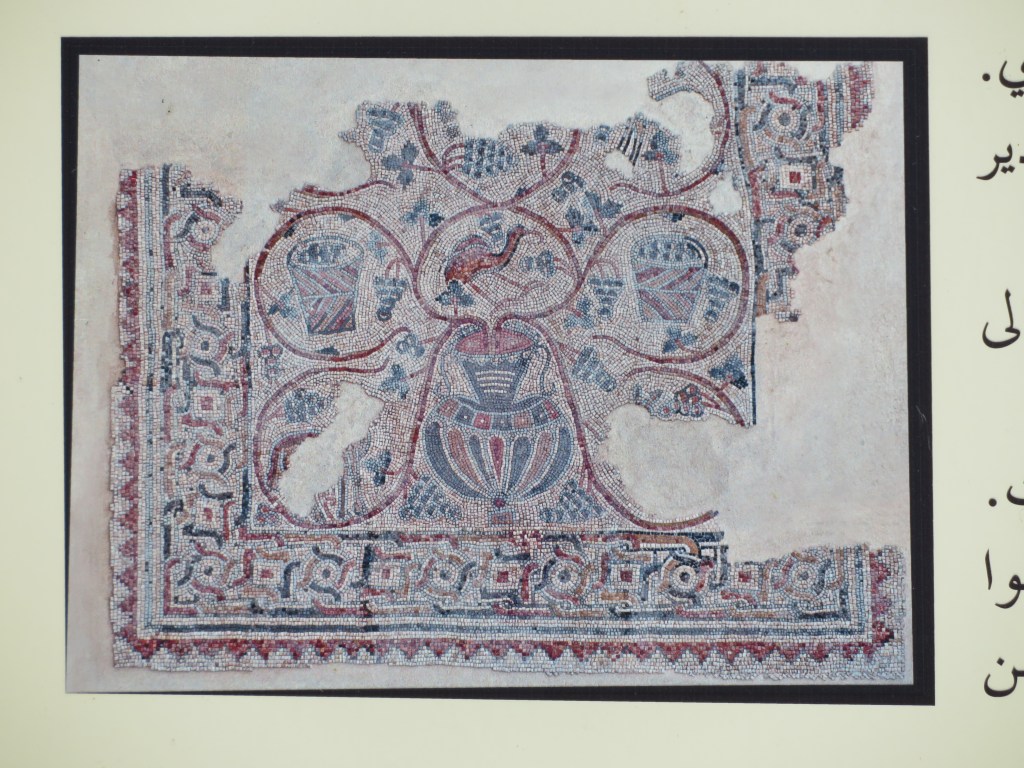
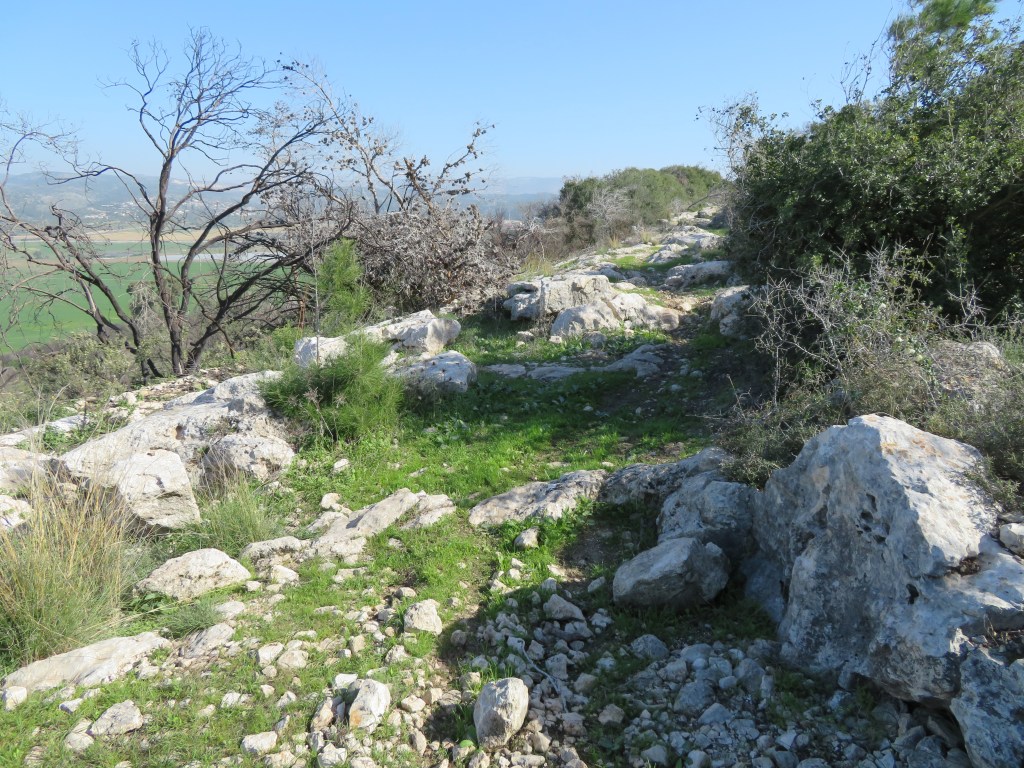
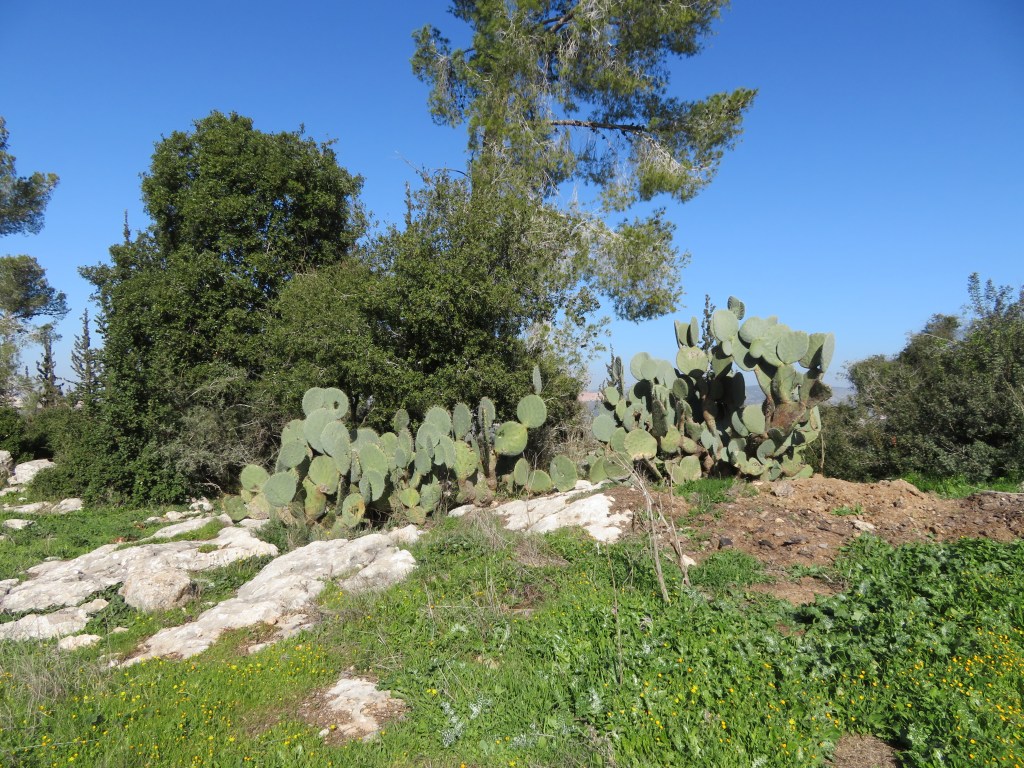

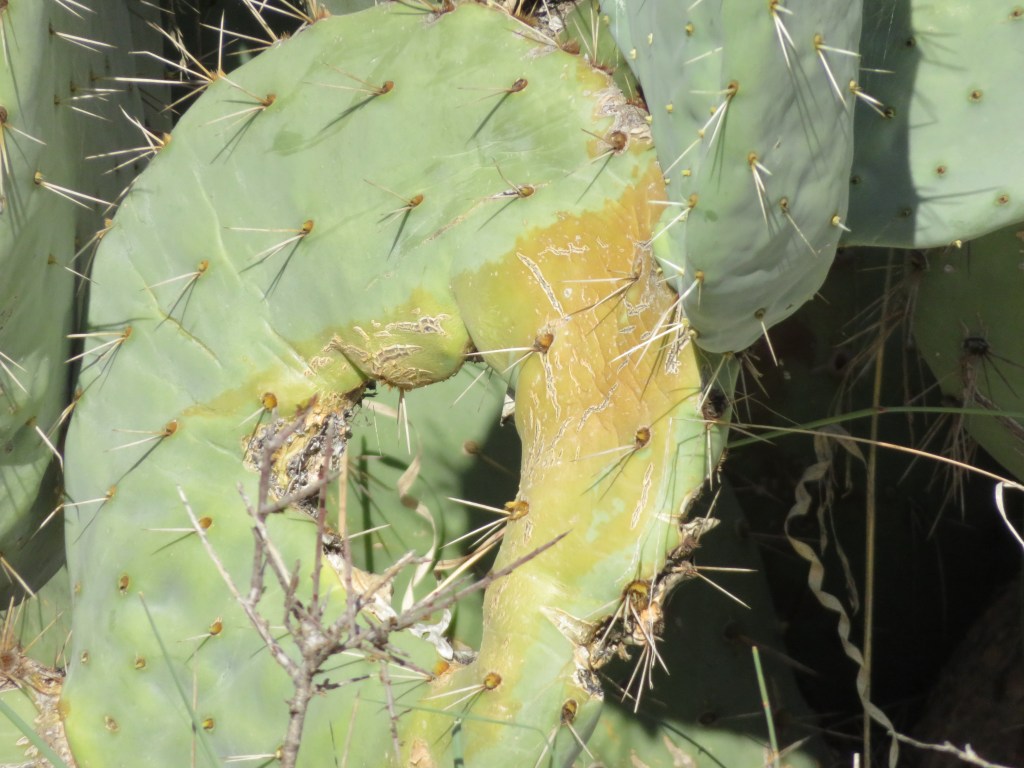
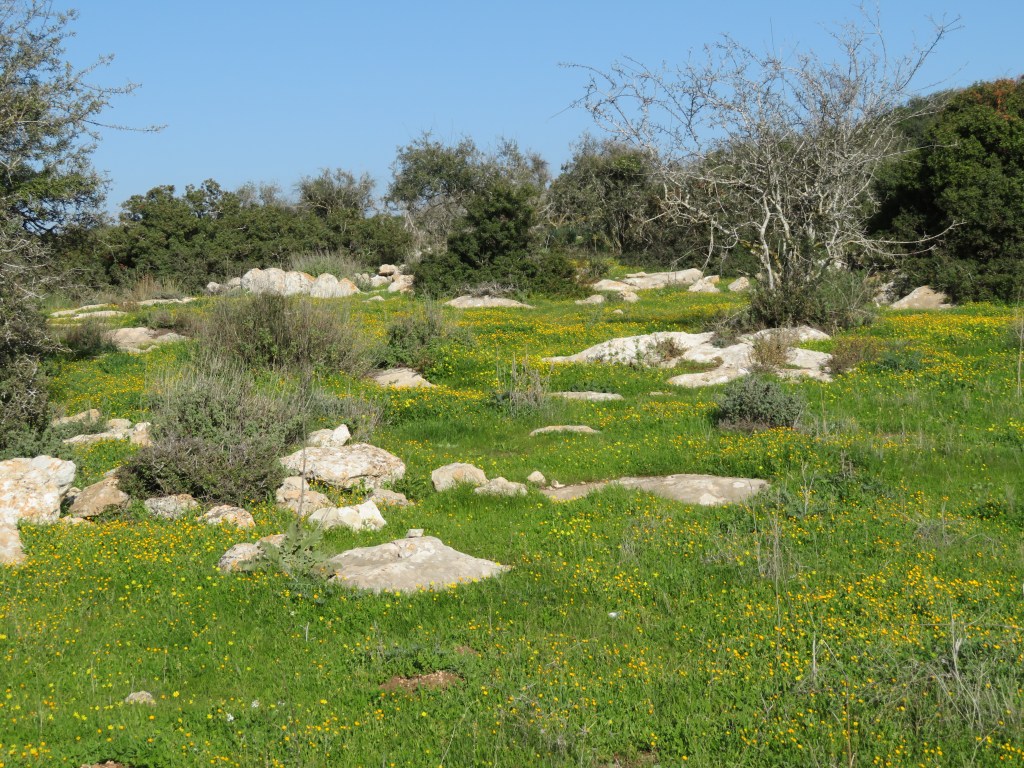
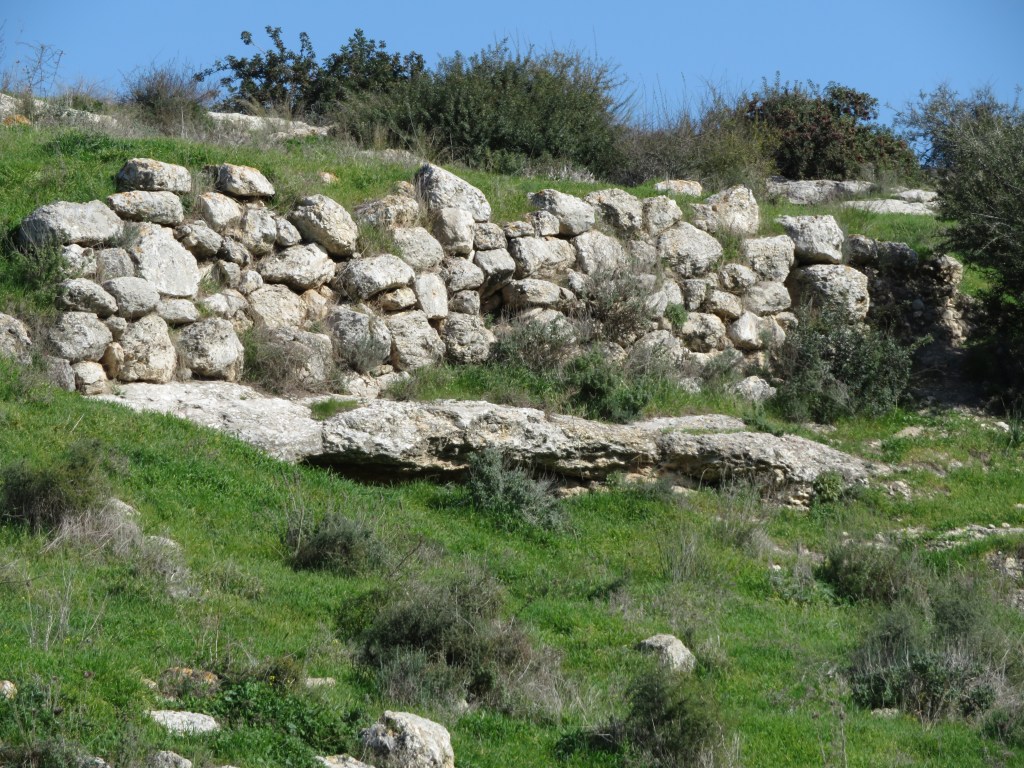
The considerable extension of the antiquities of the site, and its prominent and strategic location on the Ela Valley, are eloquent evidence of the dominant presence of human beings, of a vibrant city. Whereas Ramat Bet Shemesh speaks, or rather screams, about a new city devouring the woods and the fields, this site is the opposite. Sokho gives testimony of how nature, in its full glory, and undisturbed for centuries, has taken over where the reign of human beings has receded.
In order to have an inkling of the cultural and spiritual life of Sokho in the third century b.c.a. – the Hellenistic Era, we read in Tractate Pirkei Avot, or Ethics from Sinai of the Babylonian Talmud, the teaching of the sage Antigonos of Socho:
Do not be like servants who serve their master for the sake of receiving a reward, but rather like servants who serve their master without the express intention of receiving a reward; and let the fear of Heaven be upon you.
Irving M. Bunim, Ethics From Sinai, 2nd edition, (New York: Phillipp Feldheim 1964), p. 46.
The Bible itself teaches us about the city of Sokho. More than a century before Antigonos, Sokho was part of the setting to the dramatic battle of David and Goliath described in the Book of Samuel. David, the brave young boy who will in the future become king, slays the fearful Philistine warrior Goliat with a stone slung from his shepherd sling. This battle served as theme of many famous art works.
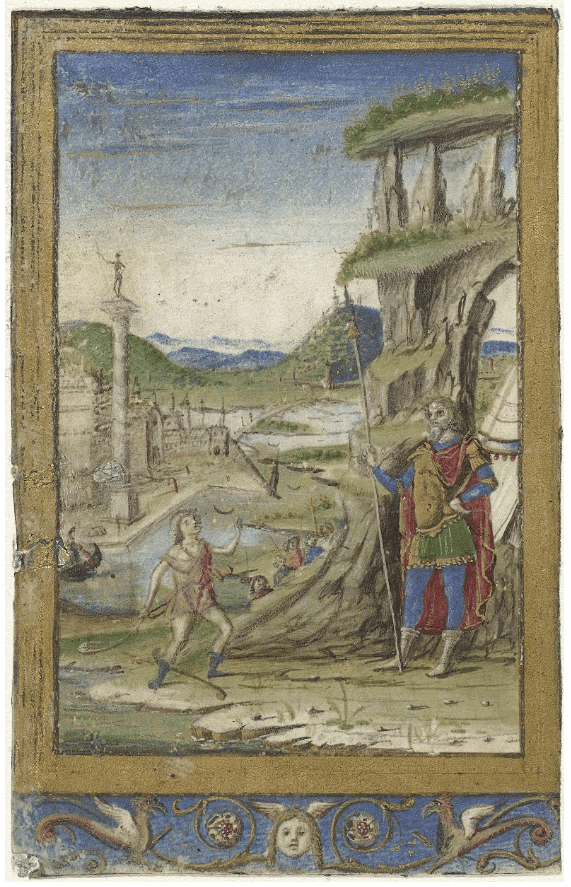
Did this European artist visit the site and depict its topography, adding buildings and water from his imagination?
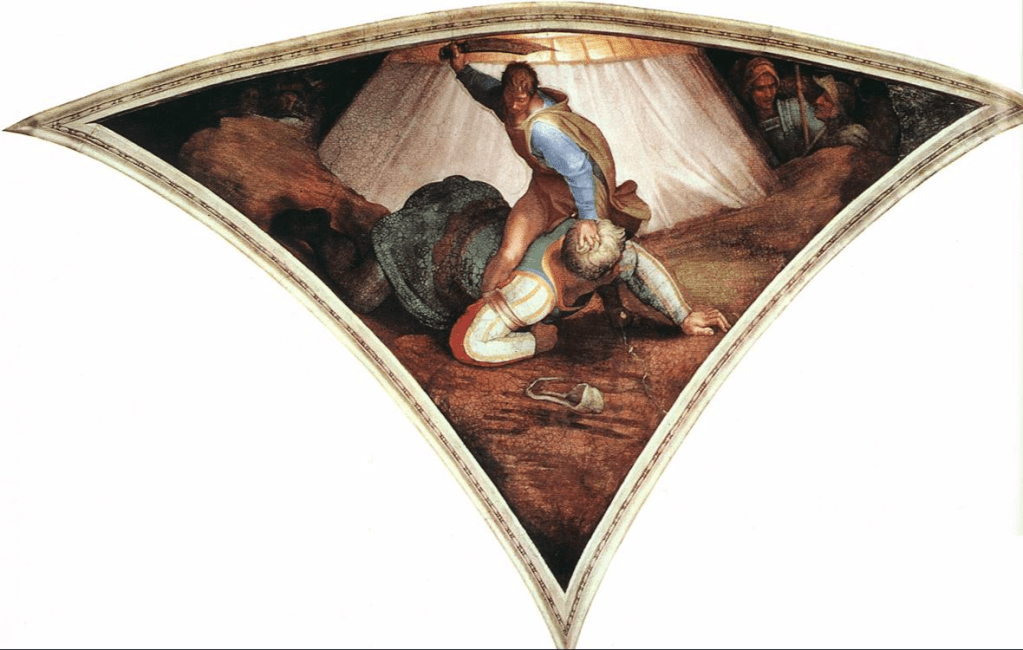
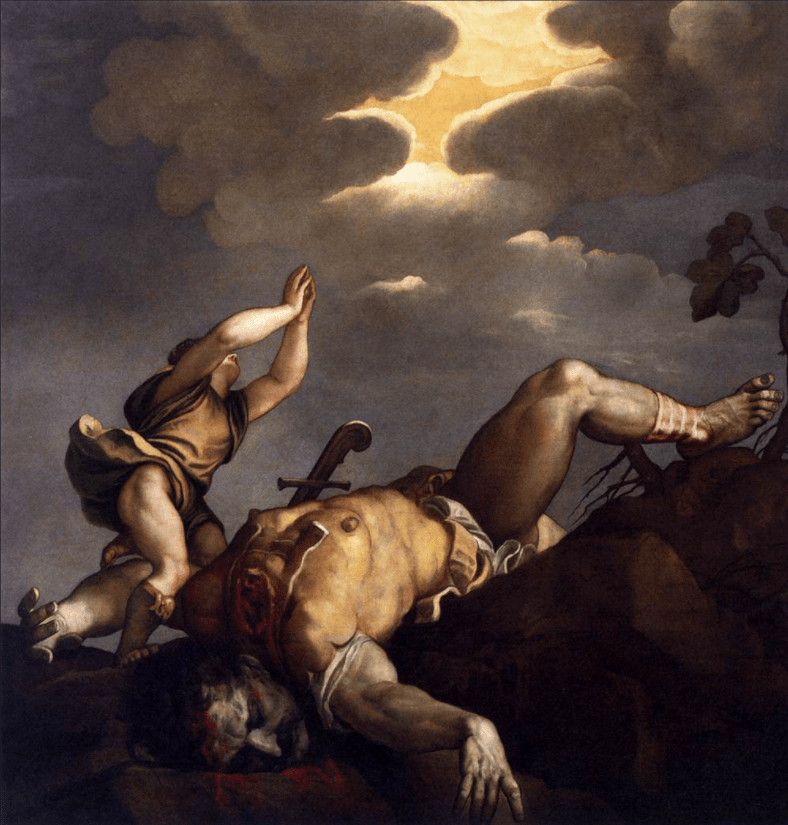
Now the Pelishtim gathered together their camps to battle, and were gathered together at Sokho, which belongs to Jehuda, and pitched between Sokho and ‘Azeka, in Efes-dammim. And Sha’ul and the men of Yisra’el were gathered together, and they encamped by the valley of Ela, and set the battle in array against the Pelishtim. And the Pelishtim stood on a mountain on the one side, and Yisrae’el stood on the mountain on the other side: and there was a valley between them.
The Holy Scriptures, (Koren Publishers, Jerusalem, 1980), 1 Samuel 17:1-3, p. 344.
Today we should read: Tel Sokho, nature and antiquities, stand on the mountain on the one side, and Bet Shemesh and progress stands on the mountain on the other side: and there is a valley between them.
Below, I share with you a short but interesting video of the history of the Bezalel Academy of Arts and Design Jerusalem. Besides being a prestigious academy, and one of the accredited 4 institutions of higher education for teaching Architecture in Israel, I have personal links to Bezalel. For one, my son Aaron studied Visual Communication at Bezalel, and thereby started his flourishing and inspiring career. My prior connection, to which I refer here, is that I rented and lived in a studio apartment in the academy campus. during the last period of my life as a bachelor.
A long stone wall with two openings, runs the length of one of the sides of the street. The wall surrounds the original Bezalel Academy complex, which includes the residences of the founders, the Schatz family. Back then, when I rented the flat, the street had narrow sidewalks and much car traffic, a bustling downtown street. Today, Bezalel street, in the center of Jerusalem, is a pleasant pedestrian street, with shops and cafes.

Click below for viewing a short video of the street December 2020:https://drive.google.com/file/d/1zCRo5eS3MQWEKi5RDQNhQ_K85cmUQ5wD/view?usp=sharing
In the summer of 1981 I was looking to rent a flat in downtown Jerusalem. I saw a newspaper add of a place at Bezalel St. no. 3, I made an appointment and went to take a look.
Upon opening the wooden door at Bezalel 3, I suddenly passed a threshold from the din of center of Jerusalem into a serene, charming world – the Schatz family homes’ courtyard. I found myself in a sheltered, silent, shady, inviting, courtyard that derives its character from its stone floors and stone walls, trees, vines and bushes, an old well, a family of beautiful Siamese cats, and last but not least, Louise and Zohara Schatz, the landladies (you hear about them in the video I am sharing below). The two sisters – in – law widows introduced themselves and welcomed me in, and I immediately realized I had had the fortune of falling in the hands of a pair of fascinating, extraordinary ladies. They led me to the apartment, lost at the end of the elongated courtyard. The back wall of the courtyard has two doors and a window.

Between the two doors was a sculpted, expressive bust of a bearded man – a copy of the head of Boris Schat’s famous “Mattathias The Hasmonean”. The left door, they explained, is the entrance to the Schatz family’s spacious art studio where Zohara at that time was producing her art. The blue door next to the studio was the entrance to the the charming abode they were offering to rent out. The compact apartment consisted in a simply but tastefully furnished living / sleeping space, a kitchen, and a bathroom, not more nor less than what I needed. In all, 4 apartments opened on to the courtyard. The two larger ones were the homes of Louise and Zohara, and the remaining two they rented out to tenants. I immediately realized that this was my dream home, and was ready to give them a down payment. They told me they had arranged to see other candidates, took my phone number, and promised to call the next day to inform me of their decision. Before leaving them, I asked them to please wish me good look. Apparently they took this request seriously, and the next day they called with their decision to choose me as their tenant. Louise and Zohara spent most of their days in their homes, and often came out to the courtyard and were happy to mingle. More than my landladies and artist aristocrats of the Schatz family, they were very pleasant neighbors and fascinating friends for me. I spent about a year in this very unique paradise in the heart of Jerusalem, and with mixed feelings left to a larger flat with Vicky when we got married. During my stay there, I received many guests, including Marianne and Enrique Wallenberg, family friends from Colombia. When they came to visit me, Enrique, himself an artist, was captivated by the place and immediately took out his paper pad and pencil, and sketched the following drawing, which we have hanging in our family room.


Here is the link to the video: https://youtu.be/X225kjuQfk0
Update 3/12/2020: We have fixed the bug, and hope you can now post your comments without any problem. Please do let me have your feedback!
I am aware that you are having difficulties commenting and interacting with my posts. I am working on this, and hope soon to have solved the problem.
Thank you for reading and following my posts!
40 years ago, October 1980, I started my first job as a graduated, employed architect. I had immigrated to Israel 10 months before, and enrolled at D’var Yerushalayim – Jewish Studies Academy – in Jerusalem, where I studied Judaism and the Hebrew language. I had arrived to my new country with very scant knowledge of the local language. Without much effort, I landed a job at David Best Architects, a leading architecture office in Tel Aviv, and after the High Holidays, left Jerusalem to a rented apartment a short bus ride away from my job. I had studied Architecture at Universidad de los Andes in Bogotá, and at AA School of Architecture in London, and came to Israel with my Diploma and working license as an Architect. Nevertheless, it took a while until I figured out how to hold a pencil at my new job. The challenge was greater, since I had to write the text on my drawings in Hebrew bold letters – this was still the era of hand drafting. An English colleague at the office by the name of Steve, who was an outstanding draftsman and a very generous person, went out of his way to teach me the Hebrew bold alphabet, and I soon was mastering that technique. My boss did not have enough patience for the rate of my breaking into the profession and into the new language, and after 7 weeks I received a nice red mechanical pencil together with my letter of dismissal. It did not take long before I found my next job at Itzhak Perlman, another large architectural firm in Tel Aviv. Thus began my career as architect.
40 years on, I sit back and look back at at my architecture career. I worked as an employee at several offices, the highlight being my year long position at world famous Moshe Safdie’s office in Jerusalem. I held senior municipal positions, I partnered with other colleagues, and to date have been managing my private studio. Striving for excellence, I have tried to merge the passions of my life: I love biking, and the synergy of combining this predilection with my professional skills, helped me specialize and become one of the leading architect offices in Israel in the field of planning and design of bike related projects. Often it was an uphill obstacle course, and I encountered no few challenges and disappointments, but at the end of the day, I look back with much satisfaction for the footprint my work has left, and my modest contribution to making ours a better world.
Coinciding with my 40th work anniversary, last month I reached my 67th year, which is retirement age for men in Israel. Nevertheless, I have no desire to retire, and feel full of energy and motivation, and thank G-d, enjoy good health. I intend to continue working, but having reached this important landmark, I have evaluated my course and decided to adjust and fine tune my goals, my mind set, and my occupational and professional activity to my present new stage of active life.
I am an architect to the core. I see the world with an architect’s eyes. Buildings, Place and atmosphere catch my eye and beauty makes my heart beat. Yet I am not just an architect. Architecture is a central aspect of my being, but it is only a part of it, there is much more. My essence, my values, my strengths and passions, my family and friends, all go beyond the world of architecture. What I do in life, and my occupational activities, both past and hopefully at my new imminent stage, correspond to the wonderful, multifaceted world that thankfully is mine.
I rode my bike from my home for about 15 minutes to one of the forests to the east of my home city of Bet Shemesh. I chose one of the many dirt roads penetrating the forest. After leaving the intensely lit fields, I relished the shade of the trees and my eyes adjusted to the softer light. The mountain forest landscape revealed itself, with the trees, the rotting tree stumps, the floor covered with layers of pine needles, leaves, shrubs and stones. The sights, the sound and the smell of the forest which I am so familiar with, and which I so cherish, spoke to me and welcomed me.
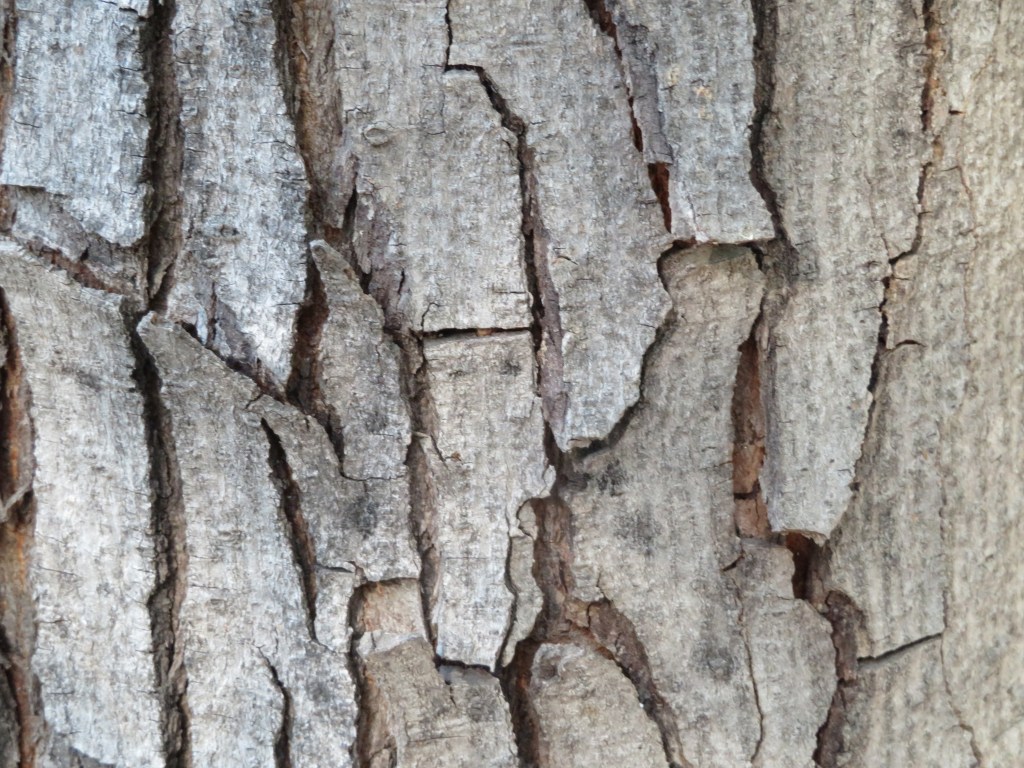
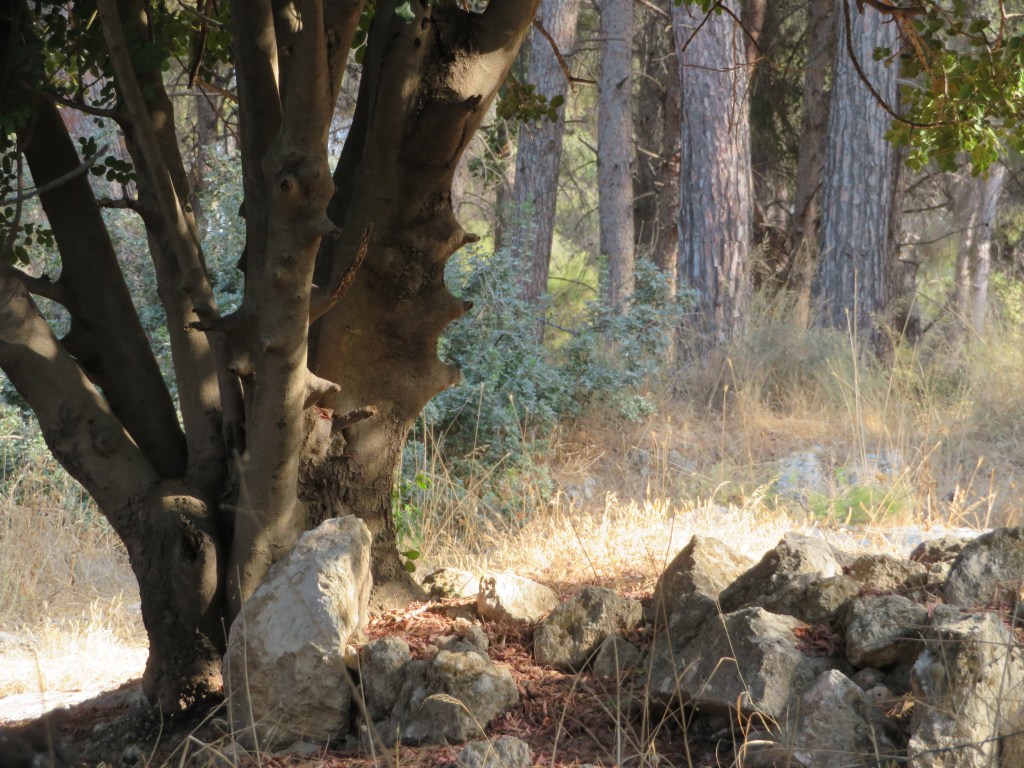
Yet, together with the spirit of the forest, I sensed an additional voice; an unmistakable voice of agony and tragedy. I seemed to hear the tortured tree trunks, the thorns and thistles and the piles of rubble cry oh, so sad a lamentation.
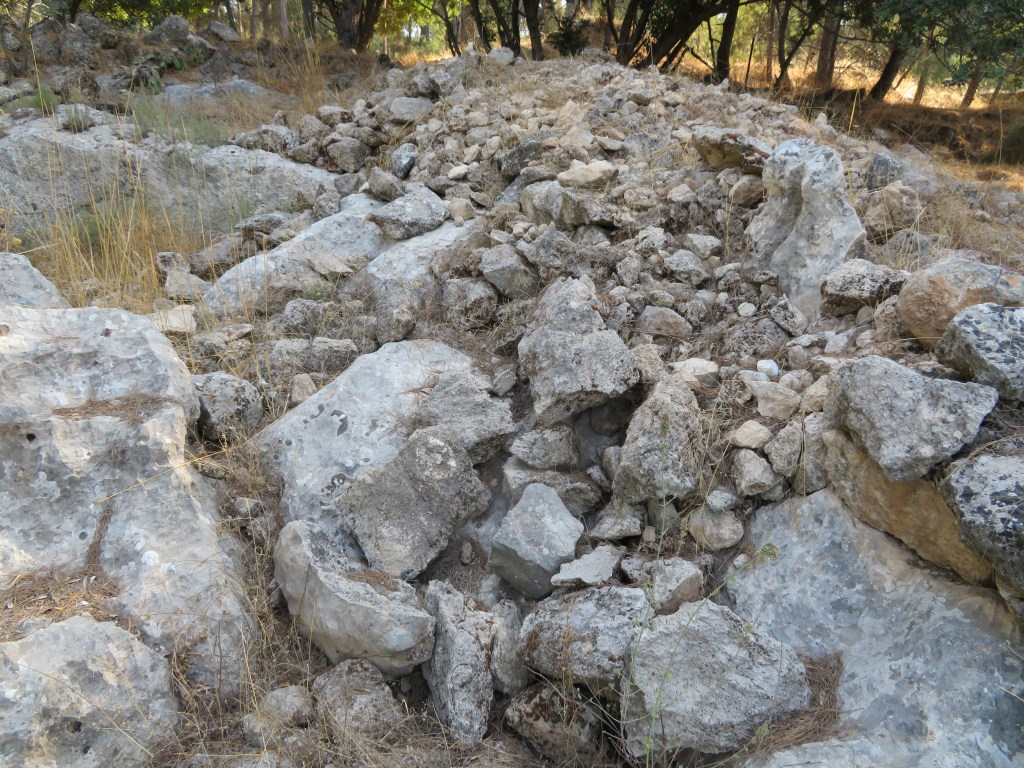
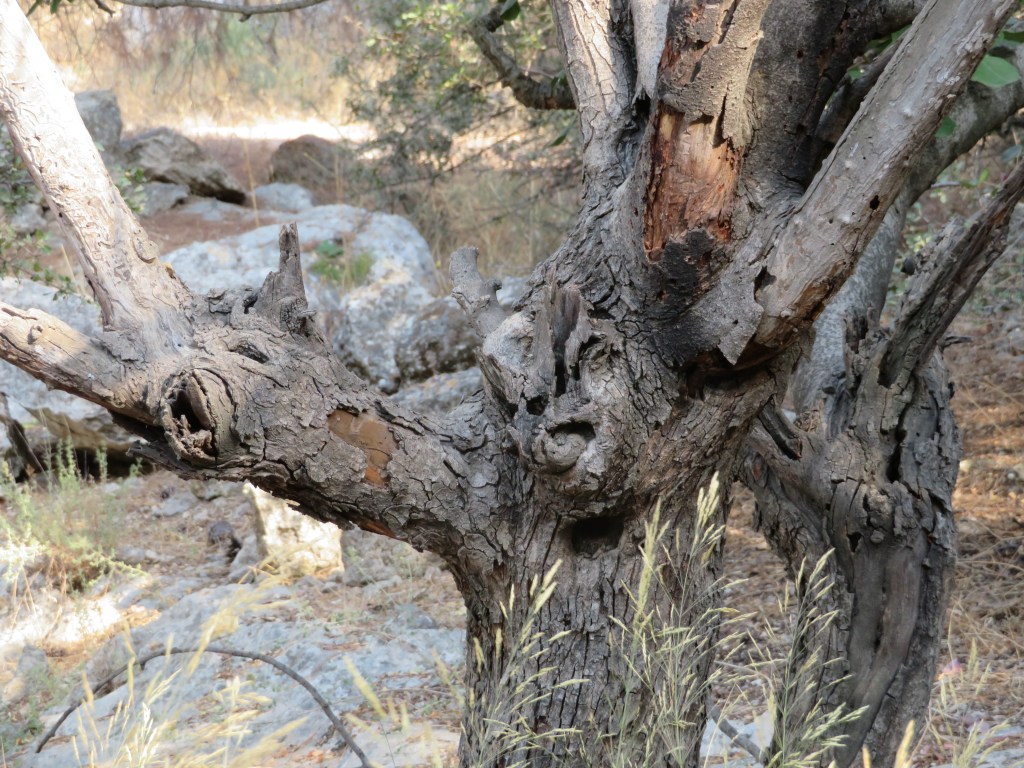
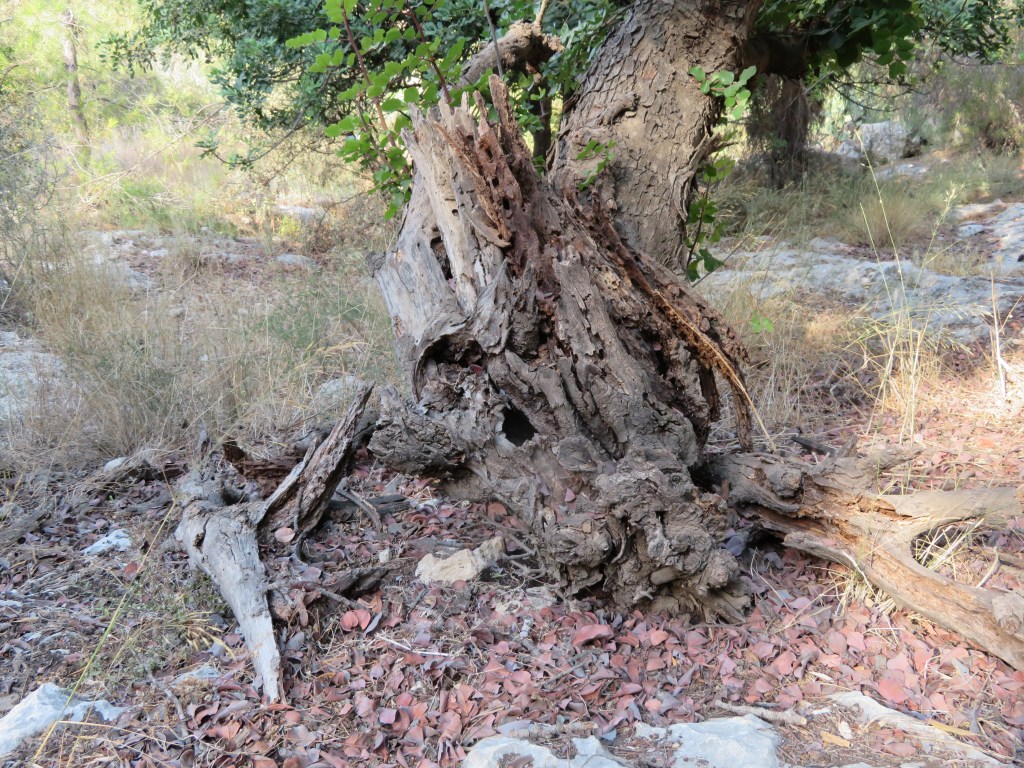
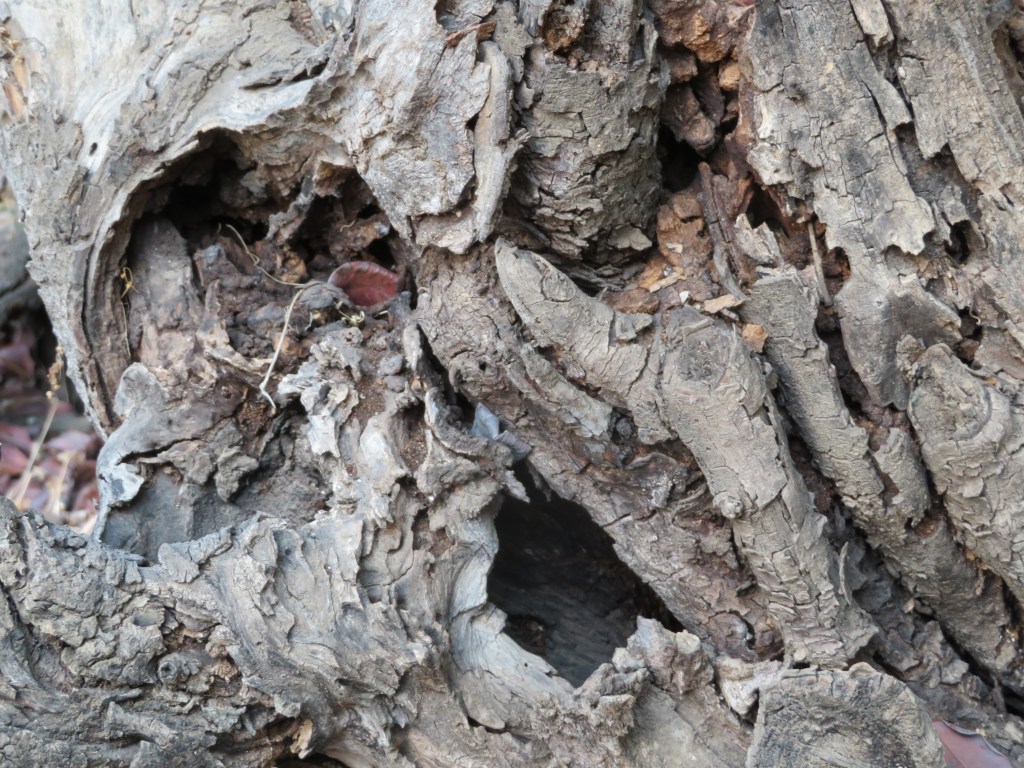
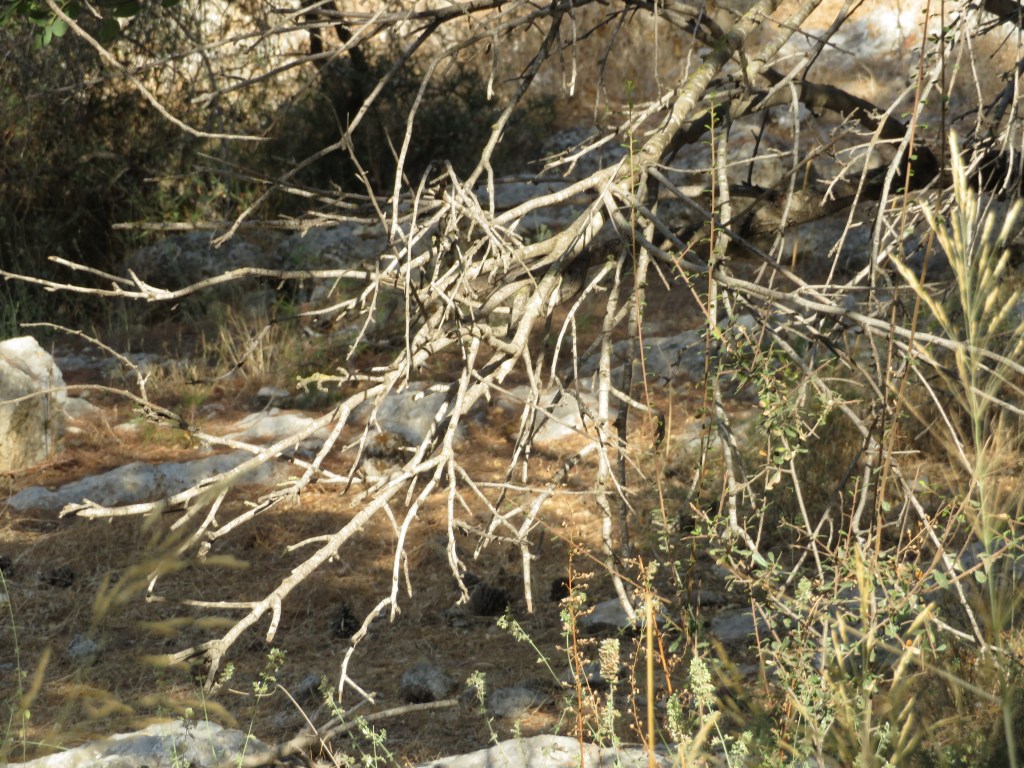
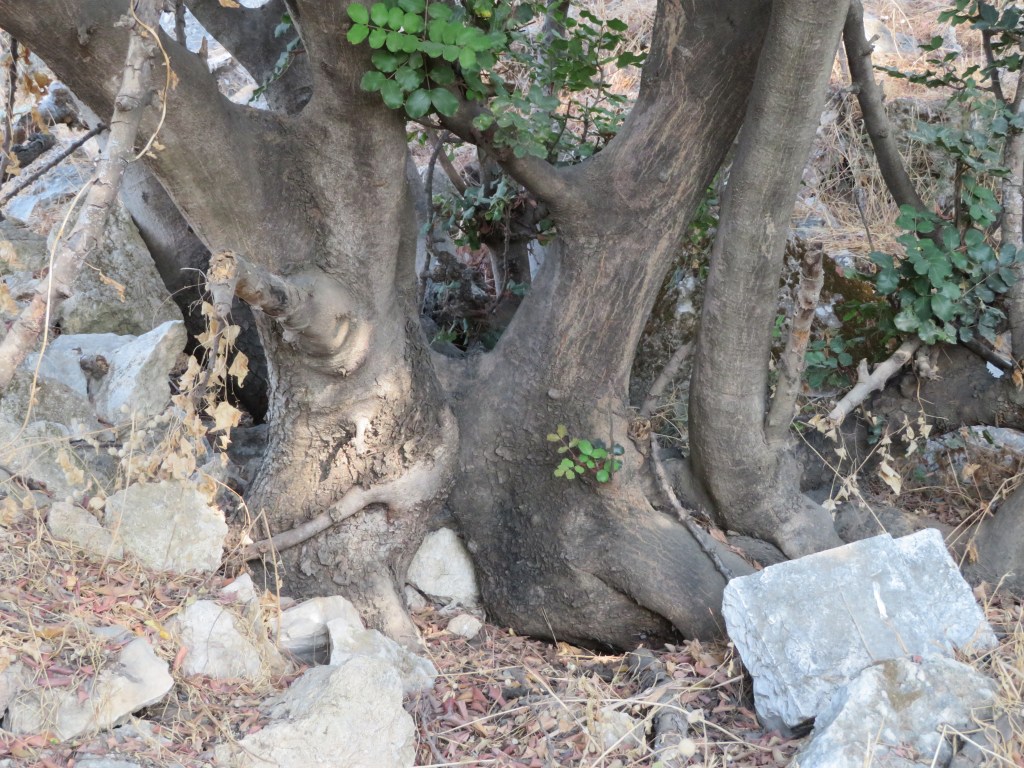
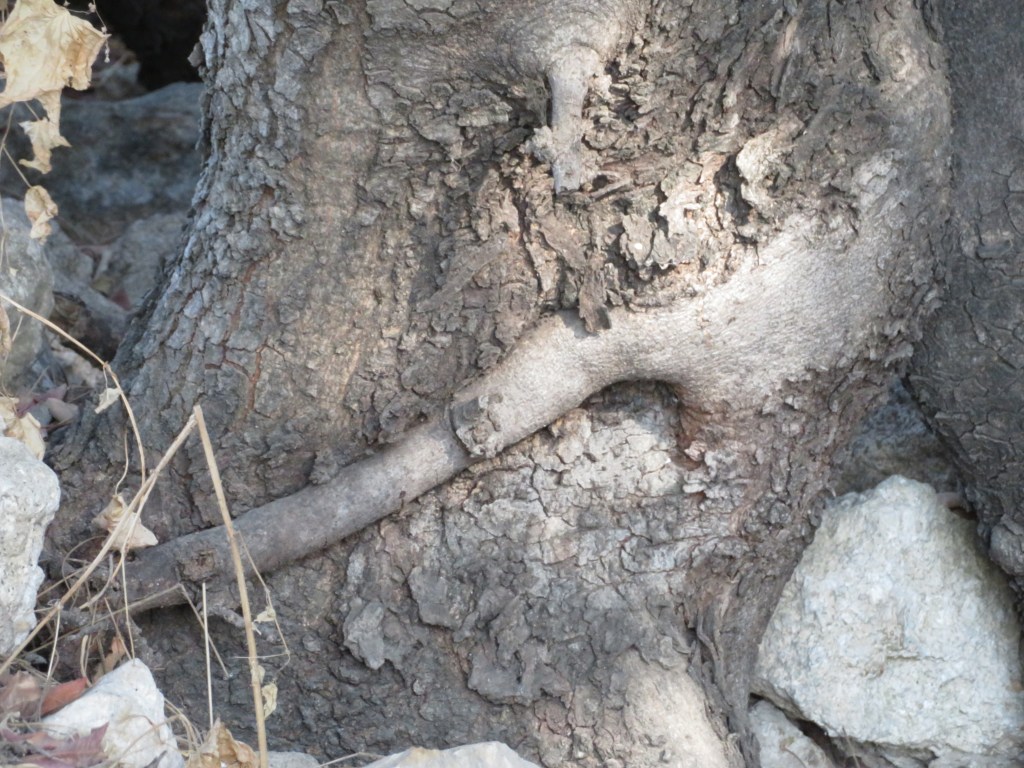
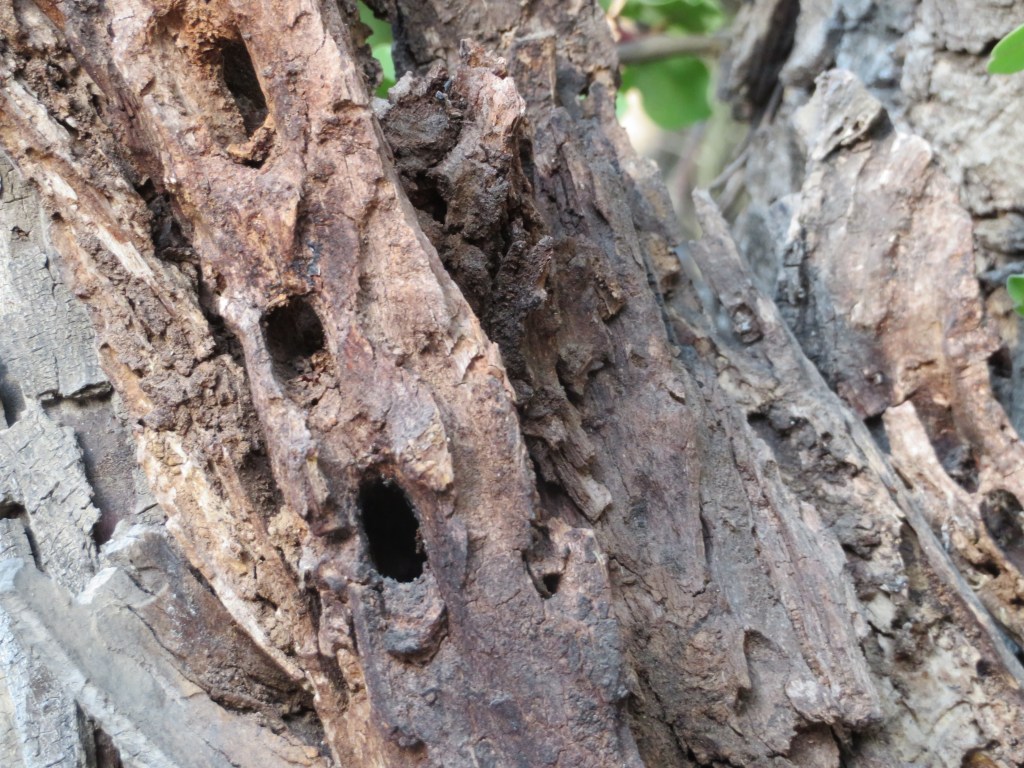
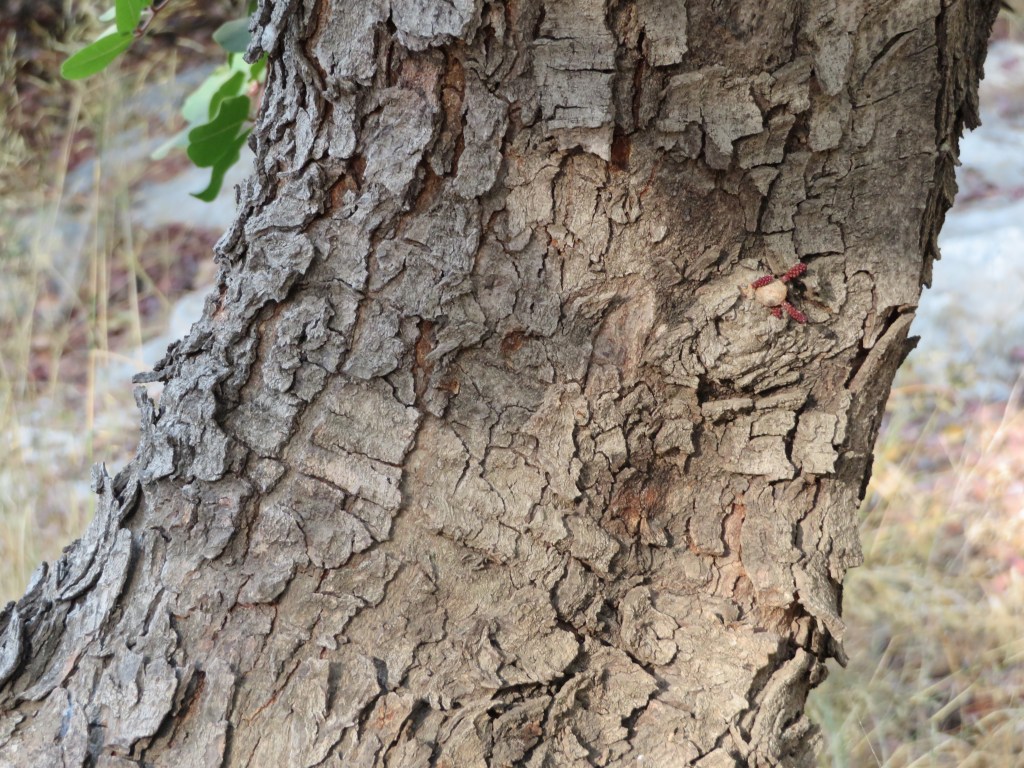
Why is this forest crying so? I biked on, and spotted a small rectangular shaped structure under a carob tree, camouflaged by the play of light and shade, by twigs, leaves and mosses. At first glance, it looked to me like part of the forest nature; but no, what I had found was a structure, built long ago by persons, subsequently abandoned by them, and finally devoured by the forest.
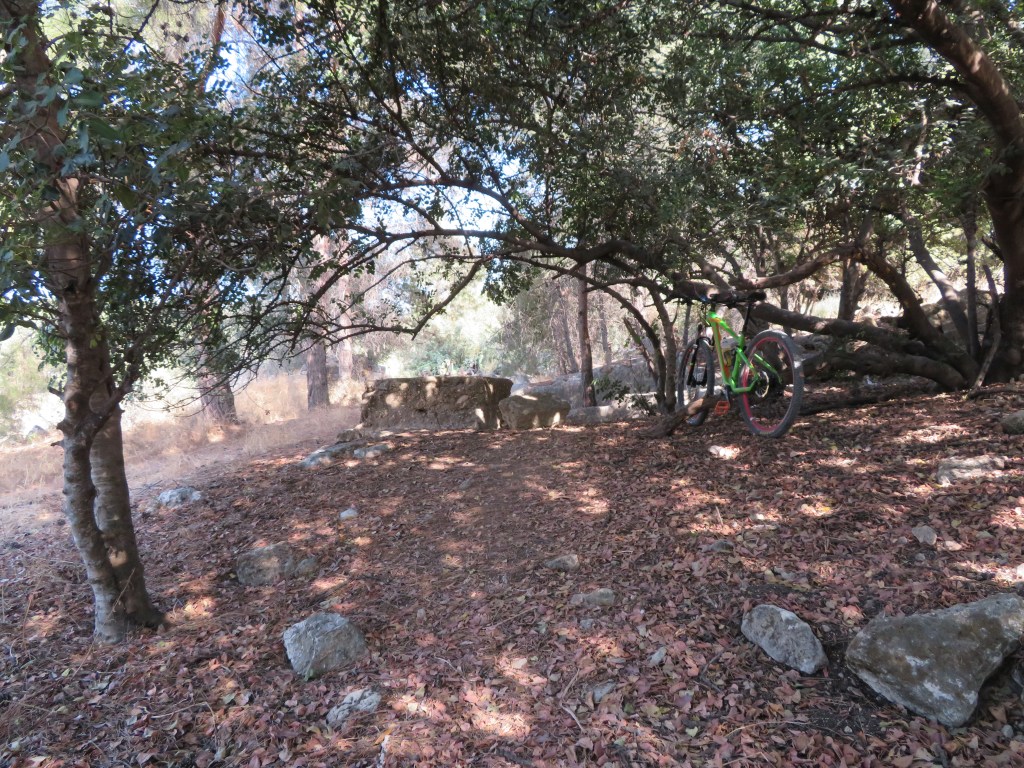
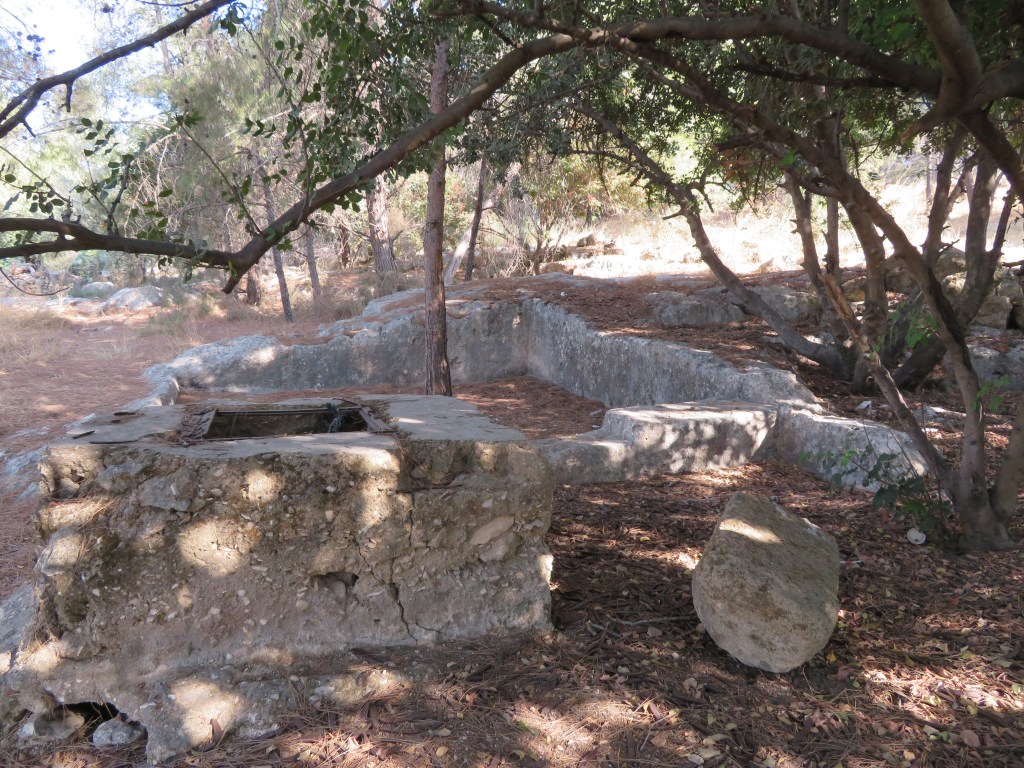
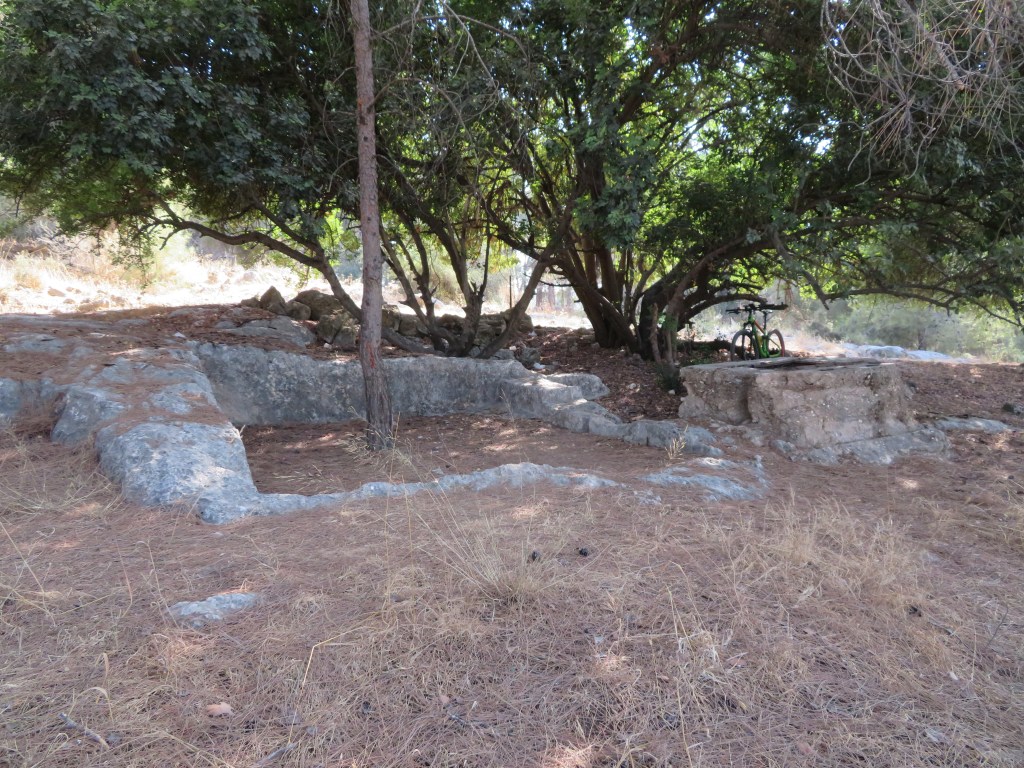
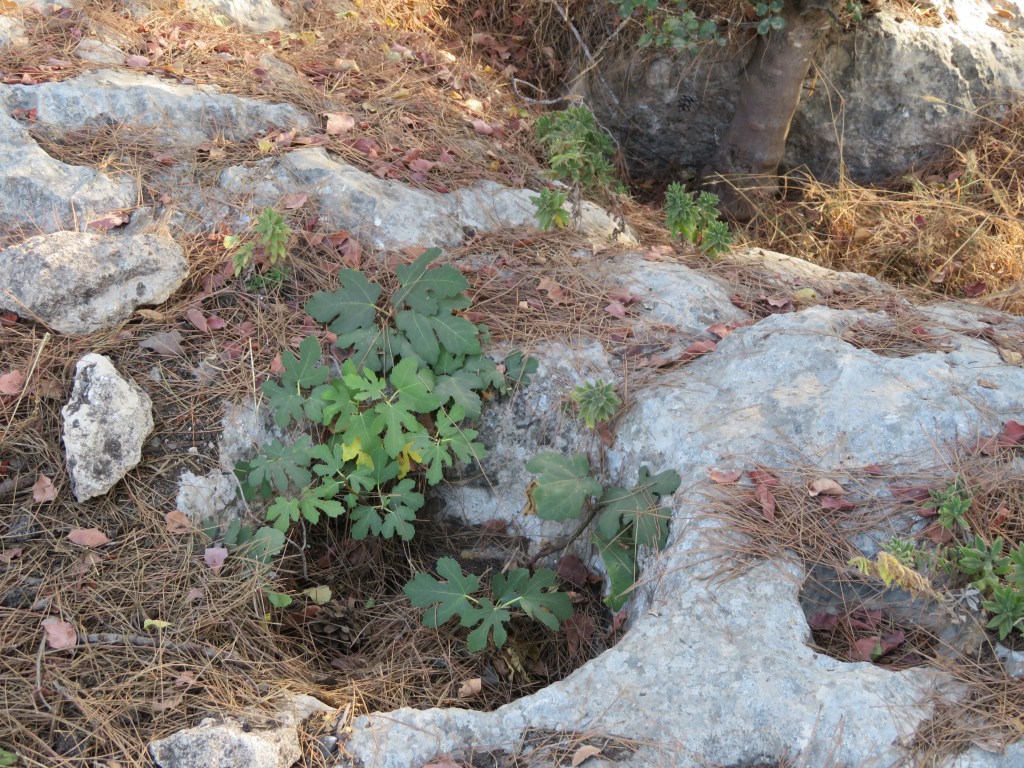
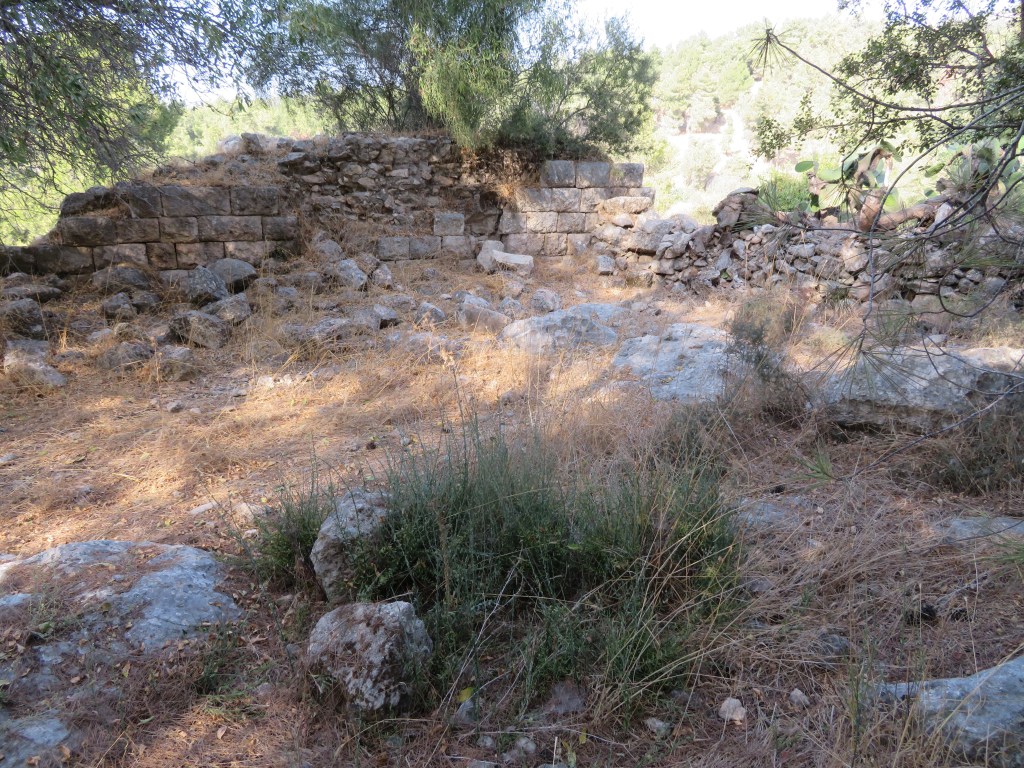
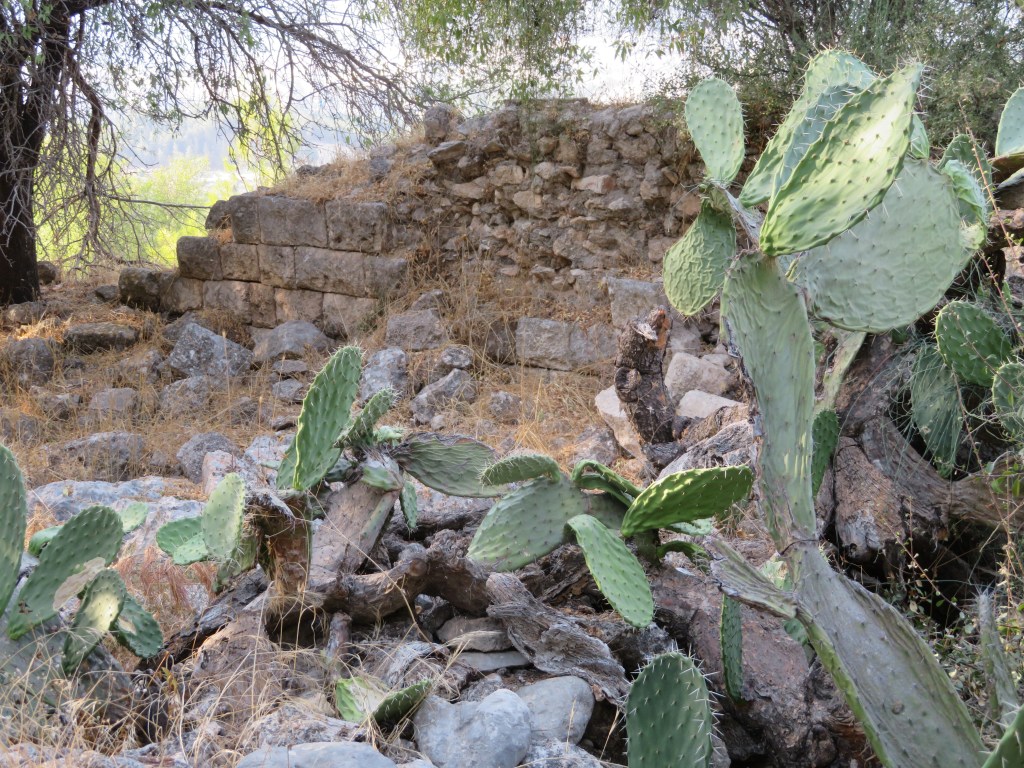
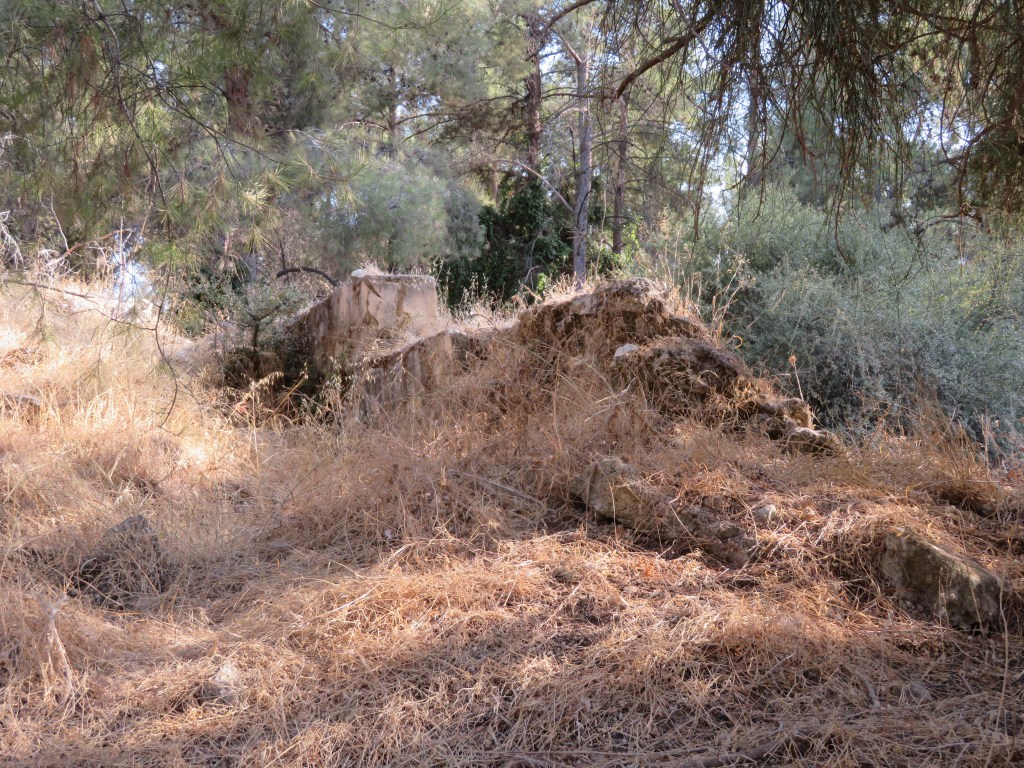
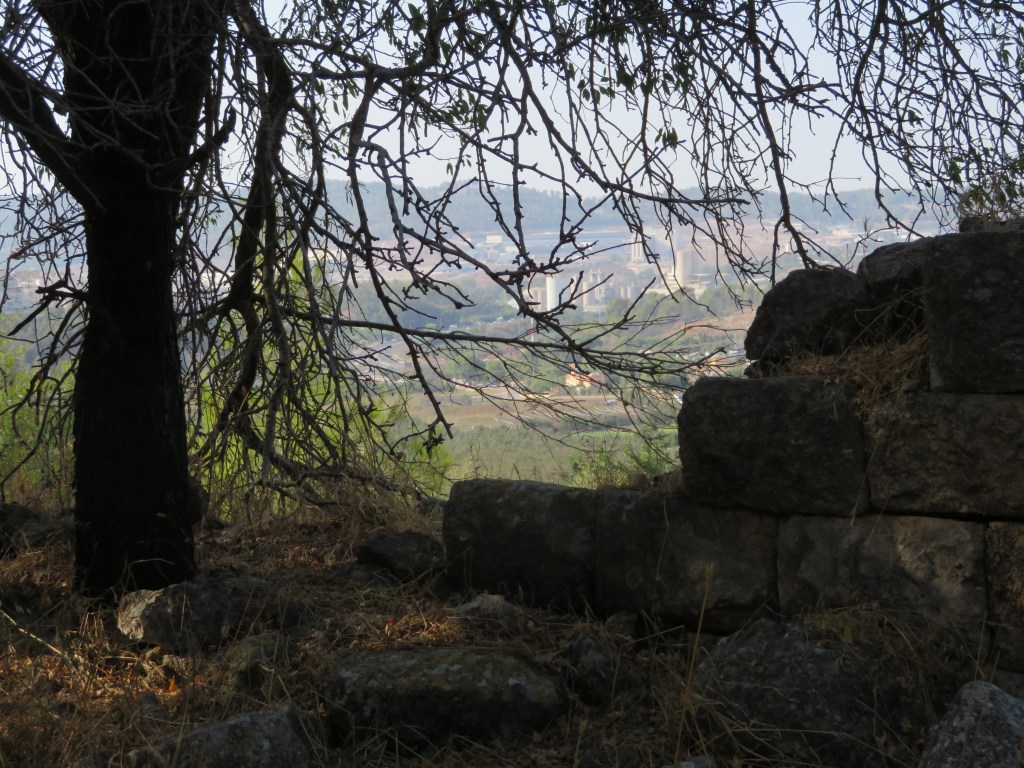
I had found a concrete structure about one by one meter, made of four walls and a slab that was covered with a rusting metal latch. I lifted the latch, and found the deep round hole, too deep to see its dark bottom. I tossed a stone, and after a short pause heard it splash into water. This was an abandoned well, probably centuries old, but covered by the more recent structure, which judging from the concrete and metal, must have been built sometime in the 20th century. Next to the well, was a square trough about three by three meters, carved into a large rock. It is an ancient treading pool for pressing grapes for wine, possibly from the Byzantine or an earlier period. The forest here hides many other ruins of buildings, rectangular building stones, terraces, wells. This is what remains of the Arab village of Deir Aban, which was destroyed and abandoned during the Israel War of Independence in 1948.
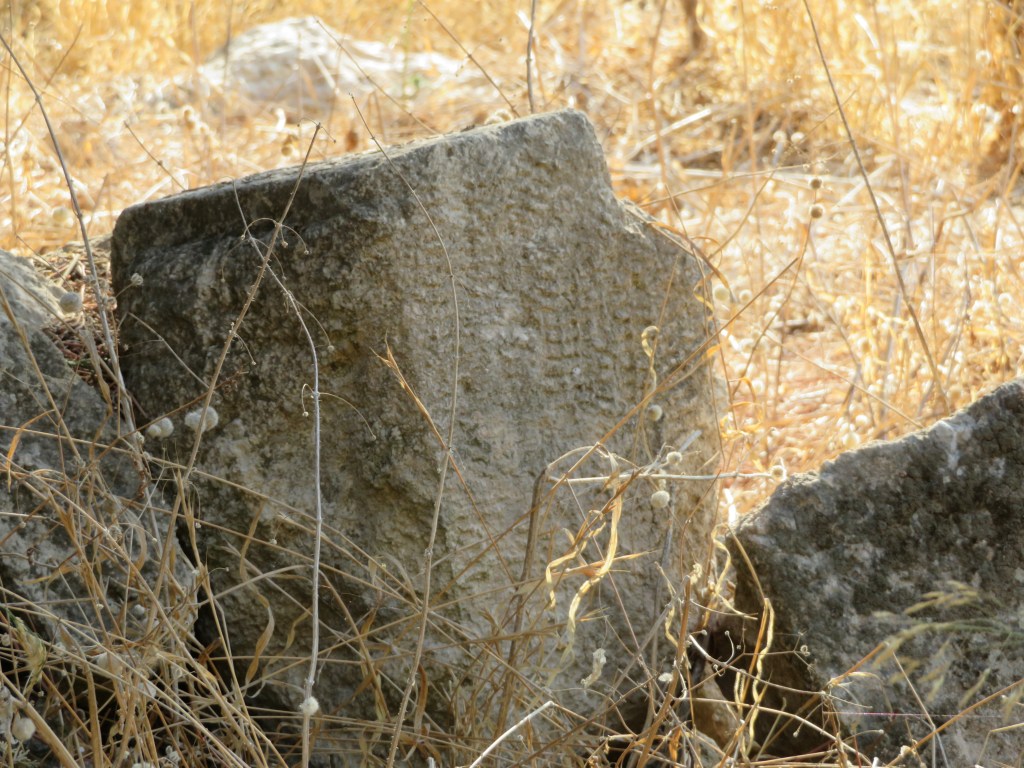
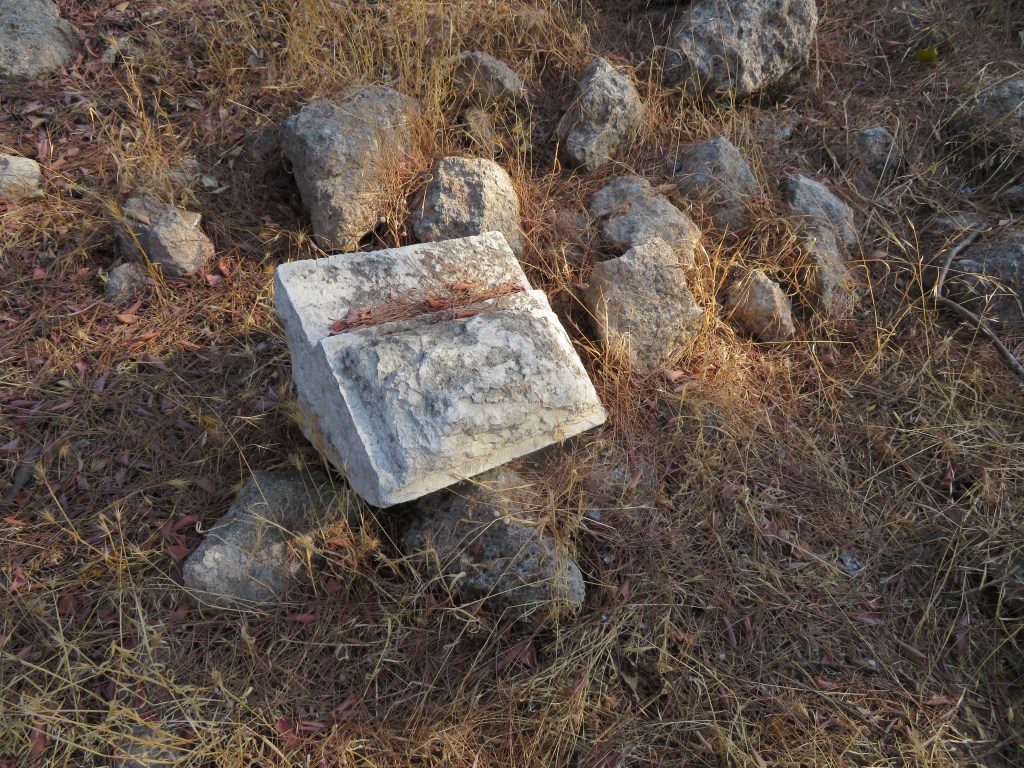
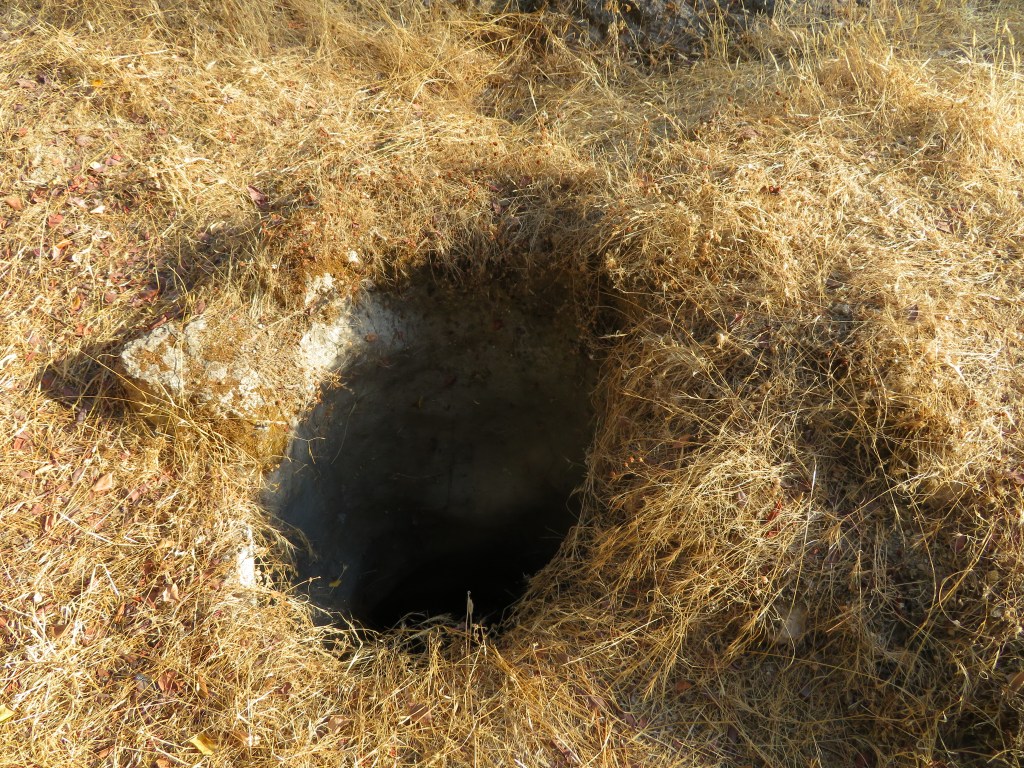
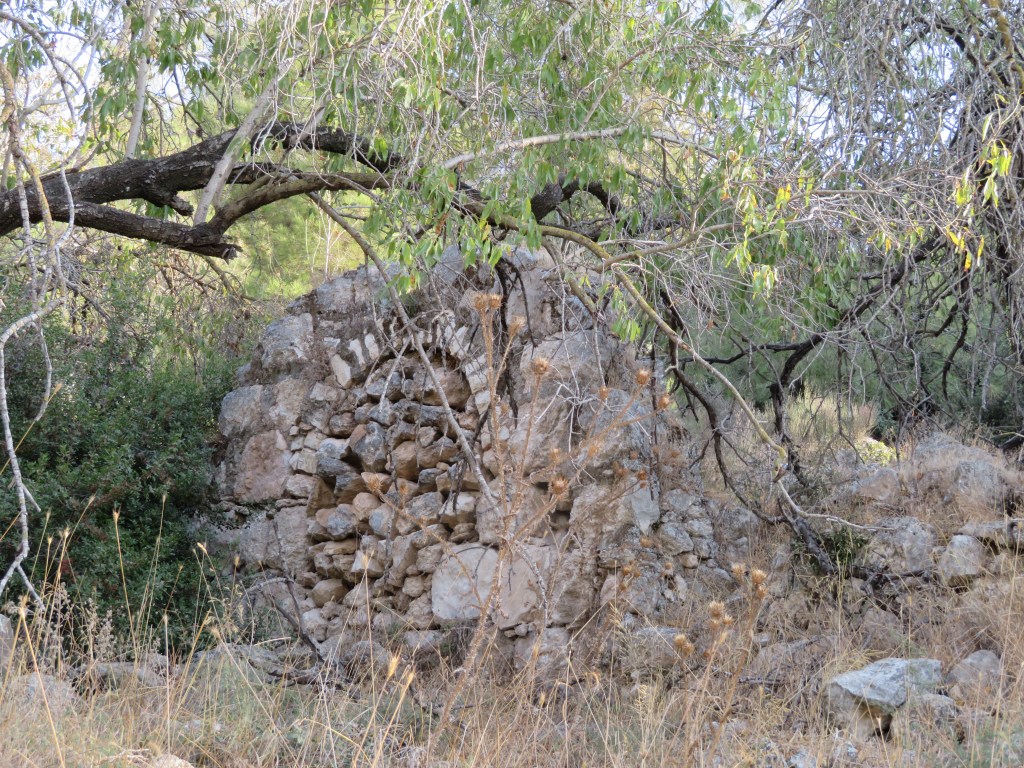
I later researched the locality on an interesting Palestinian website that compiles information about Arab settlements that were destroyed in 1948 during the War if Independence https://www.palestineremembered.com/. The website contains much information, among many other localities, about the Palestinian town of Deir Aban (Dayr Aban as per their transliteration), from which the following very partial list was taken:
The following photos are some of the 39 photos the website shows of the town before and after 1948:
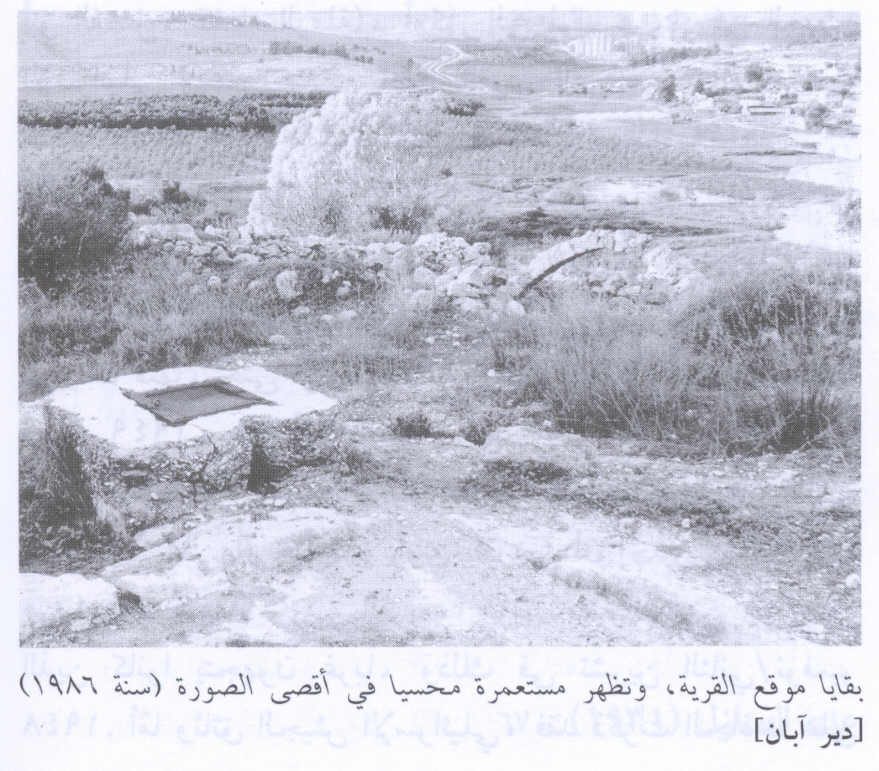
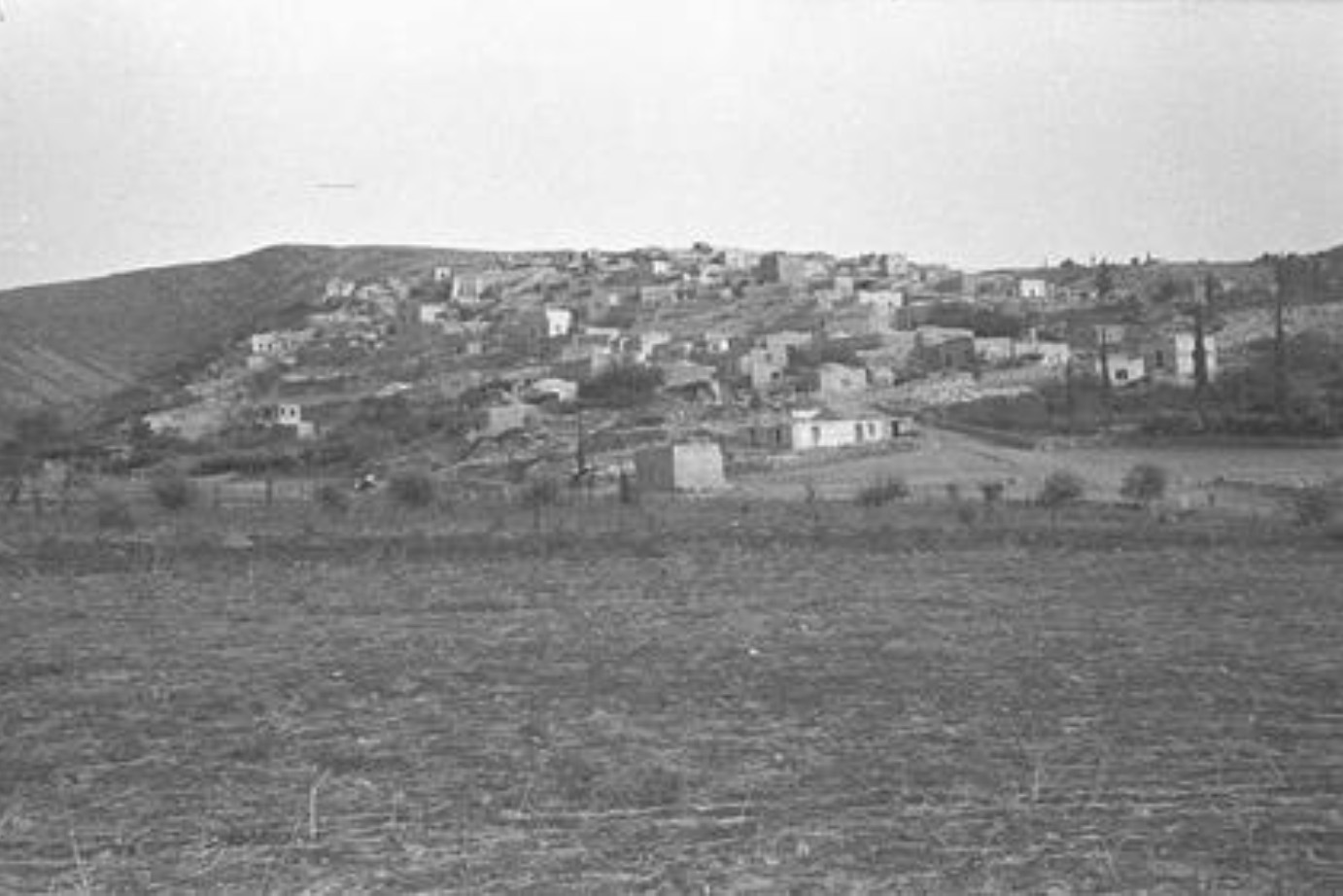
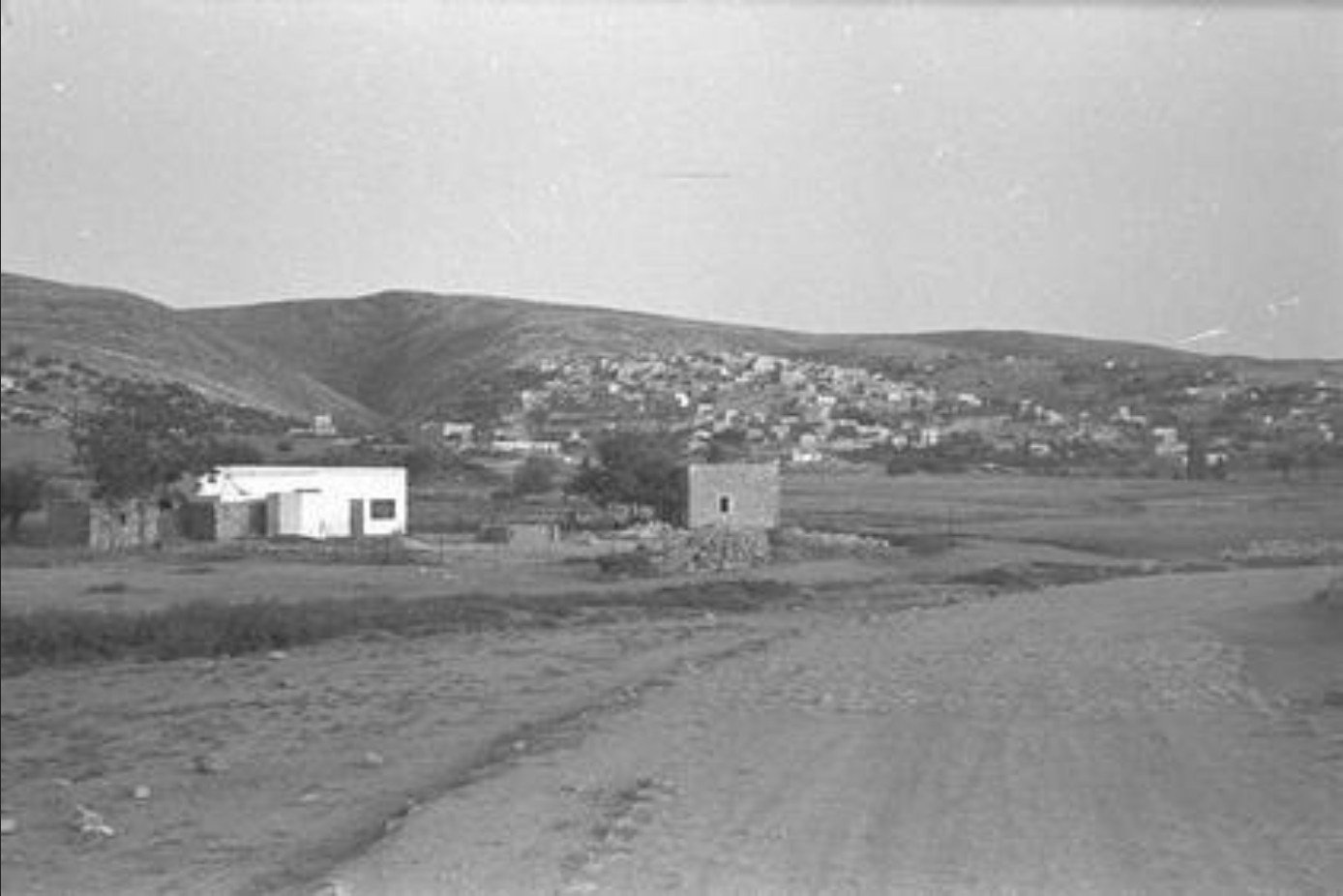
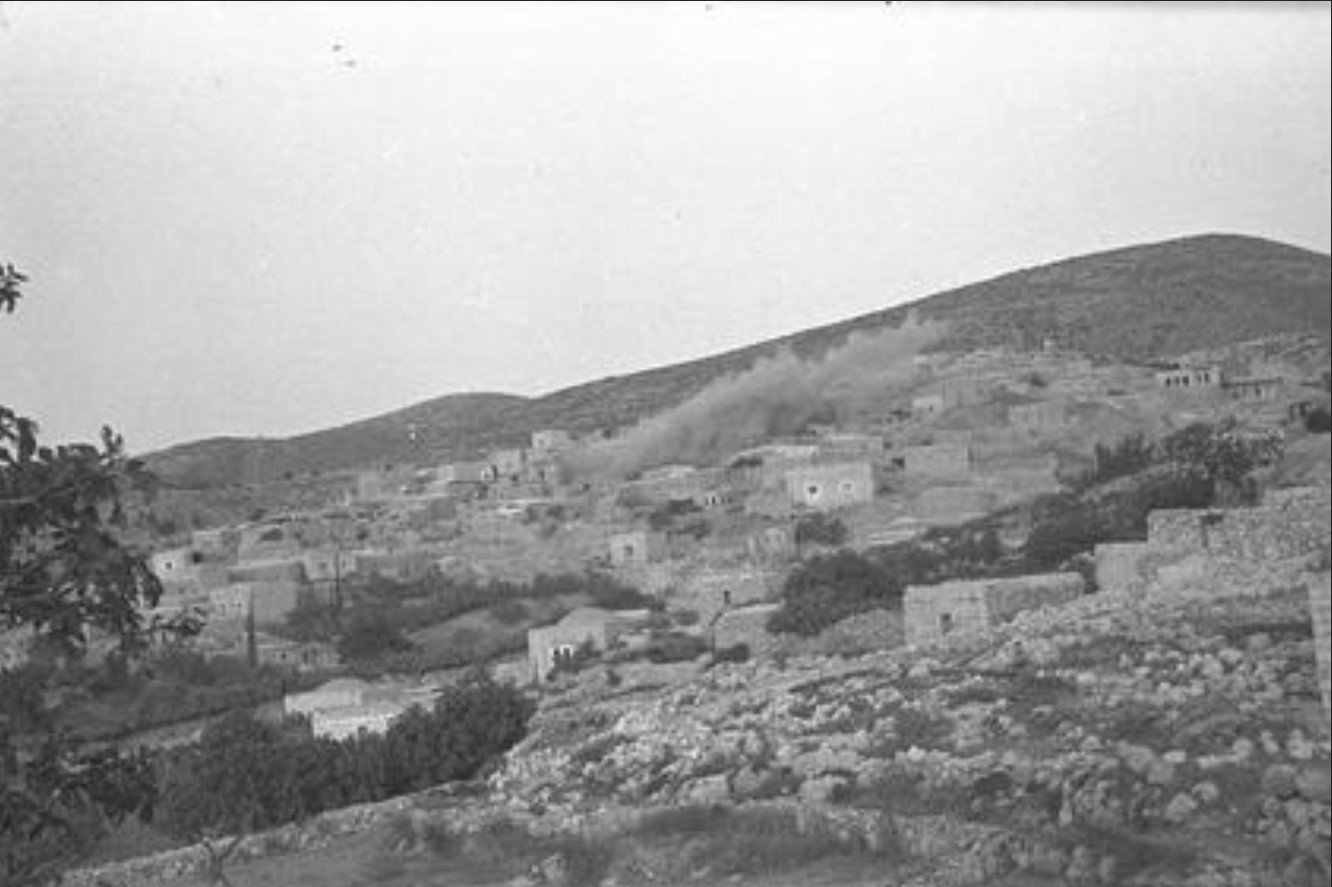
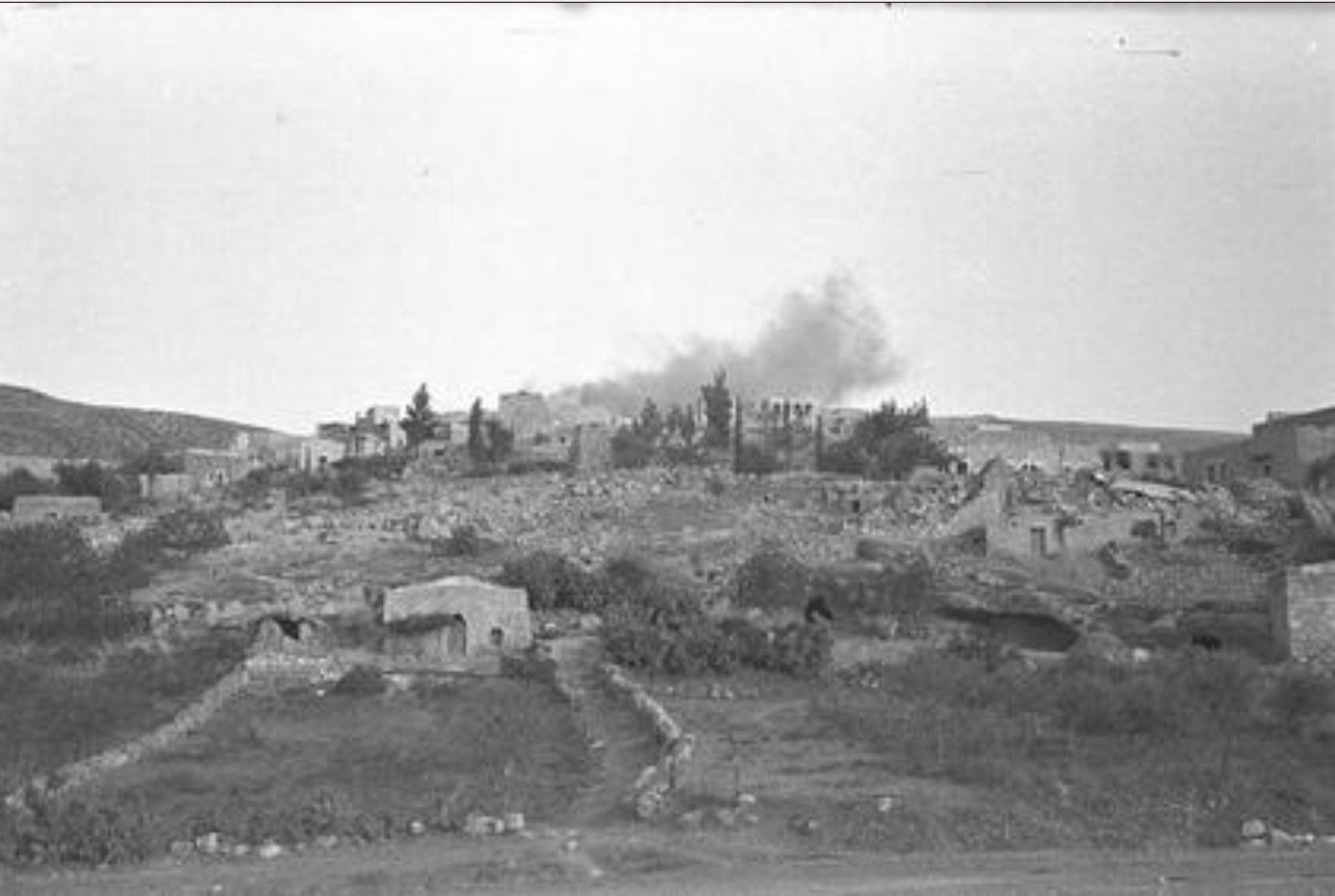
These photos show the town on barren hills, which today are covered by one of the forests that that the Kere Kayemet LeIsrael (Jewish Fund) planted during the late 50’s and early 60’s the length and breadth of Israel.
In 1990 I purchased the rights on the plot of land on which I eventually built the house where we live. Like the majority of land in the State of Israel, my plot is owned by the state, and I acquired the rights to use it under a lease for 49 years. Recently I was reviewing the official Property Rights Certificate of my plot, which is issued by the national land property registry. In addition to the current information, the certificate includes historical information of the property. The current location is Bet Shemesh Municipality, but the original locality registered on the document, probably as per records either of the Ottoman Turkish Empire before WWI, or of the British Mandate of Palestine from the end of WWI until 1948, is none other than Deir Aban.
The above website, besides presenting a treasure of extensive statistics, facts and photos, also tells the Palestinian Narrative, which I consider a one sided and sterile interpretation of the events, a position which knows no compromise and leads only to hatred and bloodshed. Yet I cannot ride the forest without hearing the tragedies it so eloquently becries. Those ruins were houses and public buildings where human beings lived their lives. Generation after generation of families lived and worked that land, were deeply rooted to it, and then were abruptly and violently torn from it in the fury of a war. It is the story of old women and men and of children whose lives and homes were devastated. Perhaps the forest, if only we hearken to it, wants to reach out to us when we visit it, and tell us that the simple recognition of this suffering is a necessary ingredient for a peaceful, mutually respectful coexistence between the Jewish and Arab inhabitants of the State of Israel.
As I placed the reed mat as the roof of our Succa (Temporary dwelling during the Jewish Festival of Tabernacles), much mischief making was released.


Half a century ago, during our late high school years, I took several trips to Boyacá, the Caribbean and the Pacific costs of Colombia. My friend Mauricio Bautista was usually my travel companion, and one time also his sister Ma. Cristina and my cousin Ilse from Vienna joined us. Another trip we accompanied my photographer aunt Hermi on an Boyacá excursion guided by the renowned Prof. Ernesto Guhl to Villa de Leyva, Raquira and Ecce Homo Monastery.
Making order in our old papers, I found a treasure box with the following prints of photos from those trips. I don’t know for sure who took the photos; possibly Mauricio, or I. Another possibility is that Hermi took some of the better photos, even though the fact that she didn’t sign or stamp them with “Foto Hermi” casts a doubt on this assumption.
These photos show a Colombia that no longer exists.


A couple of hundred meters down from the house where I was born and grew up, in Bogotá, Colombia, stood a monastery on a large plot of land. Emmaus. I never went into the premises, and don’t even recall an entrance gate. Yet the place was a landmark, and it’s existence was firmly engraved in my mind.
Half a century later, I again found myself at Emmaus. This time, though, I was at the site of the original, historical Emmaus, in Israel. I had taken my bike to be serviced at a shop located at Latrun, the site where the city of Emmaus stood 2,000 years ago, about 15 kms. drive from my present home in Bet Shemesh, Israel.
Ayalon Valley and Emmaus are mentioned in the Bible – Book of Joshua, the Book of Maccabees, the New Testament – Gospel of Luke, and on the Madaba Map. Latrun is a strategic point overlooking the valley of Ayalon and the historical route between the Mediterranean coast and Jerusalem. The site is also on the border between the coastal plain and the Judean hills to the east. During the course of the centuries, inhabitants of the coastal plain met, interacted, traded and battled here with those of the hills.
Joshua, leader of the Israelite tribes, here asked G-d to halt the movement of the heavenly bodies in order to enable him to defeat the Philistines on his conquest of The Land.
Then spoke Yehoshua to the LORD on the day when the LORD delivered up the Emori before the children of Yisra’el, and he said in the sight of Yisrae’el, Sun, stand still upon Giv’on; and moon, in the valley of Ayyalon; And the sun stood still, and the moon stayed, until the people had avenged themselves upon their enemies. Is not this written in the Book of Yashar? So the sun stood still in the middle of the sky, and hastened not to go down about a whole day. And there was no day like that before it or after it, that the LORD hearkened to the voice of a man: for the LORD fought for Yisra’el.
Joshua 10:12 – 14, The Holy Scriptures, Koren Publishers, Jerusalem, 1980
In the 2nd century bc., the Maccabees who lived in this area, miraculously vanquished the mighty Hellenistic legions.
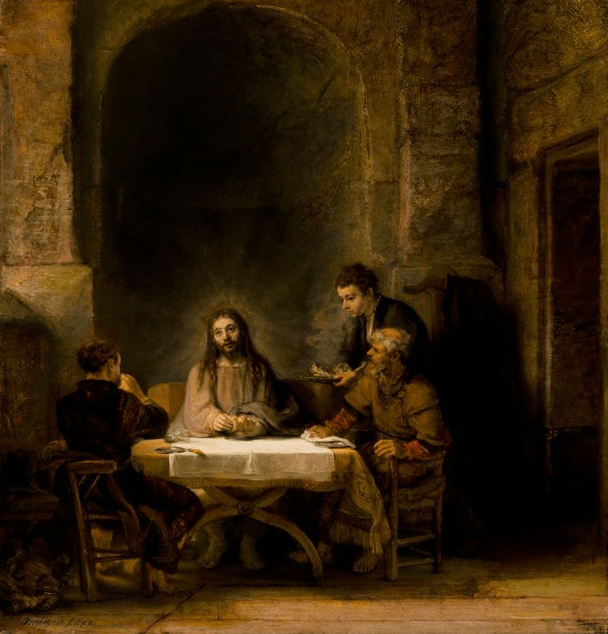
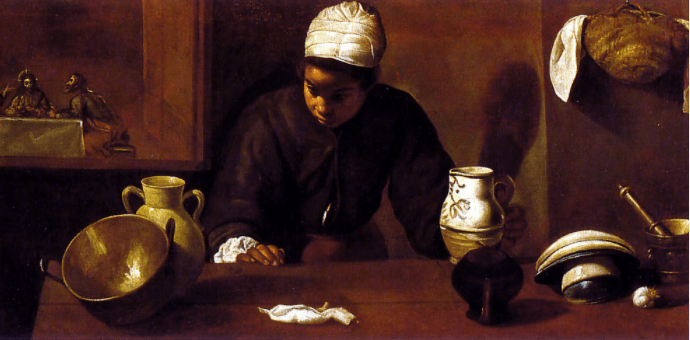
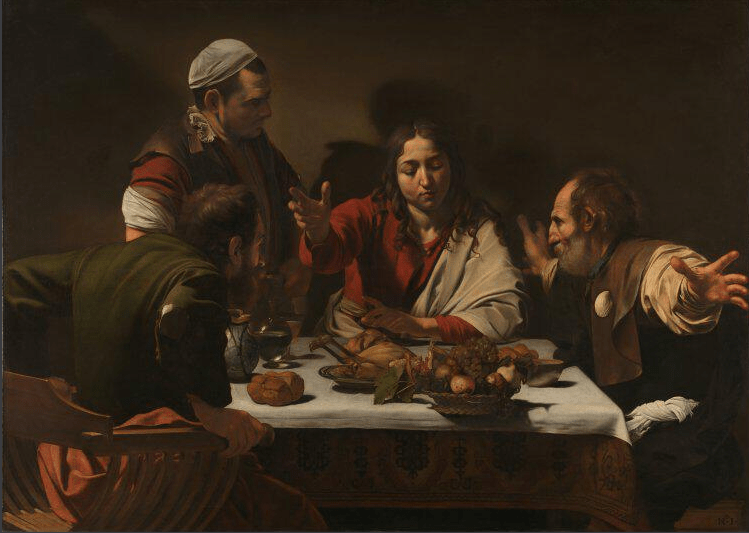
The Gospel of Luke 24:13-35 tells the story of Jesus as he appears here to two of his disciples after his resurrection. They don’t recognize him and invite the “stranger” to a meal where he reveals himself to his incredulous hosts. “The Supper in Emmaus” was the theme for paintings by famous artists.
From 1947 until the Six Day War in 1967, Hagana (Jewish defense forces during the British Mandate) and later the Israel Defense Forces fought in vain and at terrible loss of lives, against the Arab legions who from this point during those decades strangled Jerusalem’s vital access corridor.
I recall that about 10 years ago I took some friends from abroad to visit the nearby Emmaus Nikopolis site, the ruins of a Byzantine Basilica, that was subsequently reconstructed by the Crusaders. Entrance was free, on condition that visitors stay in the access area with its souvenir shop, and from where one can see the ruins from a small distance. My friends intended to buy some souvenirs after taking a quick look at the ruins, but, intrigued by the ruins, took one or two steps too far. The nun who was running the souvenir shop immediately shouted angrily at us in French, accusing us that we had gone past the access area and insisted we pay the entrance fees. My friends preferred not to argue with the irate nun, payed the bill, and we promptly fled, foregoing the pleasure of patronizing her shop.
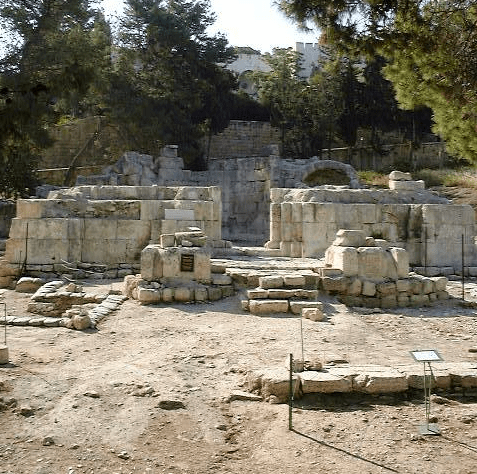
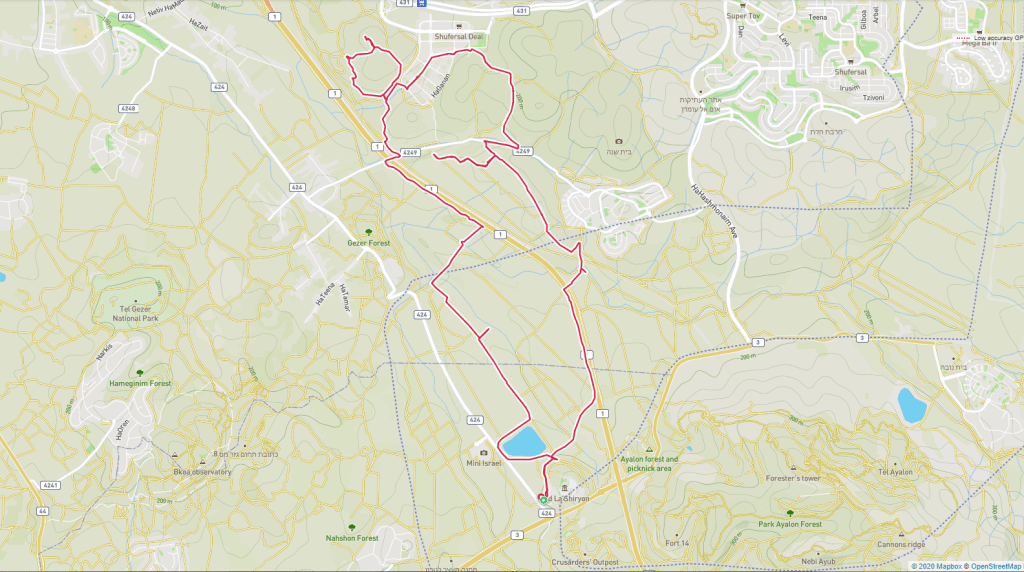
After receiving my fixed bike from the shop in Latrun, it was mid afternoon. The midday heat was starting to relent, but I still had a good 3 or 4 hours left to go riding before sunset. I had no idea where I would go, just hopped on the bike and let it take me.
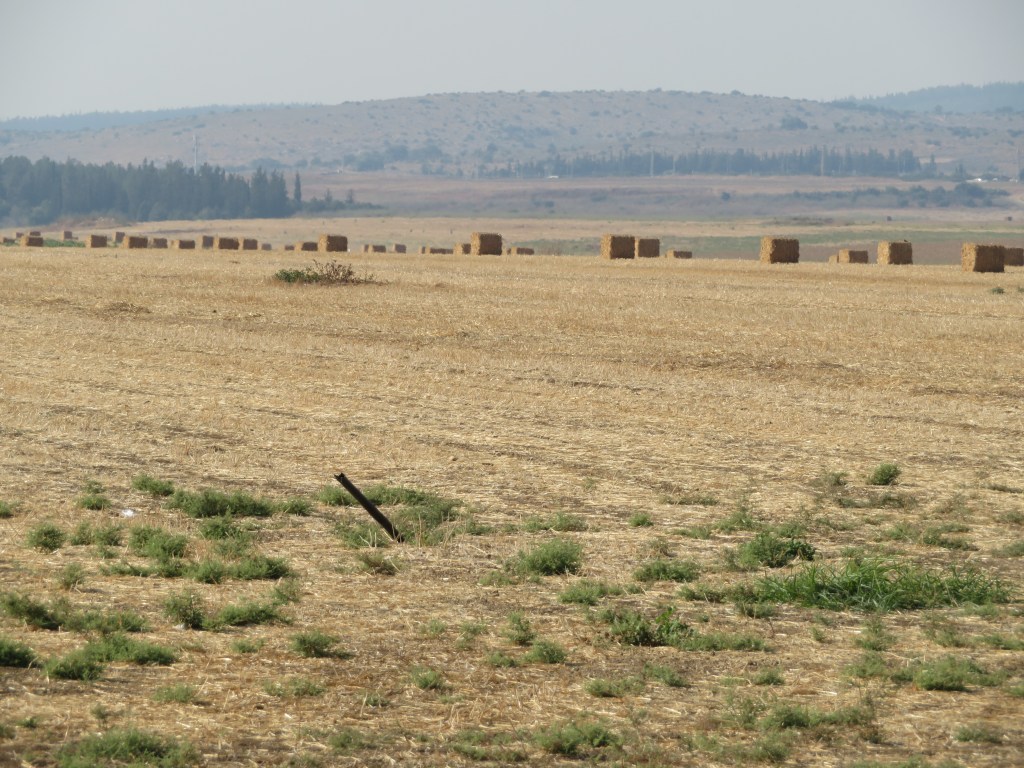
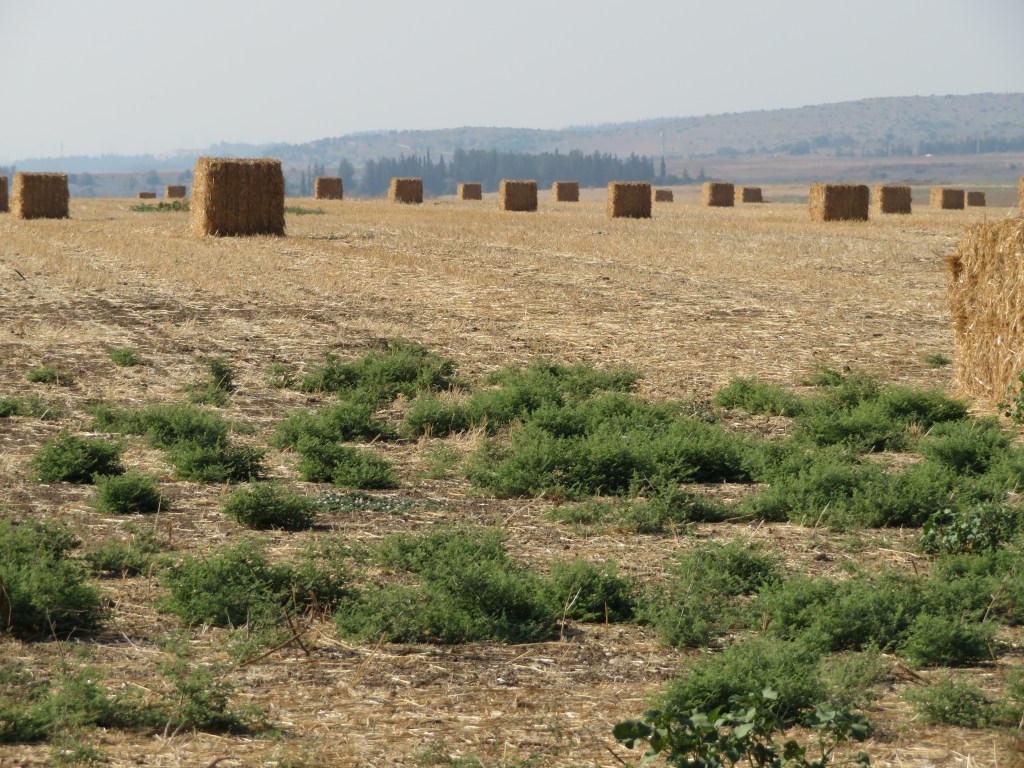
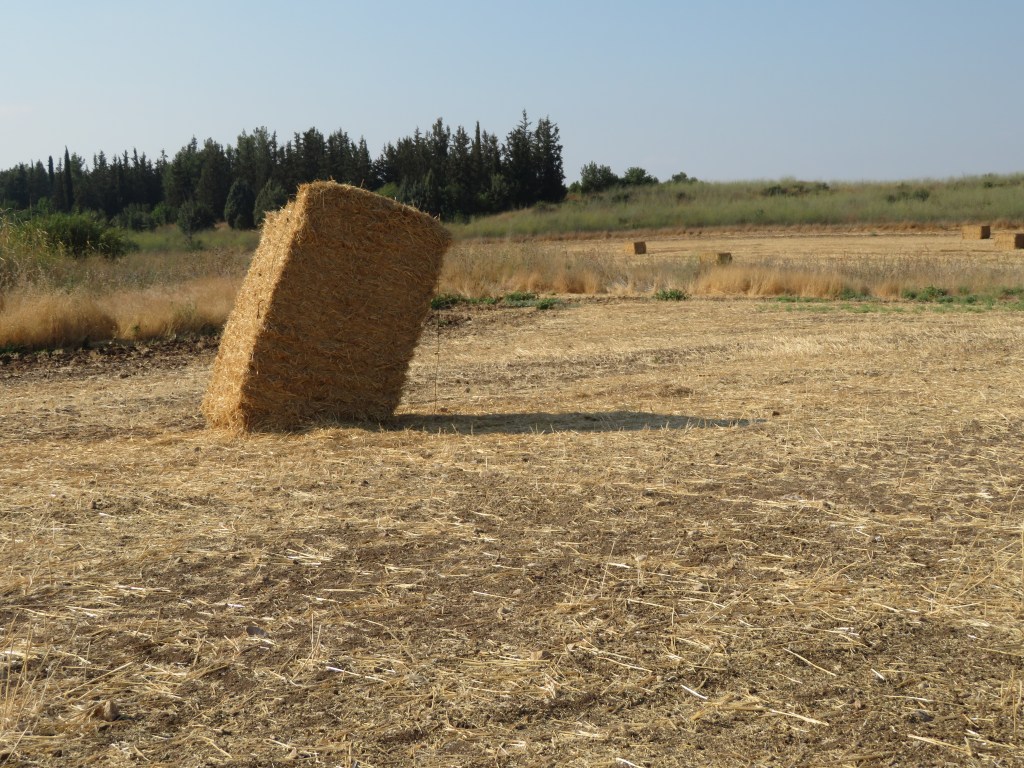
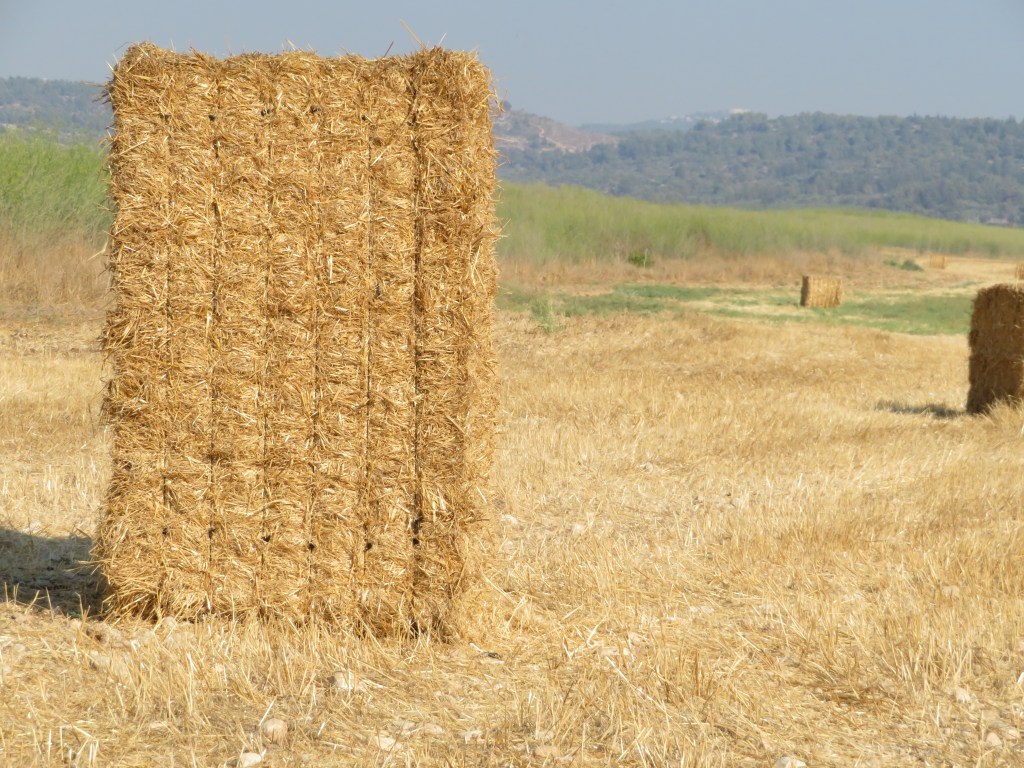
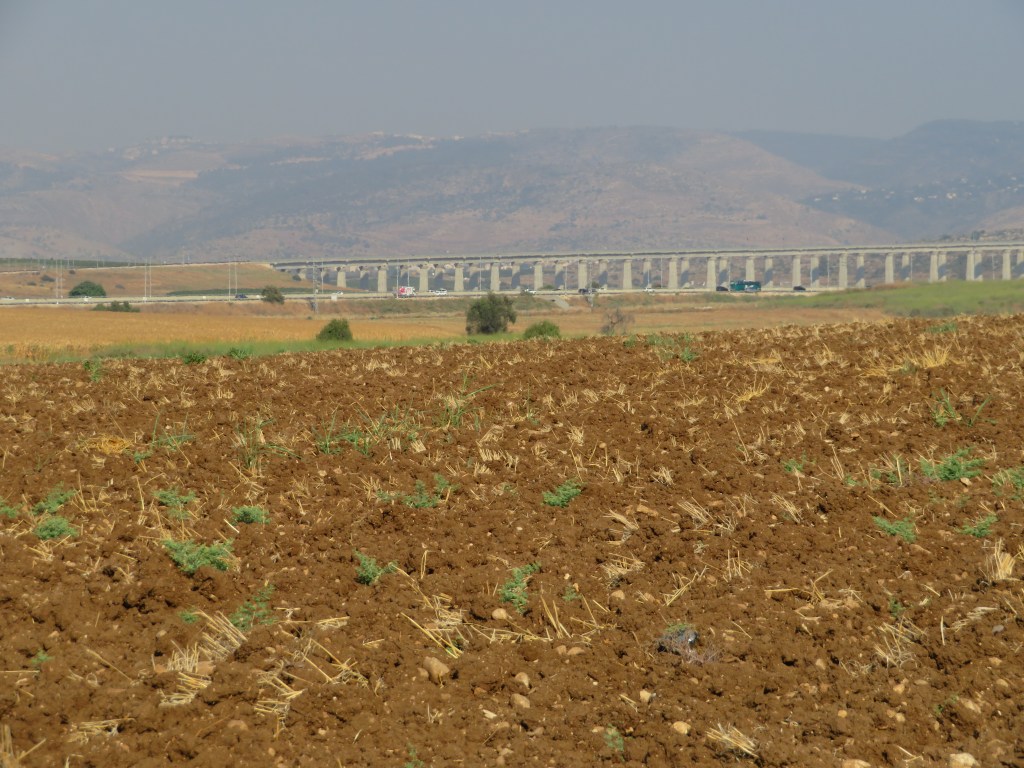
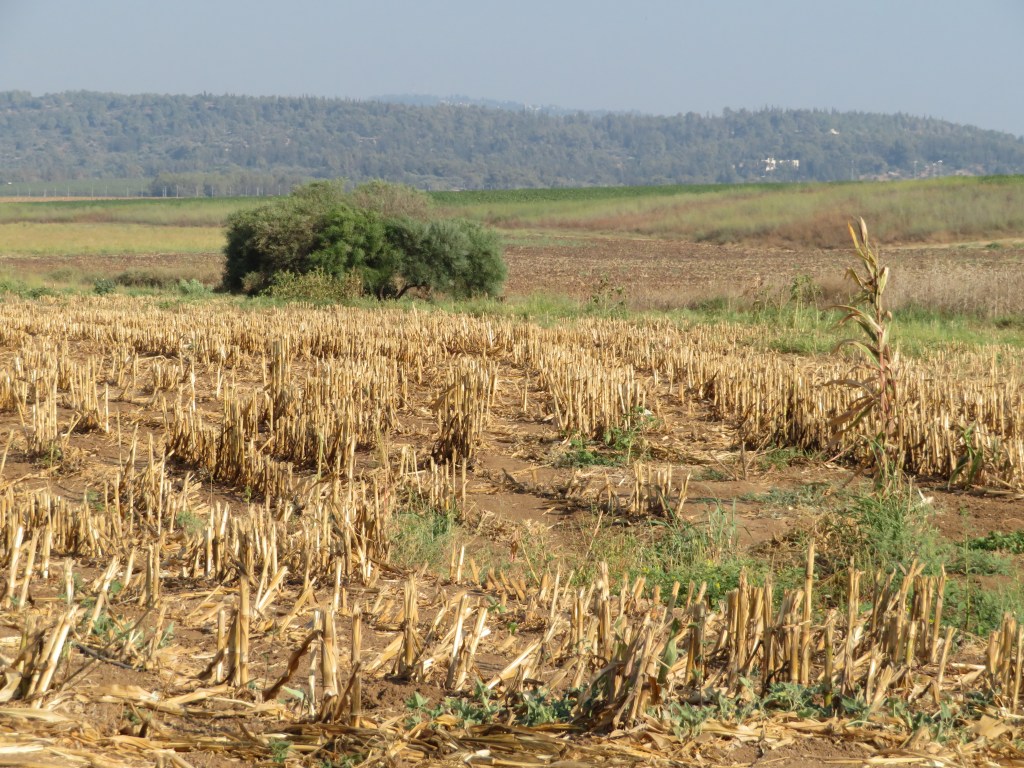
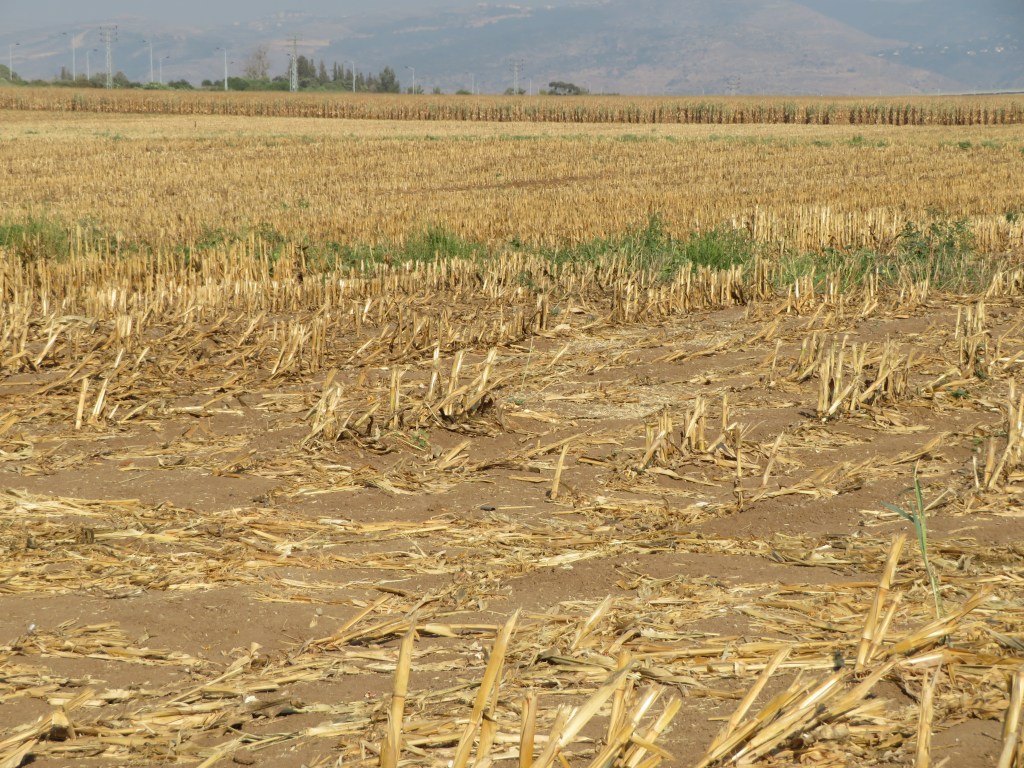
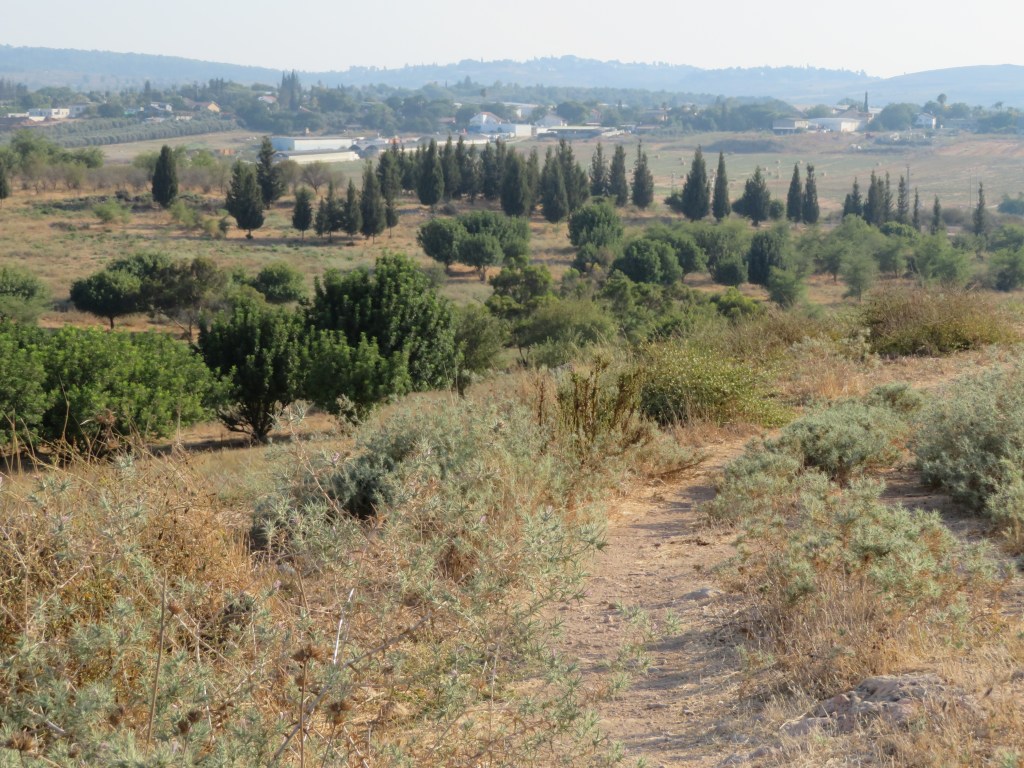
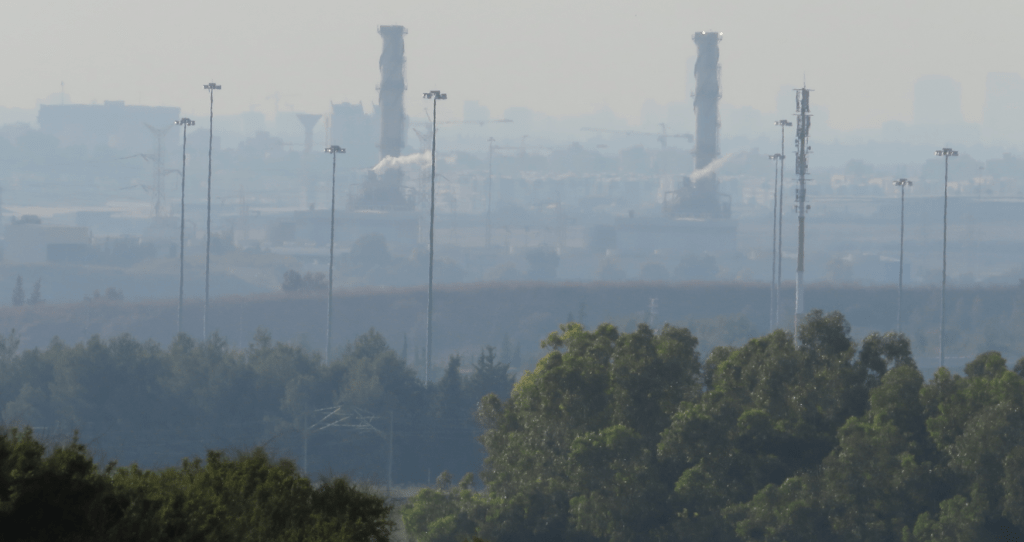
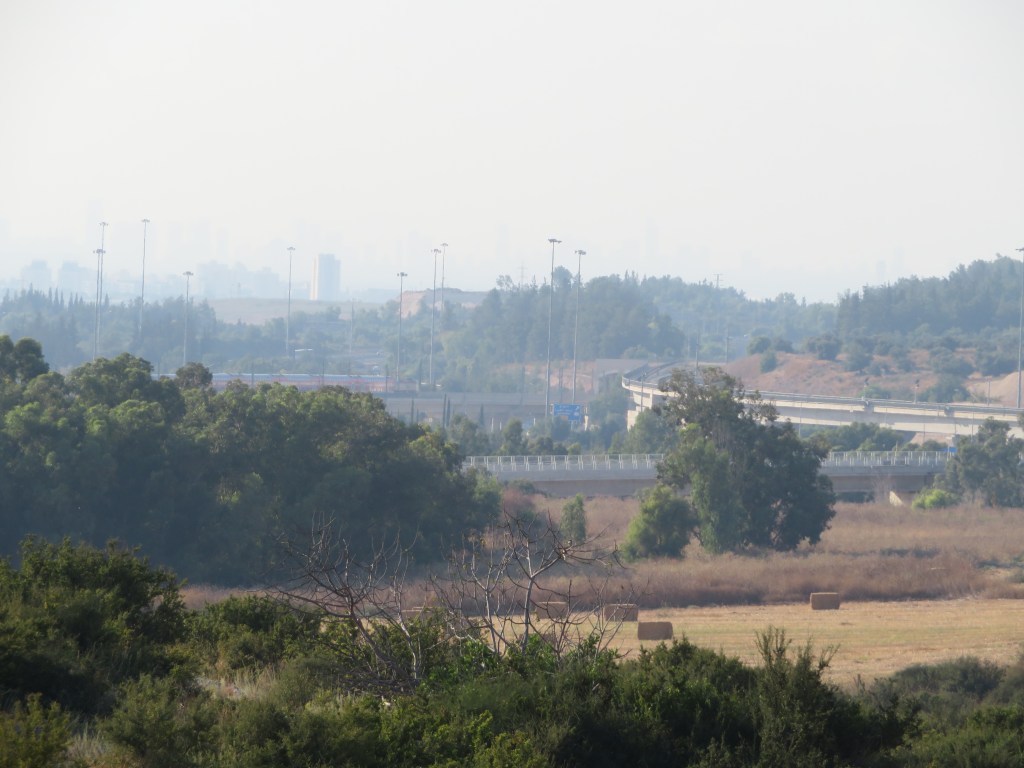
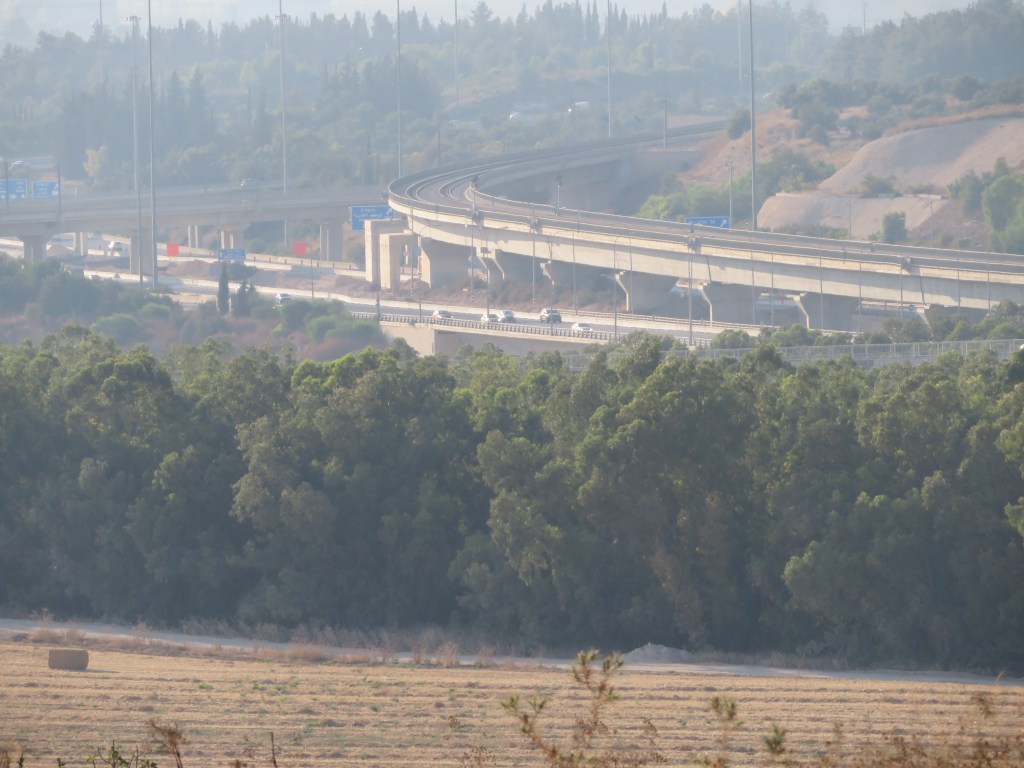
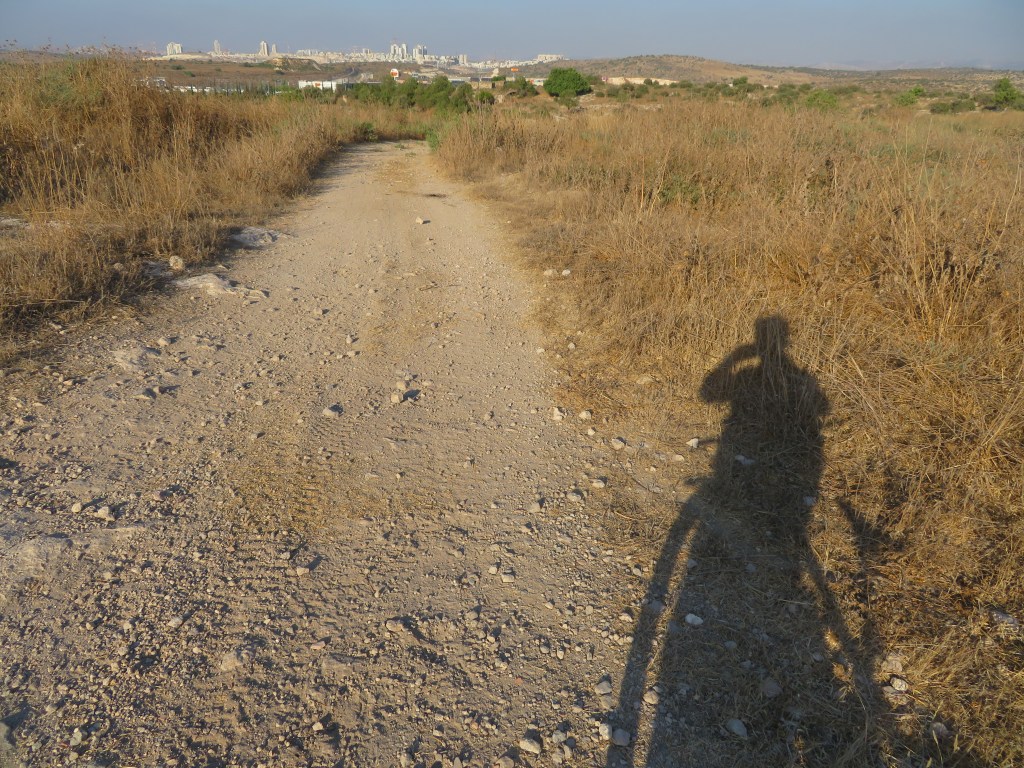
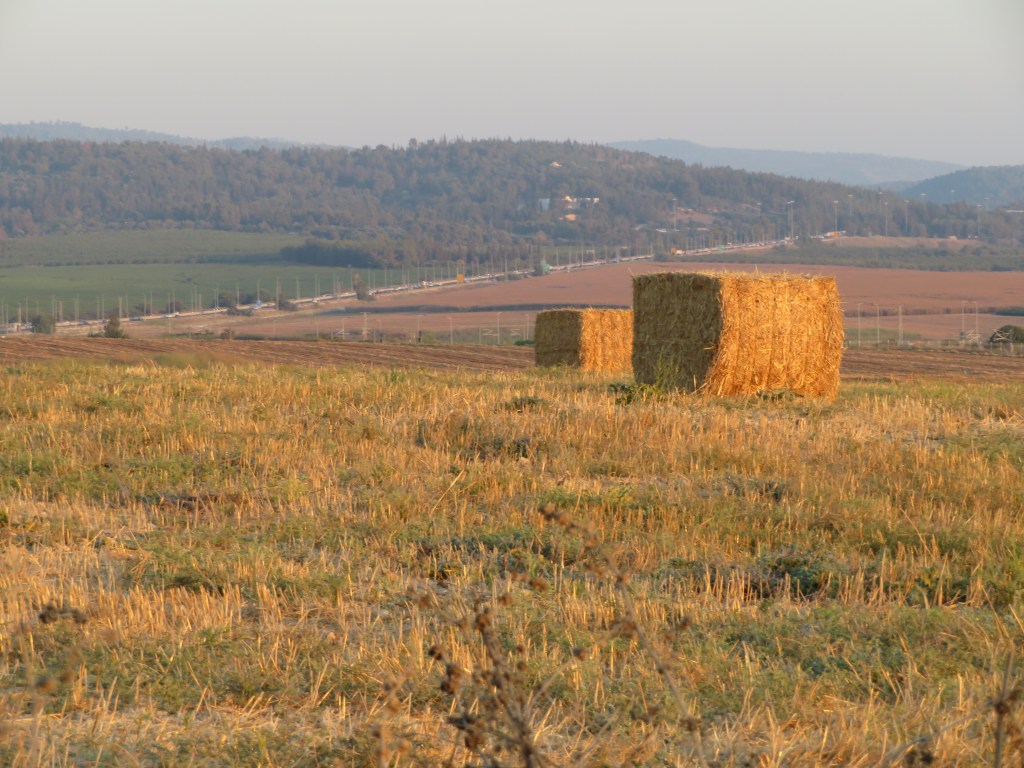
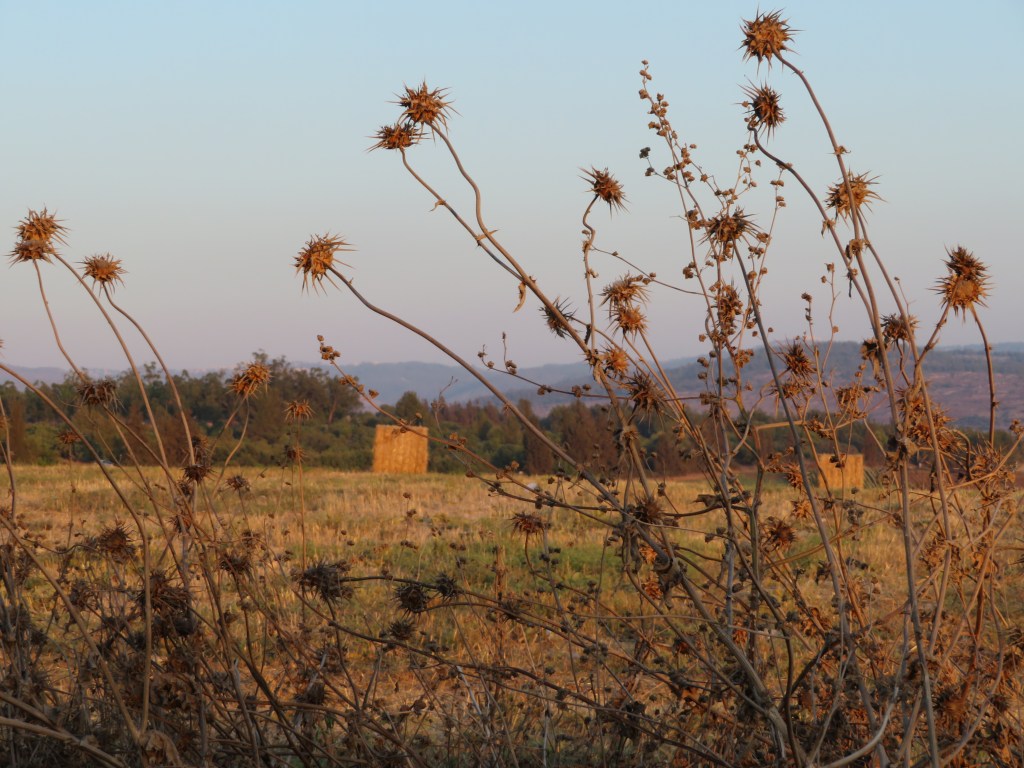
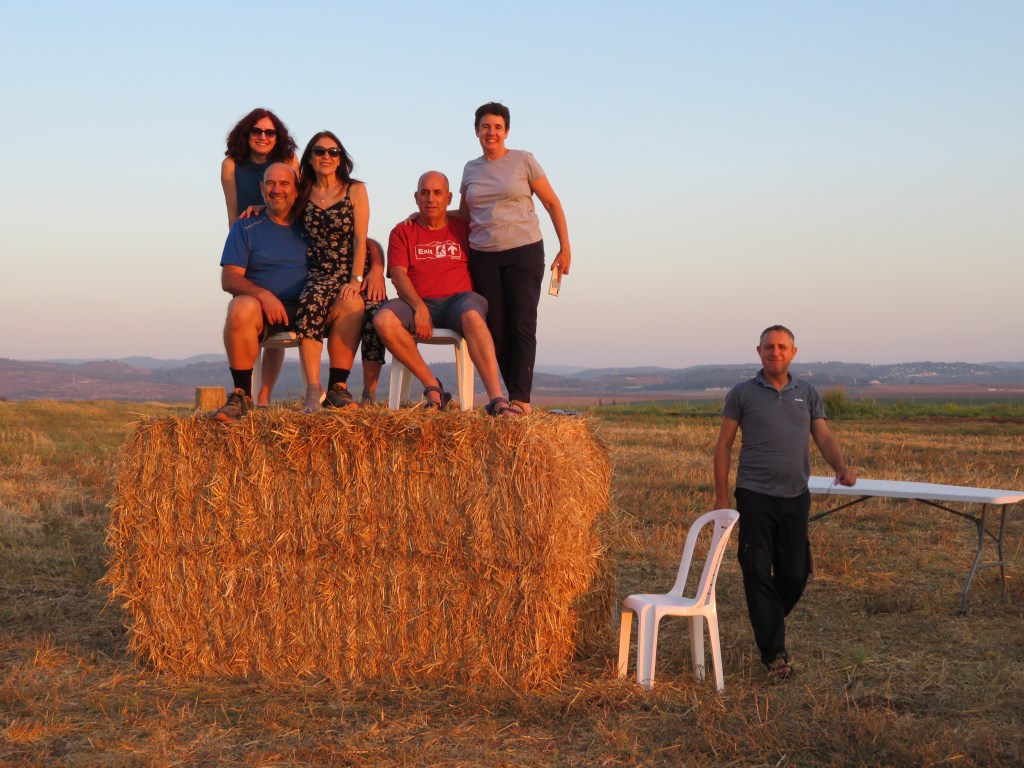
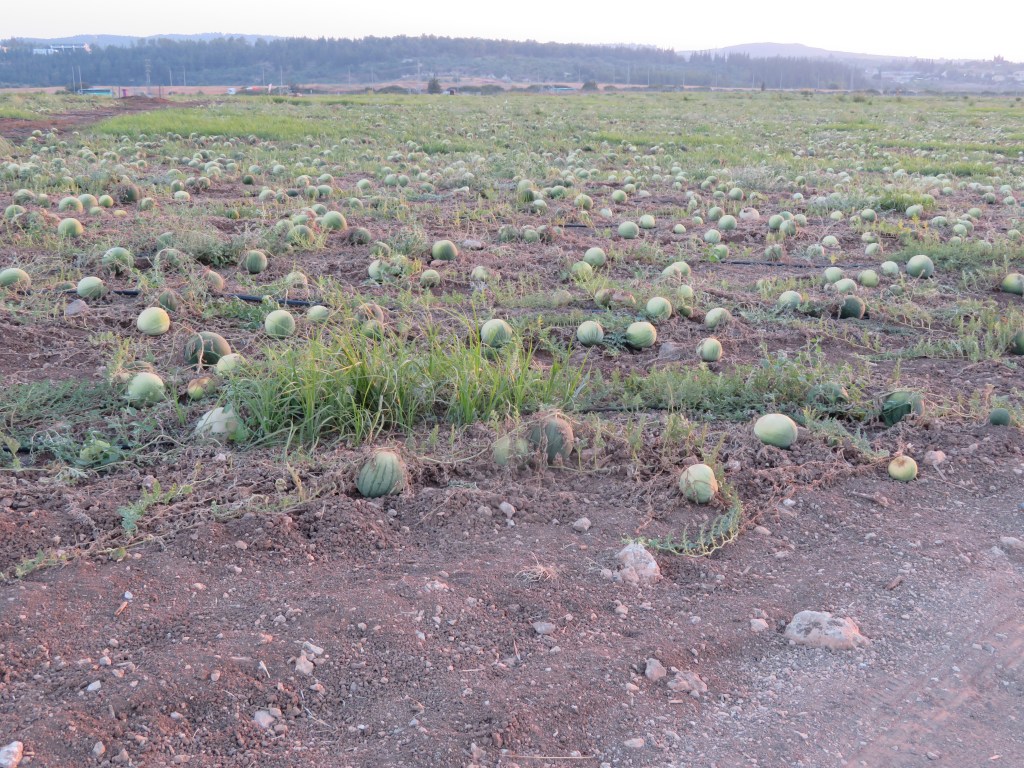
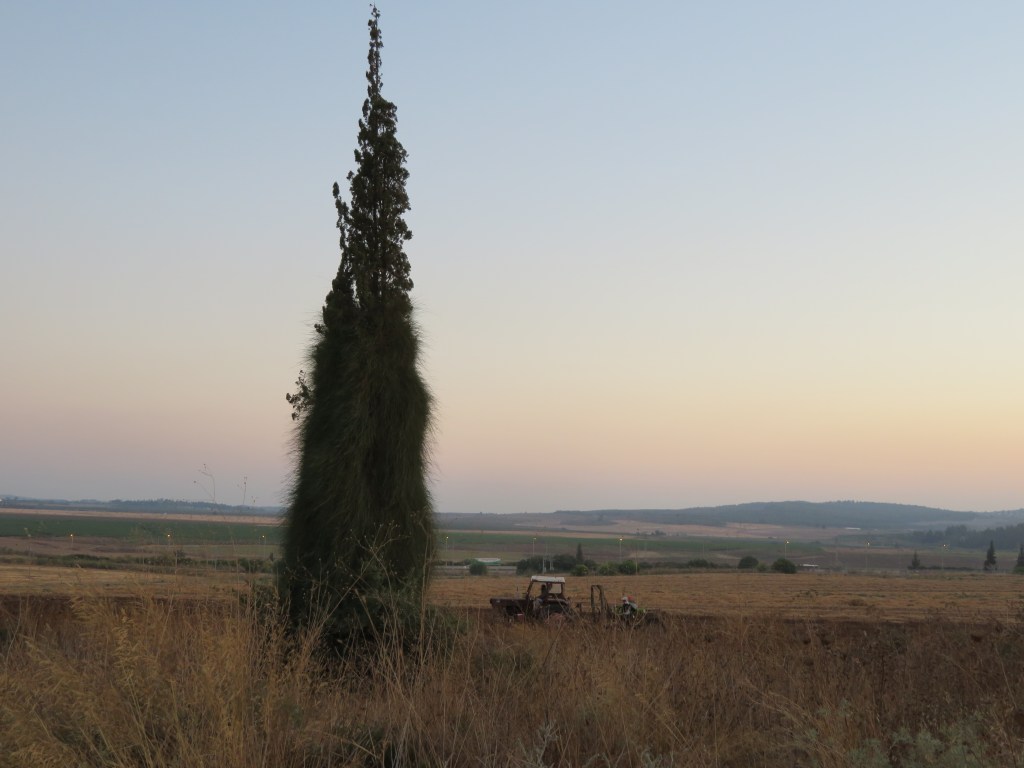
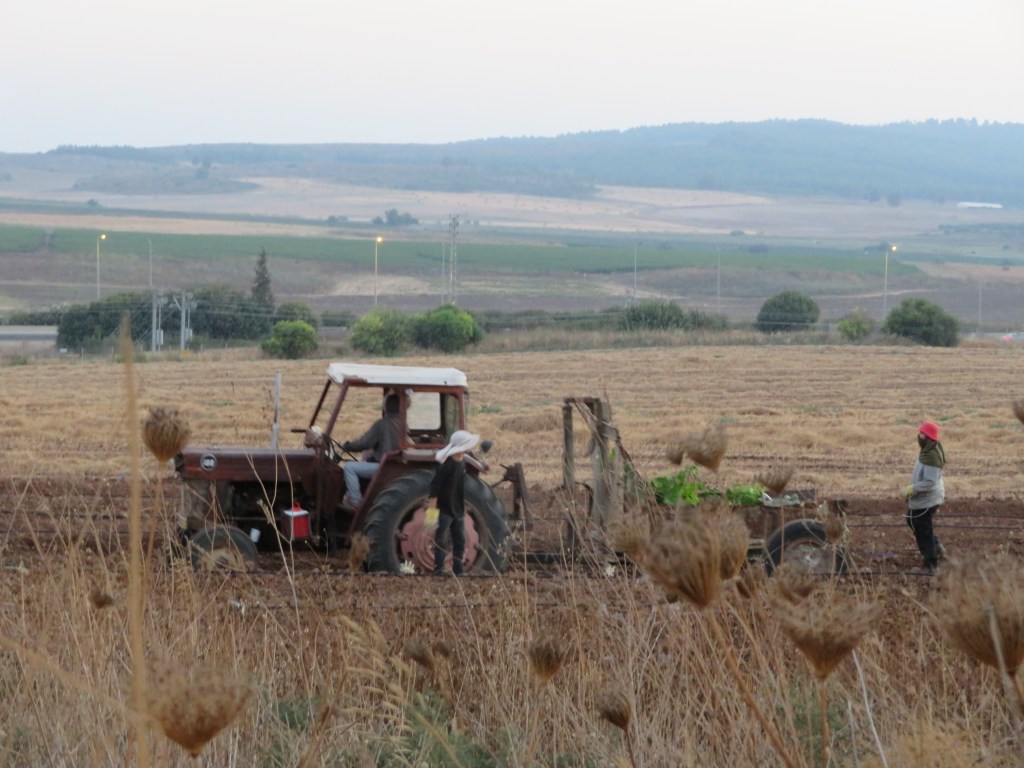
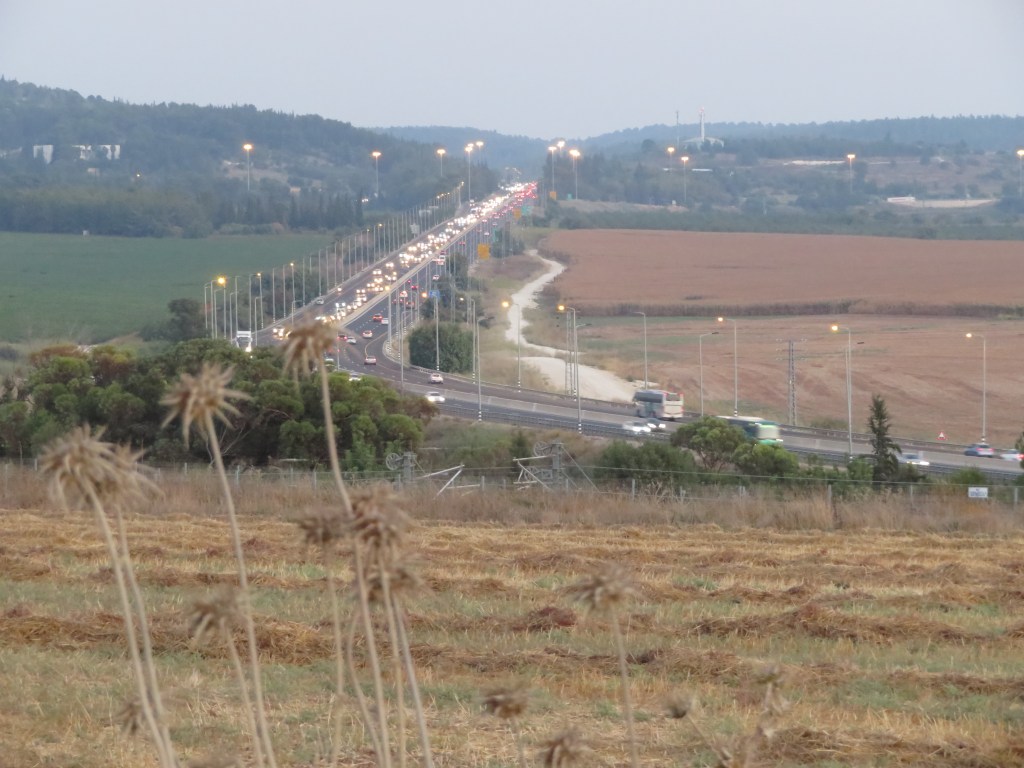
The shallow but broad Ayalon Valley is surrounded by softly rounded hills. The mid summer landscape is predominantly yellow hues with green accents. Agricultural fields, seemingly endless and without barriers, are worked by kibbutzim and moshavim (cooperative agricultural villages) of the region, but on land that is property of the state, and thus by law, accessible to the public. This region clearly invites rambling spirits like myself!



and following ramblings while trying to get some work done on my pc