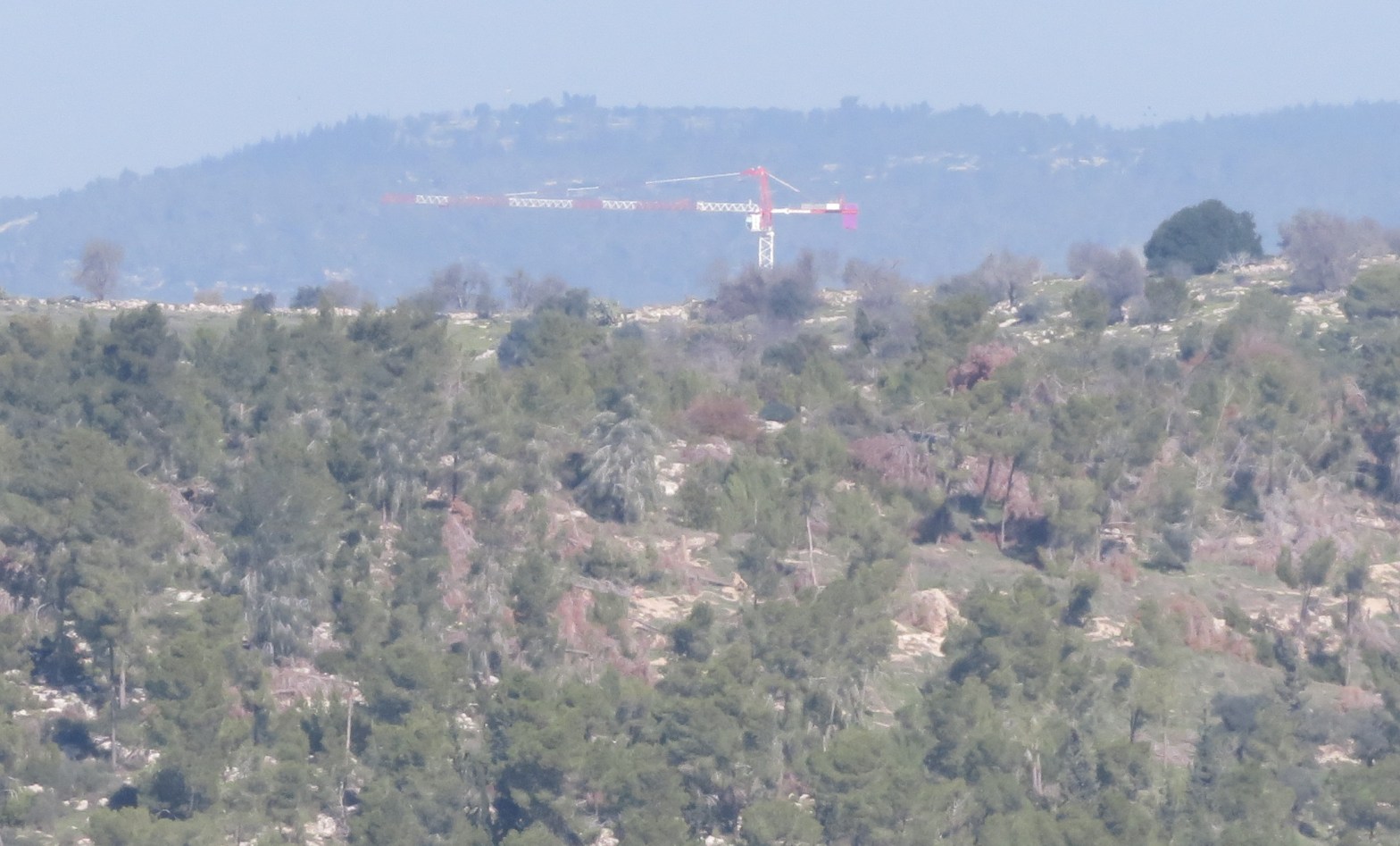
Soho, in London’s West End? SoHo in lower Manhattan? No! It’s about Socho or Sokho (kh pronounced as a gluttural h, as in the Spanish name Jose), the Tel or archeological mound overlooking the Elah Valley, in the the Judean Lowlands, beyond the south border of my home city of Bet Shemesh, Israel!
I. The Road to Sokho
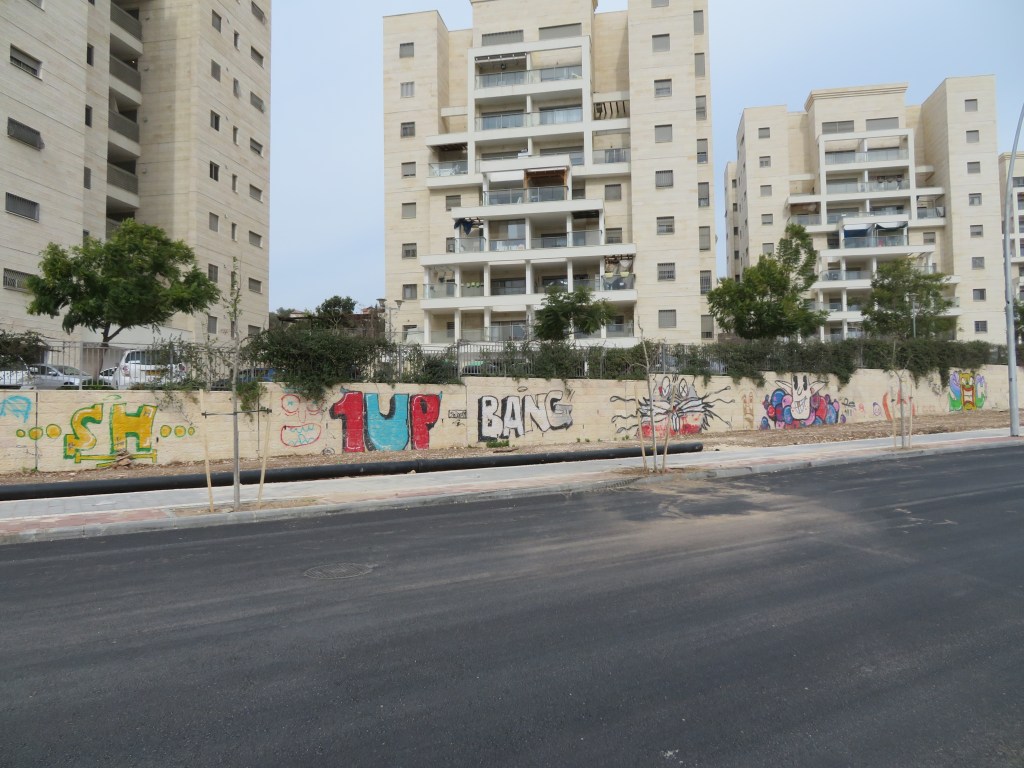
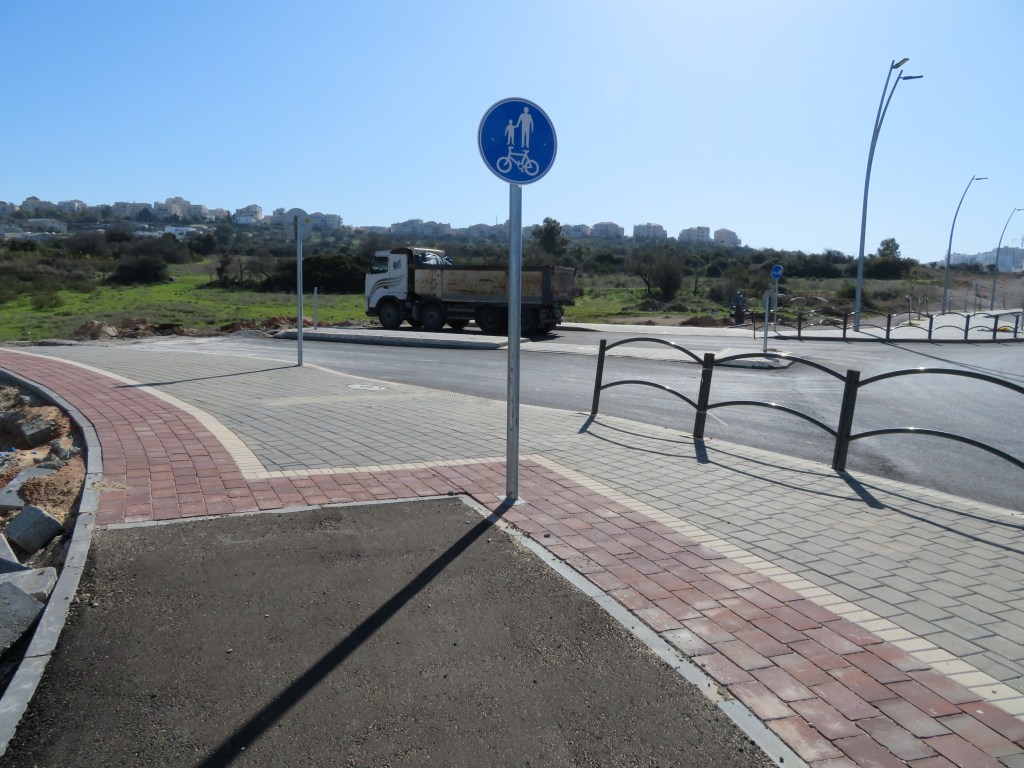
I biked from my home, along a new main road, like a spinal chord, running most of the length of the city of Bet Shemesh. I used the road before its opening to car traffic; bicycles have their privileges.
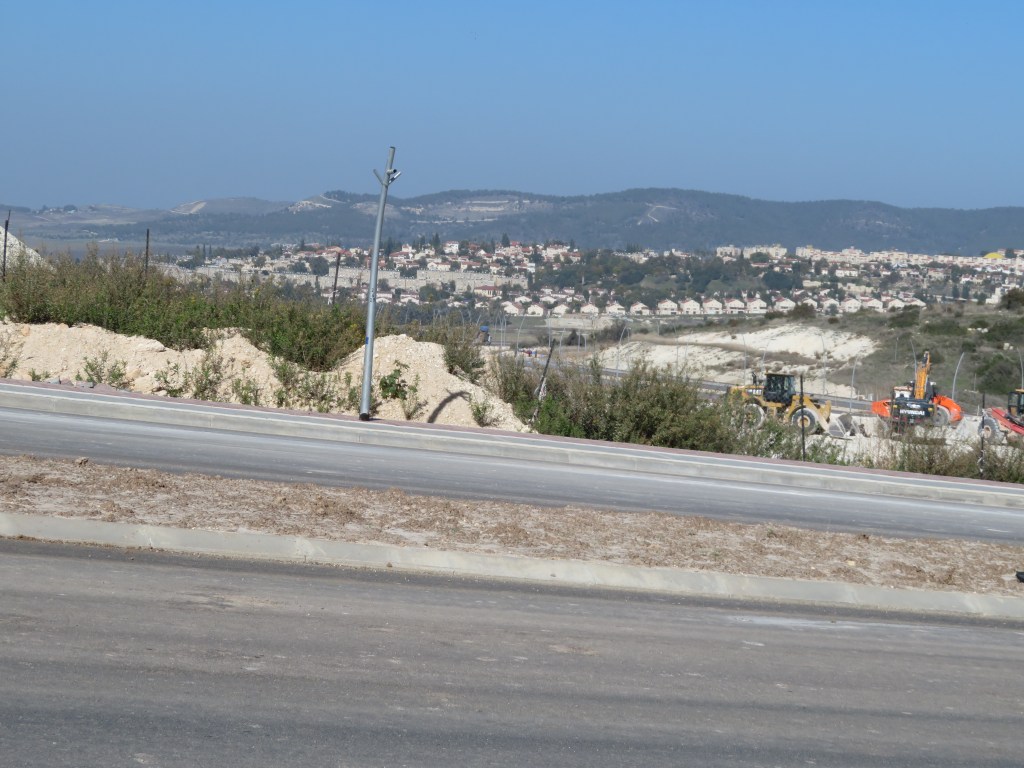
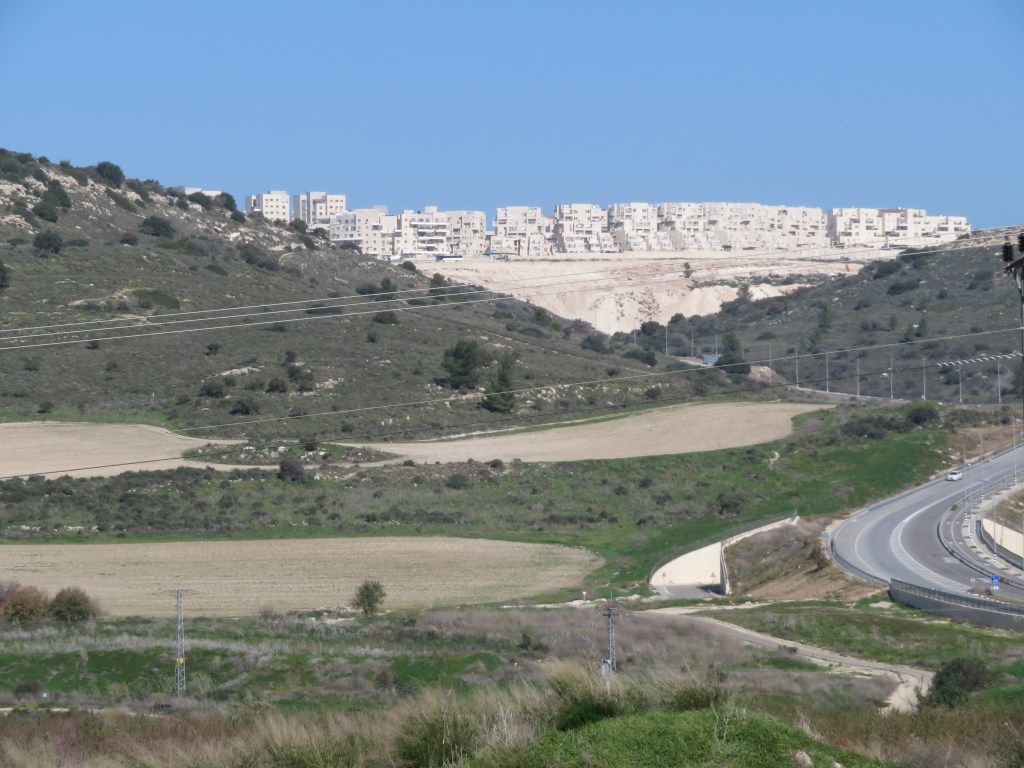
The new road has become the focus of the view out from our home. One of the reasons that 30 years ago I chose the plot of land to build our house, was precisely this view. That was way before this road was even dreamt about. Back then, no tall trees stood on the hill where our neighborhood is located, and therefore we enjoyed an uninterrupted view of the breathtaking, pastoral and pristine landscape of the valley bellow and the hill beyond. On top of that hill stands the monastery of Bet G’emal. I used to spend hours enjoying that landscape, sometimes with binoculars, and even with a telescope. One day, with my bare eye, I noticed what looked like a white spot moving on the green fields of the valley. Curious to discover what I had seen, I zoomed in with my telescope, and through its eyepiece discretely joined a group of six monks in their white robes, taking their Sunday stroll and relishing the silence of the fields, olive groves, rolling hills, soothing winter sun, blue sky, chirping birds, wild flowers and as yet pristine horizons.
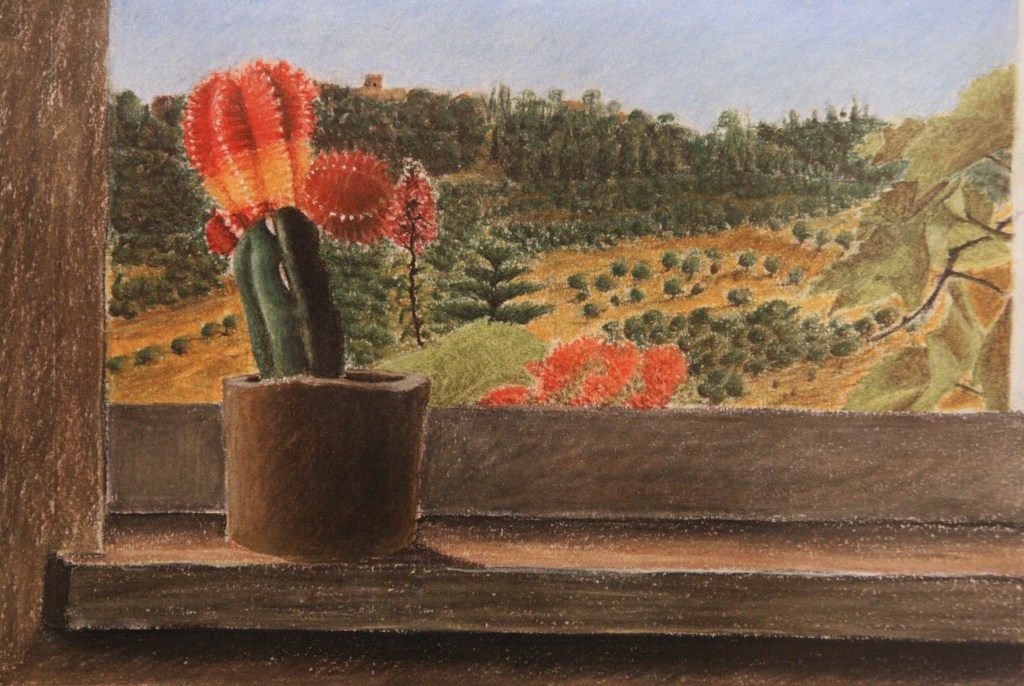
I recall when, a few days after moving into the house and going to enjoy the view, I saw that a high-tension electricity mast was being erected on the hill directly opposite, at about 5 kms. distance. After some months that mast was dwarfed by another massive one, about twice the height, with its highly visible cables and their bright red air flight warning balloons hanging from them. A national-scale high tension electricity corridor to export electricity to Jordan, Israel’s neighbor to the east, generated at a plant on the Mediterranean Cost to our west, now crossed the view from my window. These electricity infrastructures were just the beginning. Four years later, I observed from my window how heavy machinery began to remove the green mantle on the hills at 6 kms. distance, but again, smack in front of our nose.
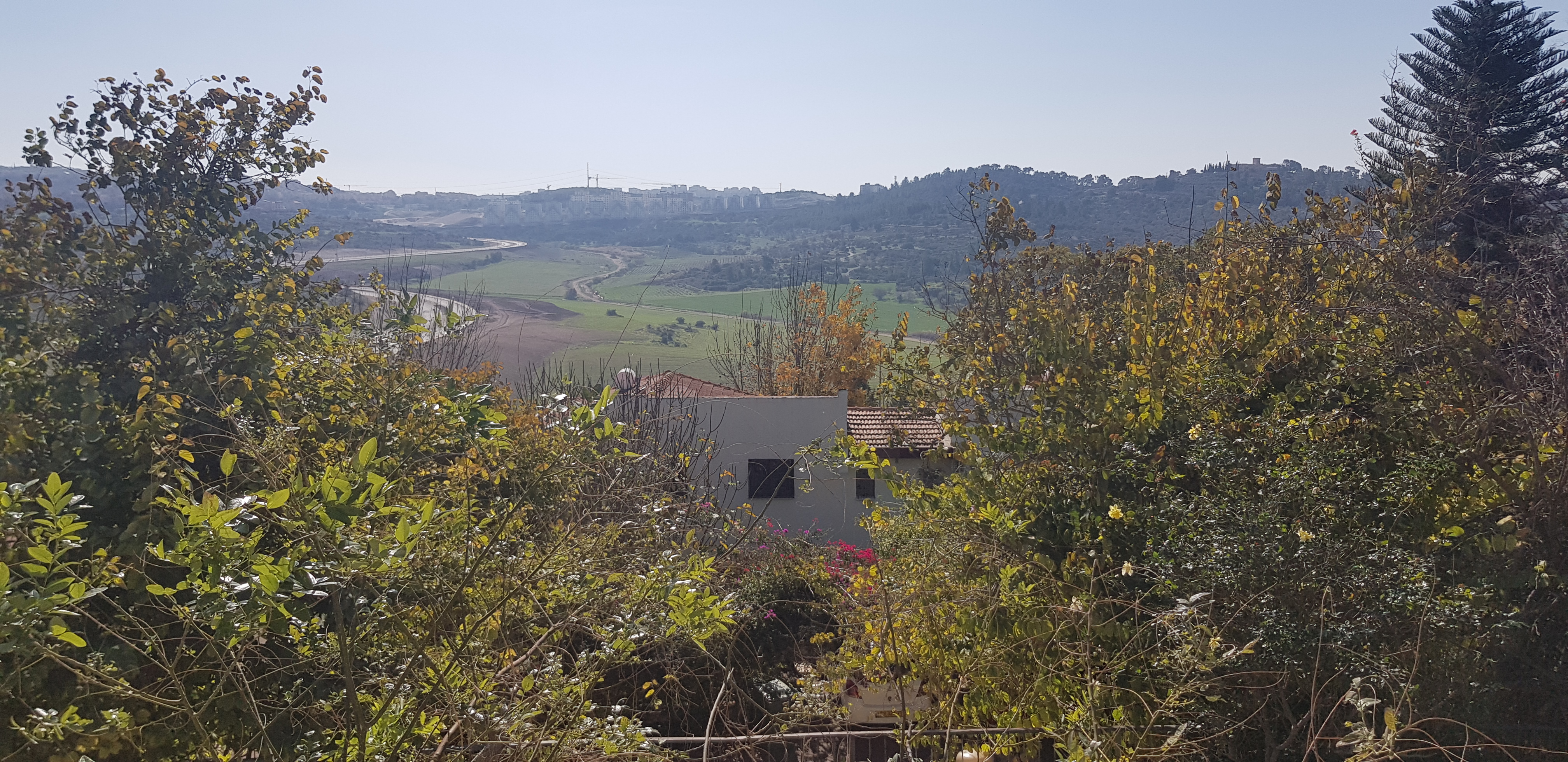
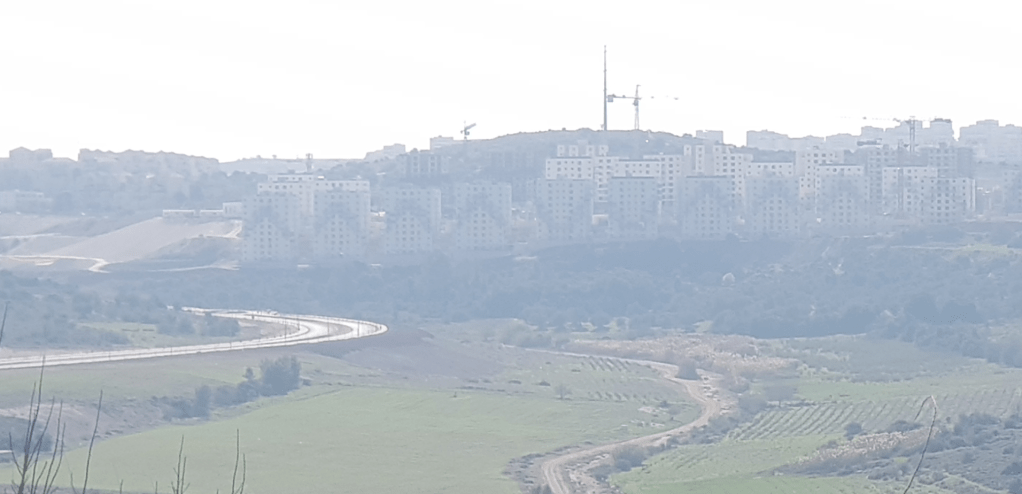
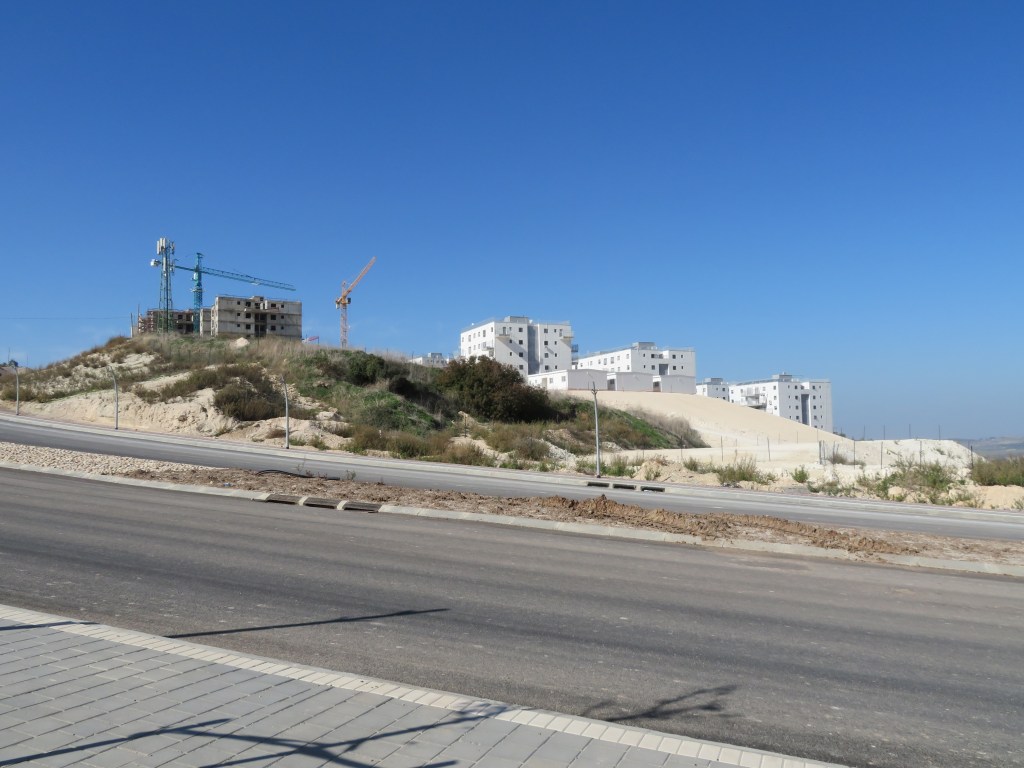
At the time we were learning to live with the changing landscape seen from our home, I was working as the City Engineer for the Bet Shemesh Municipality. I was involved in the urban planning of the future neighborhoods of Ramat Bet Shemesh, planned and built by the government, for over 150,000 inhabitants, to be annexed to the original Bet Shemesh, at the time a small town of scarce 20.000. Local residents expressed their distress at the Housing Ministry’s gargantuan intervention with their home town, without informing them, let alone consulting with them. Poignantly they protested “the rape of Bet Shemesh”. (Today Bet Shemesh numbers about 120,000 residents, and is planned and very rapidly growing to become a city of a quarter million.)
I was later commissioned the design of a school located next to the above mentioned electricity posts, the site clearly visible at the distance from our windows. Working in my profession, I was torn on the one hand between the satisfaction of participating in my country’s development, and on the other hand, the pain from the consequent destruction of the precious balance of nature, views and antiquities of my surroundings.
Looking out the back window of my home to Progress vanquishing Nature, rings a bell. The house I was born and grew up in in Bogotá Colombia, was also built at the edge of the city. In the early 1950’s, the back windows looked into a marvelous landscape of woods and mountains. But by the time I was a young boy, roads and houses started to appear in the woods, and before long, the border of the city – and the proximity of the woods and the mountain – moved farther and farther away. This motive has accompanied my 6 decades of existence in the 20 and 21 centuries. The same motive was beautifully expressed in the popular Israeli song from the 1950’s Gan Hashikmim (Garden of the Sycamores), referring to the rise of the new city of Tel Aviv at the expense of the native Sycamore trees.
Garden of the Sycamores
lyrics: Ytzhak Ytzhaki, music: Yohanan Zarai
Once upon a time here were Sycamores.
surrounded by sand and a landscape
the city of Tel Aviv in those days
was a sole house on the sea shore
and sometimes meetings were held
under the Sycamores in the shade
and near the trees the girls laughed
and answered in song “Hi Yalel”
Yes, this is, yes, this is
this is the garden of the Sycamores
there were many like these
then in those days
Tel Aviv grew suburbs around her
everything in it was planned and checked
built within her streets ,they forgot the Sycamores
and whitened their heads with dust
Everything here was built with the pace of the generation
stores and skyscrapers
but if we only turn our vision back in time
we will remember the green Sycamores
Yes, this is, yes, this is..
Today, the Sycamores have disappeared
just a sign with their name reminds
a few birds and and an orphaned bench
stands in the heart of the city.
and draws to it, when evening falls
and the leaves drop from the trees
a street person or a solitary walker
or a pair of young lovers.
Yes, this is, yes, this is….
https://lyricstranslate.com/en/gan-hashkimim-garden-sycamores.html
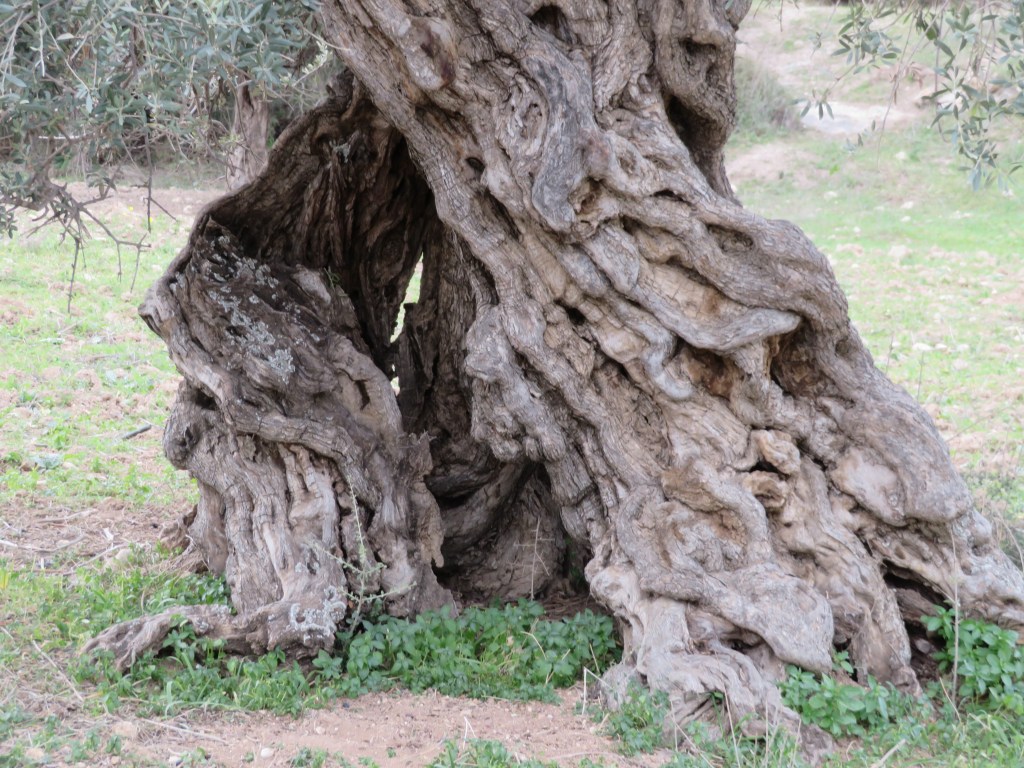
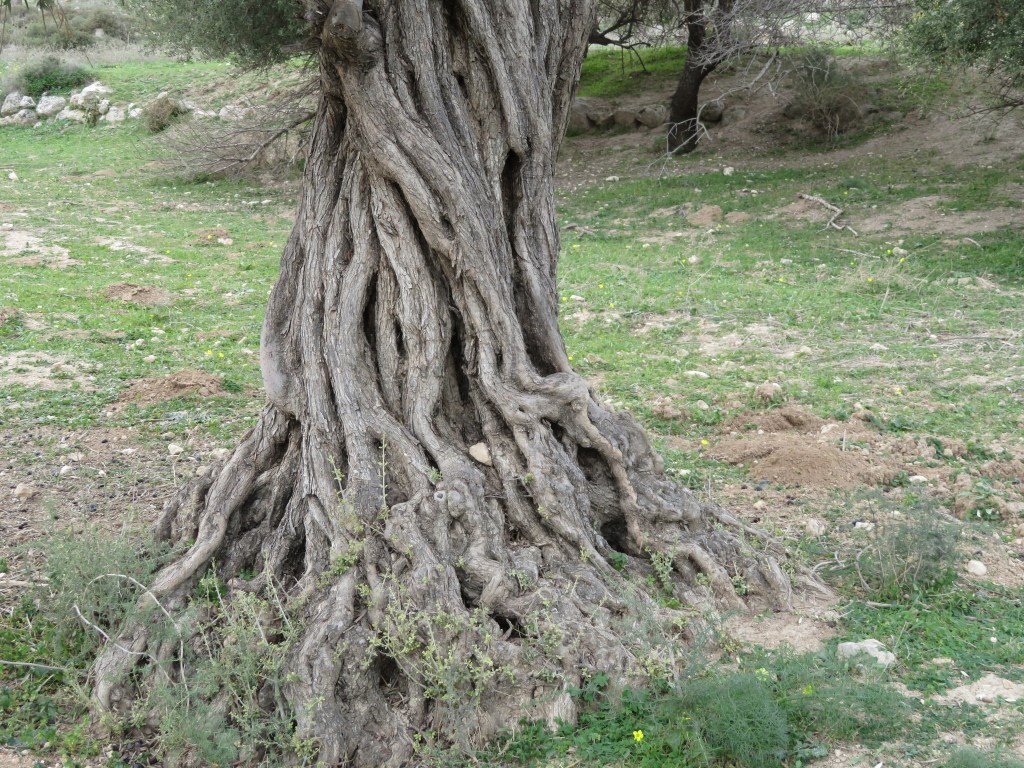
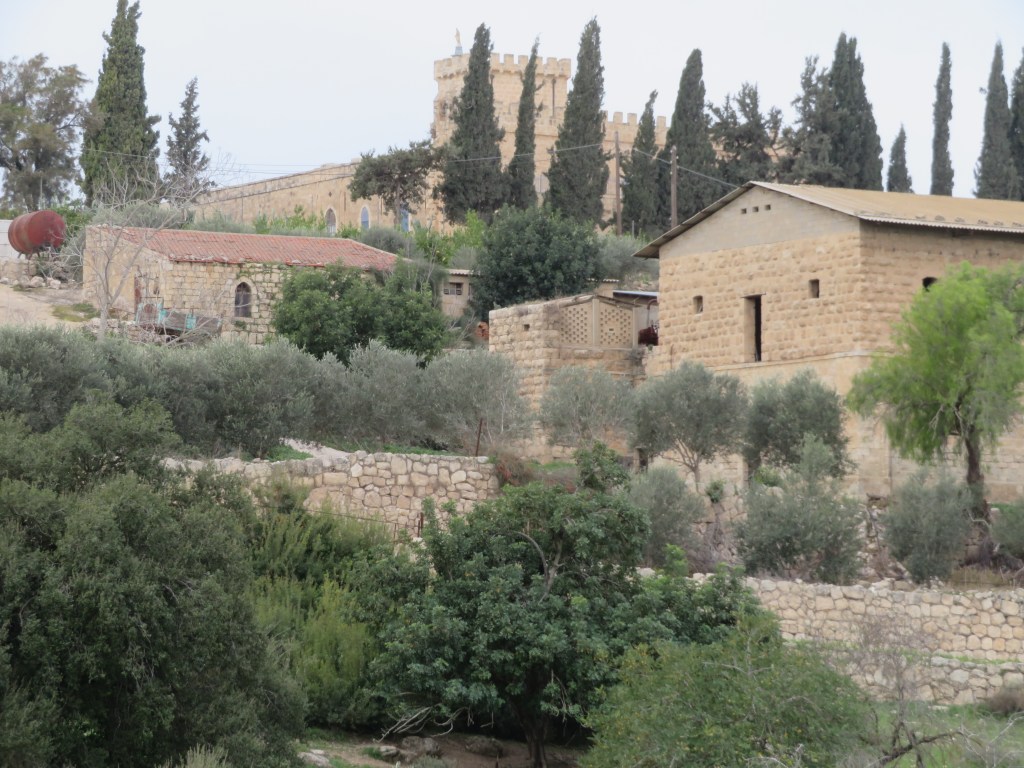
The new road flanks the hill on top of which Bet G’emal monastery stands. The entire hill and surroundings, property of the Vatican, is land used as ancient olive groves and agricultural fields. Thankfully, except for the new road that crosses it, the property remains as a large green lung in the center of the city. I pray the Vatican will not decide one day to sell the land to developers.

II. Tel Sokho
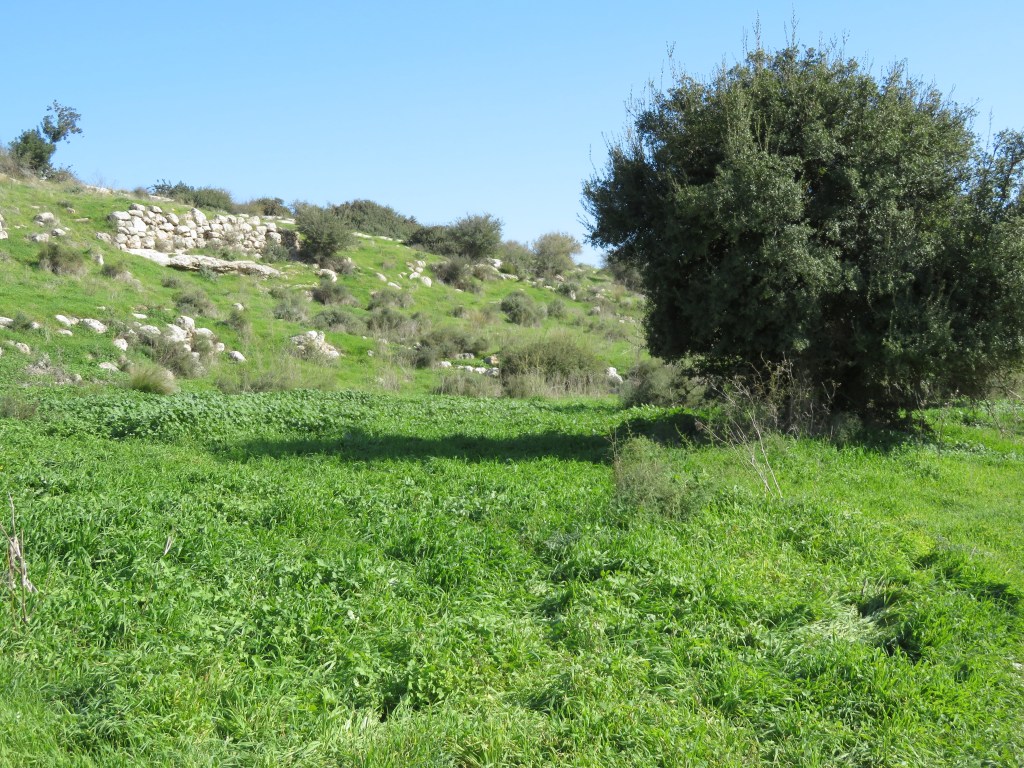
The new road ends at the foot of Tel Sokho, one of the rolling hills flanking the south of the Ela Valley. In the winter it is covered by an intense green mantle with native Mediterranean trees and scrub. In spring the hill is blessed with large breathtaking extensions of of purple wild Lupines. Upon hiking or biking on the tel, one will undoubtedly stumble on the very numerous remnants of ancient buildings, walls, mosaic floors, wells, cisterns, stone installations for producing wine or oil, burial graves, etc. I am relieved to know that Tel Sokho is part of Adulam Park, a vast swath of land legally designated as a nature reserve, where buildings, certainly cities, may not be erected. Some years back, the area was under threat of a shale fracking project, which fortunately became irrelevant thanks to the fall of the world oil market.
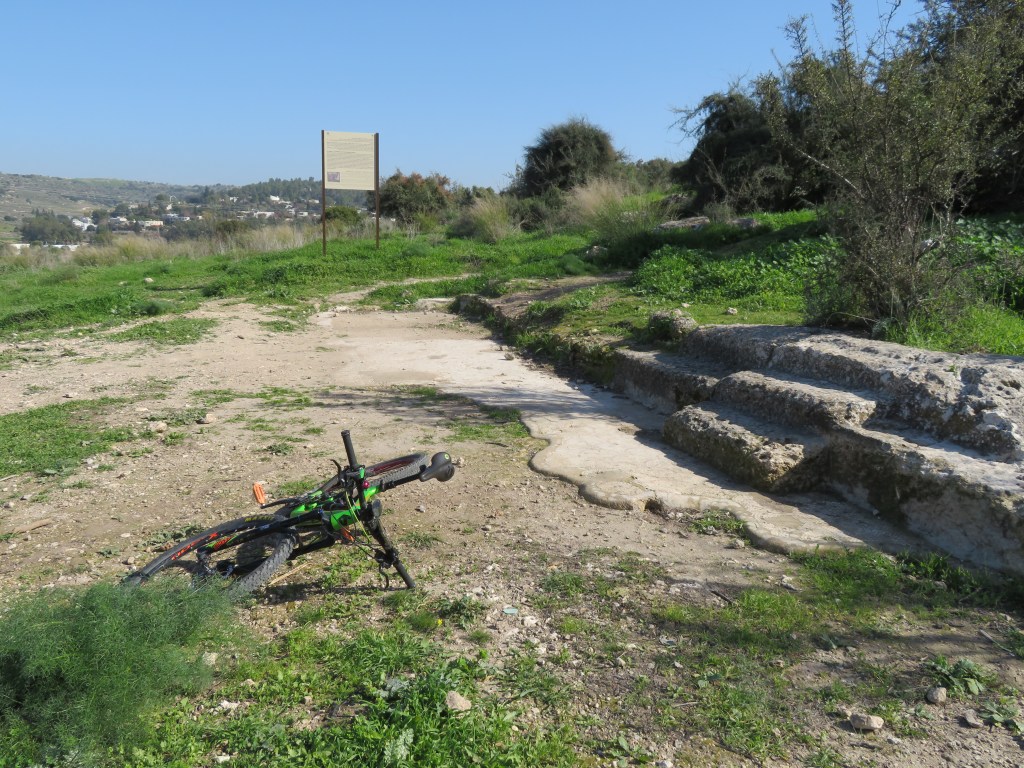
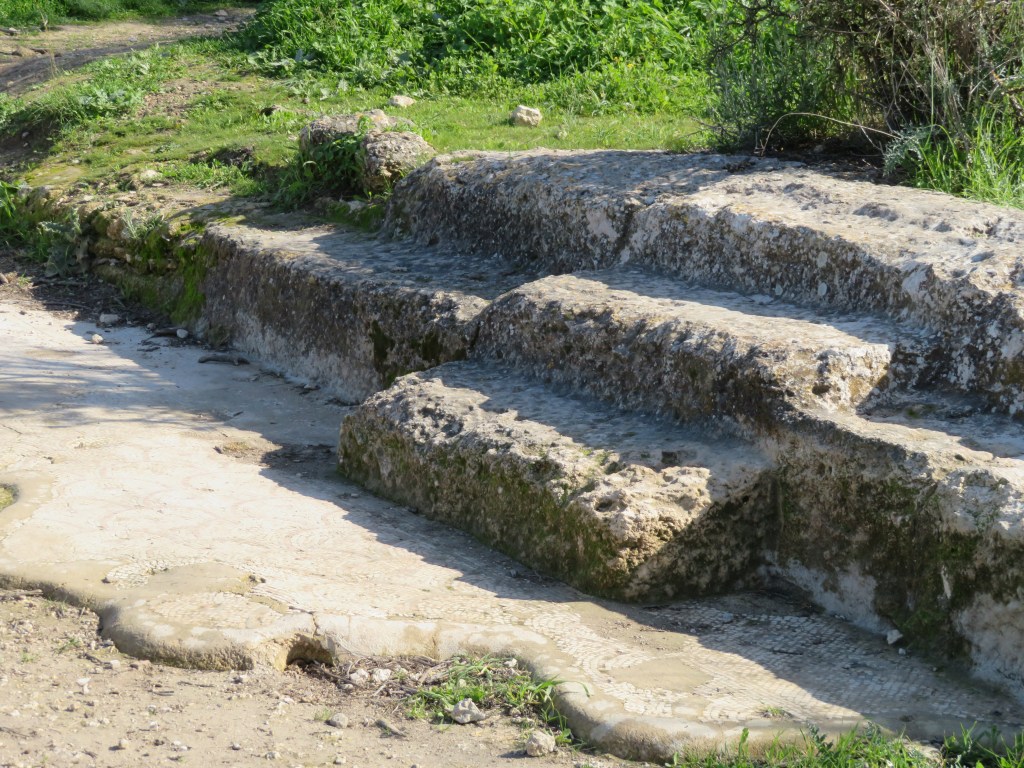
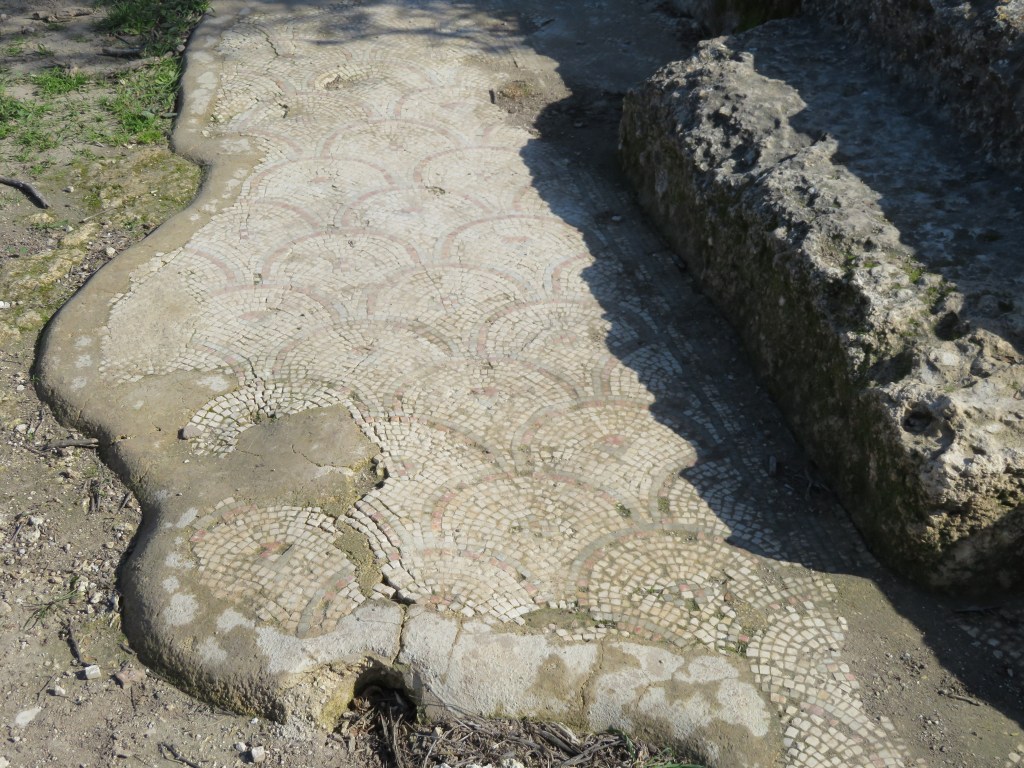
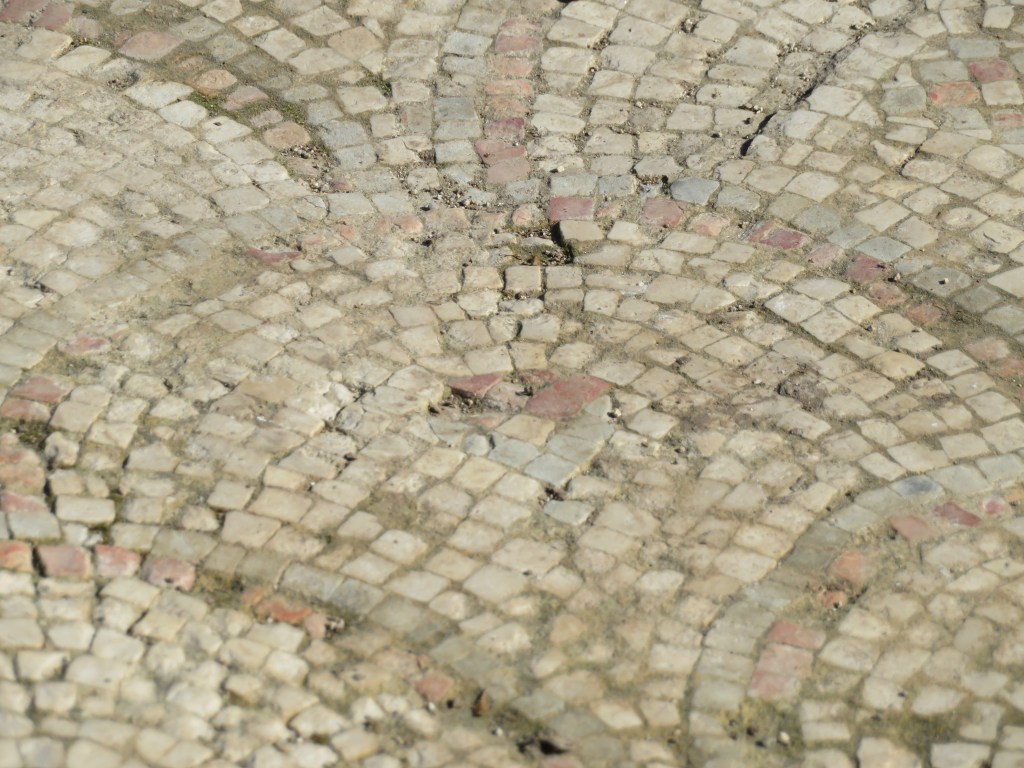
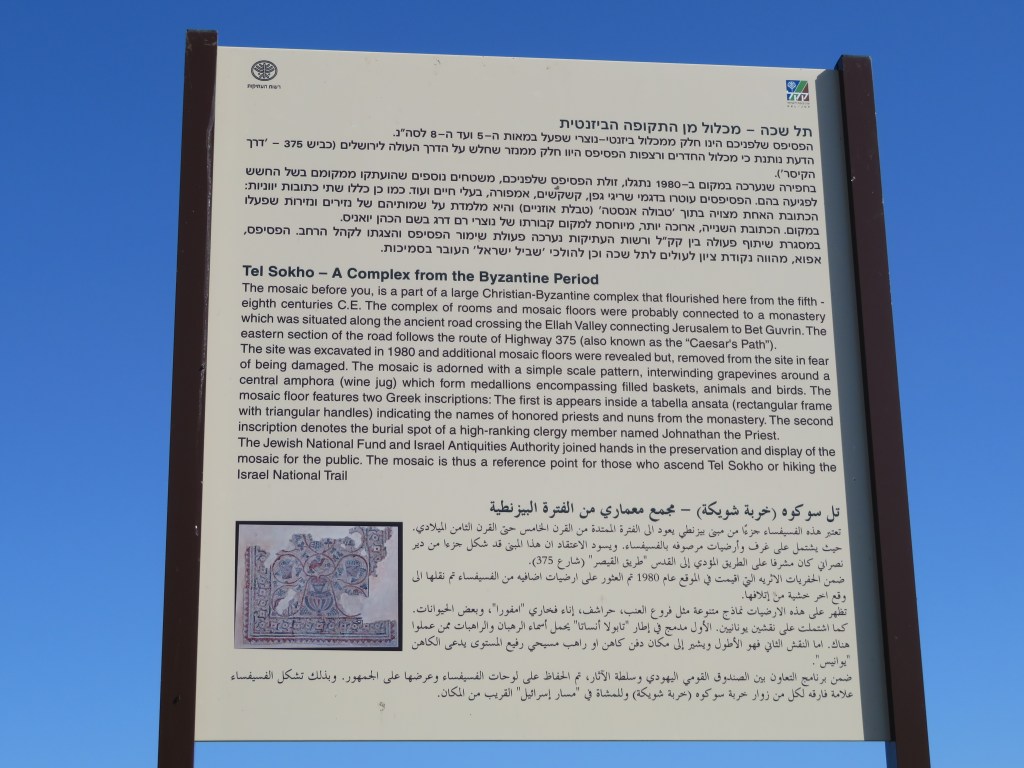
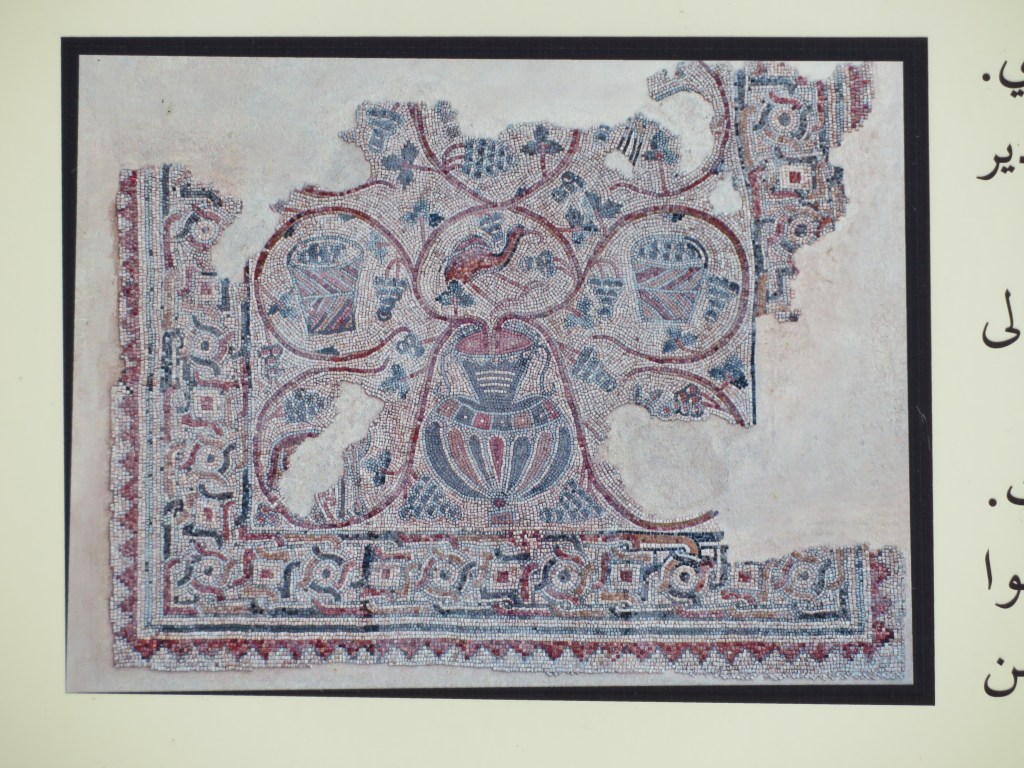
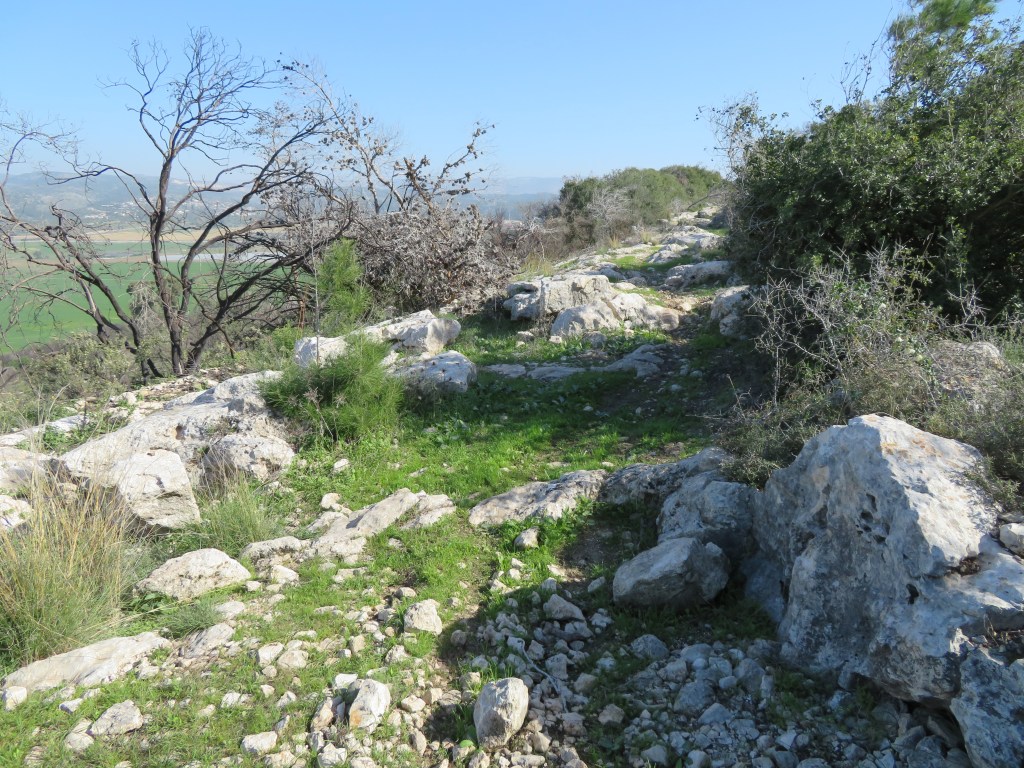
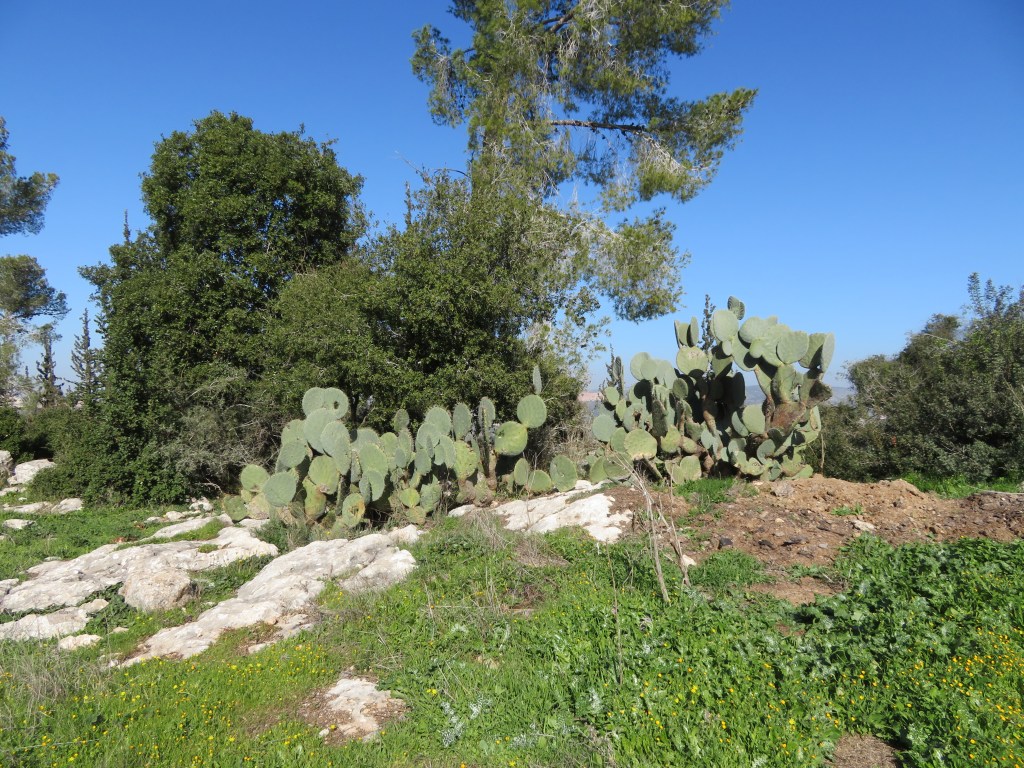
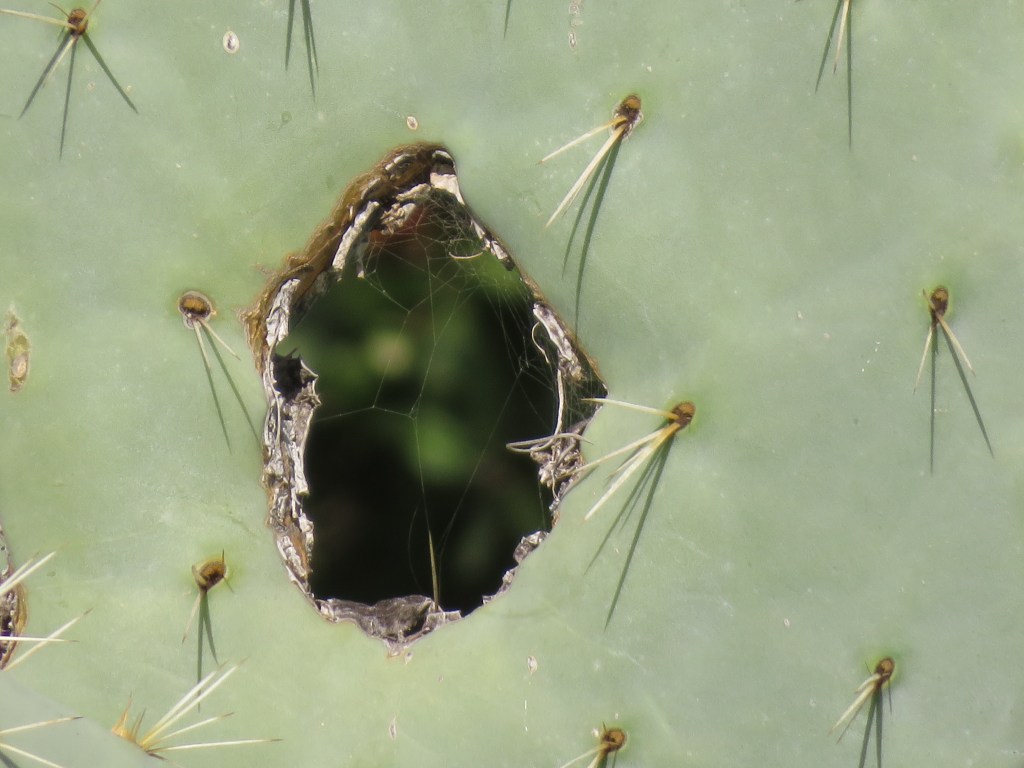
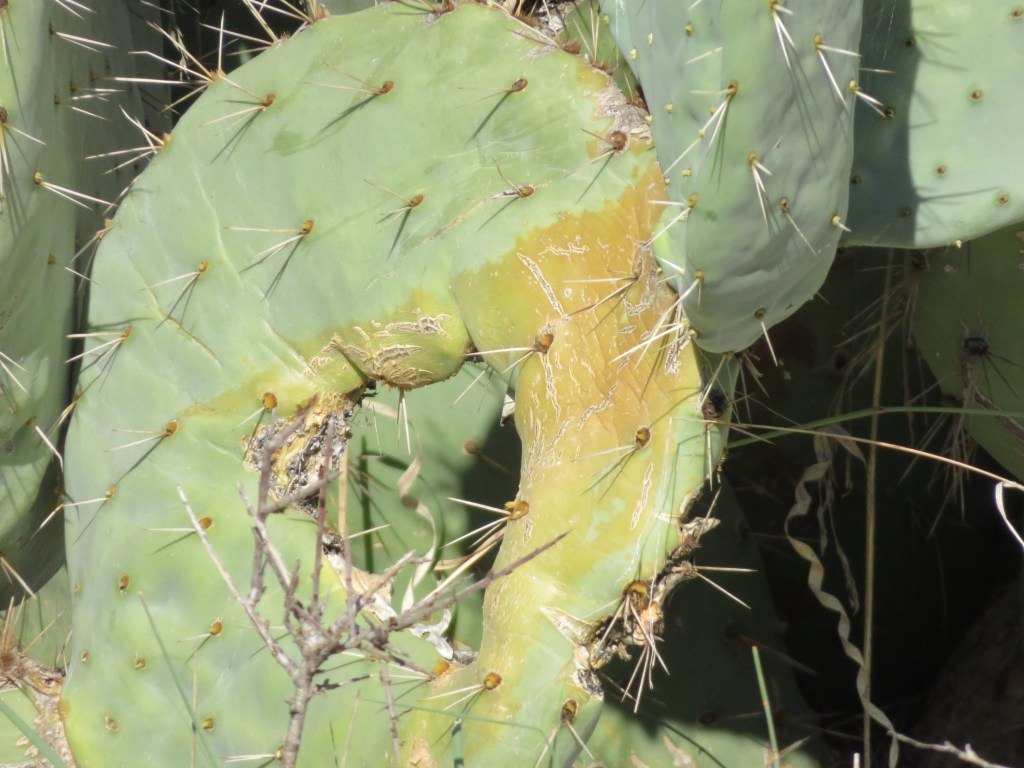
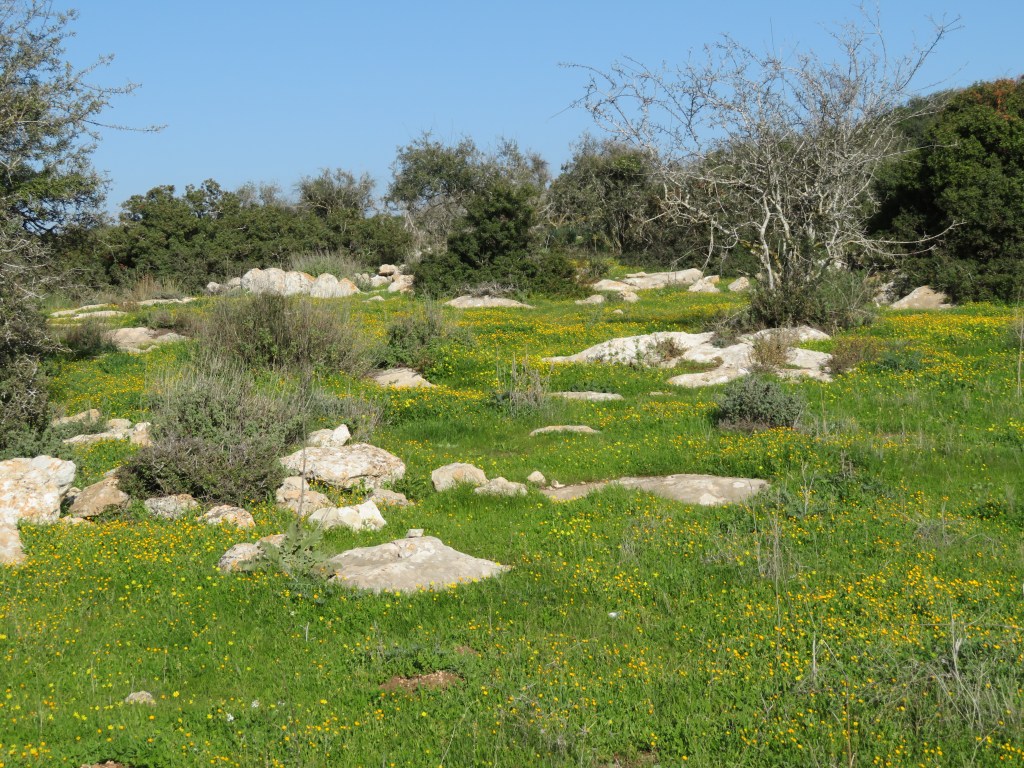
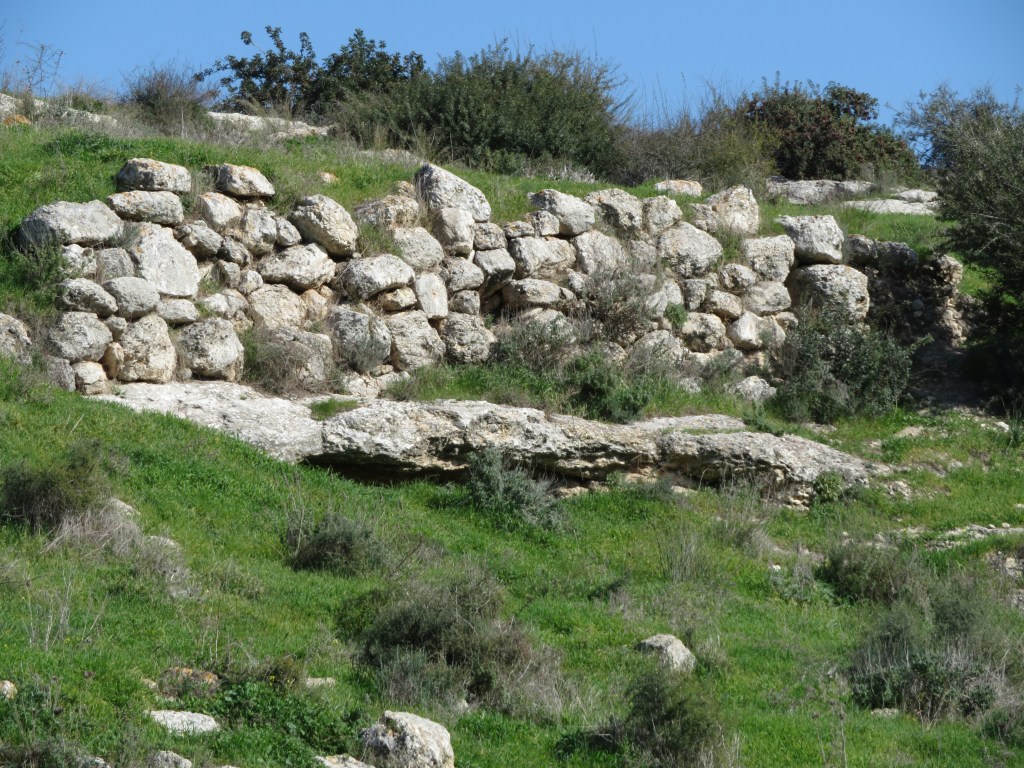
The considerable extension of the antiquities of the site, and its prominent and strategic location on the Ela Valley, are eloquent evidence of the dominant presence of human beings, of a vibrant city. Whereas Ramat Bet Shemesh speaks, or rather screams, about a new city devouring the woods and the fields, this site is the opposite. Sokho gives testimony of how nature, in its full glory, and undisturbed for centuries, has taken over where the reign of human beings has receded.
In order to have an inkling of the cultural and spiritual life of Sokho in the third century b.c.a. – the Hellenistic Era, we read in Tractate Pirkei Avot, or Ethics from Sinai of the Babylonian Talmud, the teaching of the sage Antigonos of Socho:
Do not be like servants who serve their master for the sake of receiving a reward, but rather like servants who serve their master without the express intention of receiving a reward; and let the fear of Heaven be upon you.
Irving M. Bunim, Ethics From Sinai, 2nd edition, (New York: Phillipp Feldheim 1964), p. 46.
The Bible itself teaches us about the city of Sokho. More than a century before Antigonos, Sokho was part of the setting to the dramatic battle of David and Goliath described in the Book of Samuel. David, the brave young boy who will in the future become king, slays the fearful Philistine warrior Goliat with a stone slung from his shepherd sling. This battle served as theme of many famous art works.
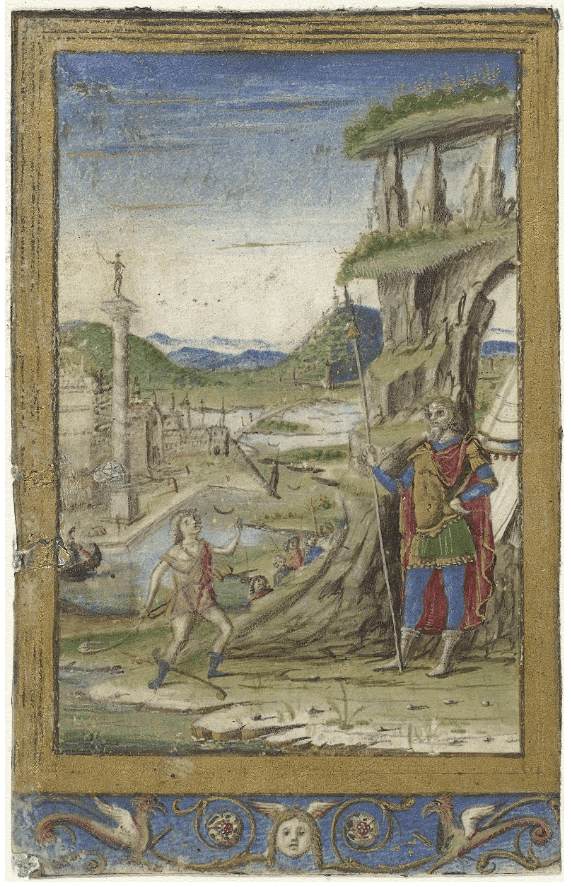
https://artsandculture.google.com/asset/david-en-goliath/DwFiD9Ys6AeXIw?hl=en
Did this European artist visit the site and depict its topography, adding buildings and water from his imagination?
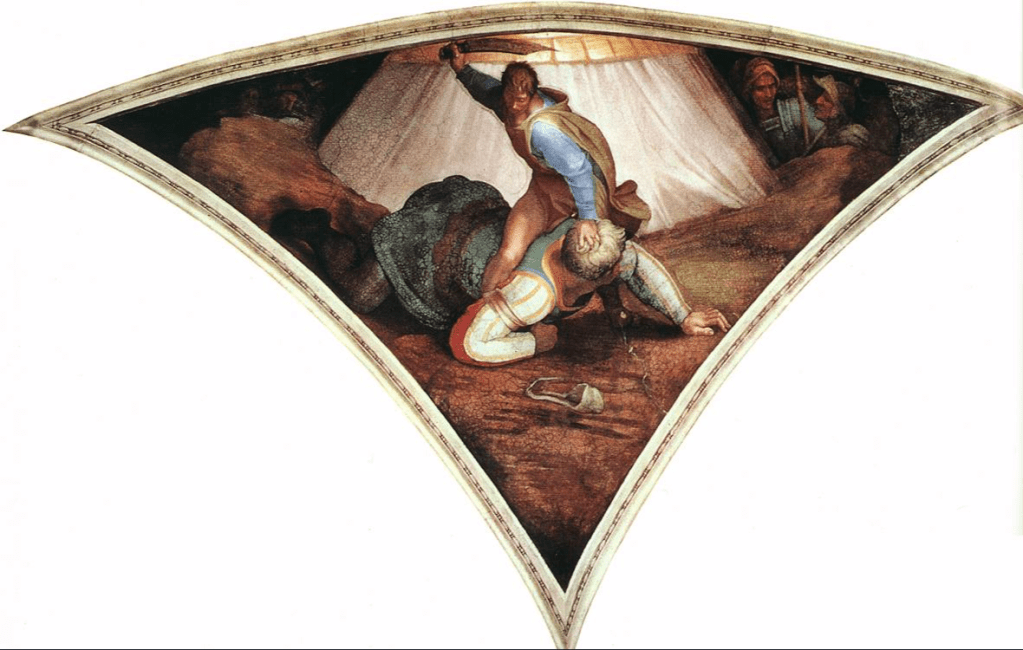
https://www.wikiart.org/en/michelangelo/sistine-chapel-ceiling-david-and-goliath-1509
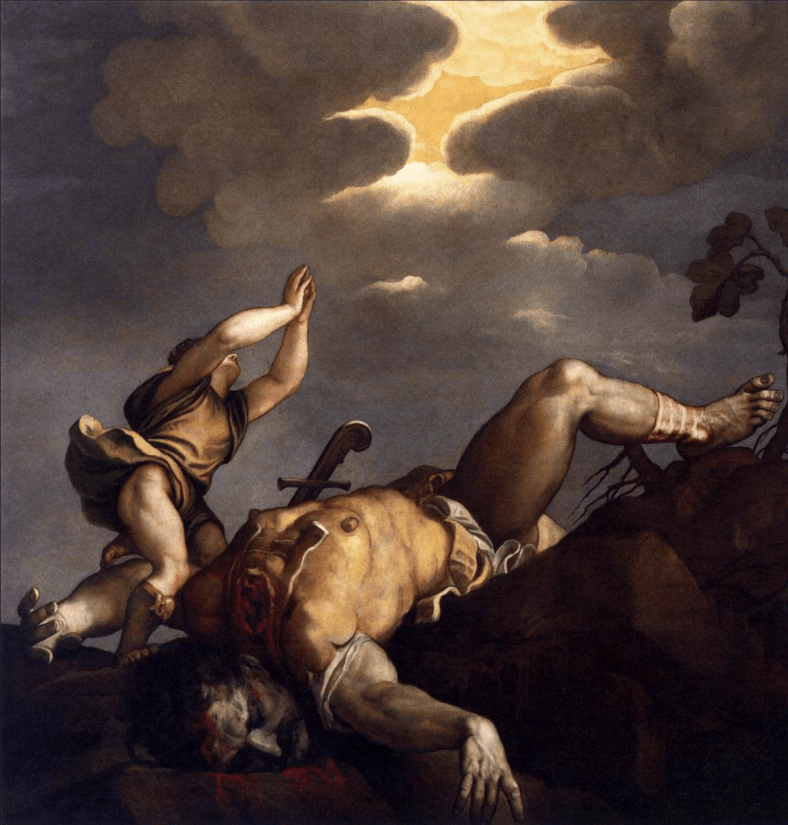
https://www.wikiart.org/en/titian/david-and-goliath-1544
Now the Pelishtim gathered together their camps to battle, and were gathered together at Sokho, which belongs to Jehuda, and pitched between Sokho and ‘Azeka, in Efes-dammim. And Sha’ul and the men of Yisra’el were gathered together, and they encamped by the valley of Ela, and set the battle in array against the Pelishtim. And the Pelishtim stood on a mountain on the one side, and Yisrae’el stood on the mountain on the other side: and there was a valley between them.
The Holy Scriptures, (Koren Publishers, Jerusalem, 1980), 1 Samuel 17:1-3, p. 344.
Today we should read: Tel Sokho, nature and antiquities, stand on the mountain on the one side, and Bet Shemesh and progress stands on the mountain on the other side: and there is a valley between them.
 Otto's note pad
Well written. Added with great pictures of our dear area. But the analogy at the end…Of course, after I finished the article, I reread 1 Sam. 17. Right here. Thanks.
LikeLike
As always, so eloquent in words, images and now in sound, besides enriching the description by your masterful contextualization, amazing!
LikeLike
You owe me a bike ride, always so much to learn from you my dear cousin, Thanks and a big Shkoiach Paul
LikeLike